
13 Customer Service Email Tips (and Example)

A well-written customer support email can make all the difference between refund and a cross-sell (or long-term customer loyalty.)
While you will of course have your own special style, in this post, we will cover tips that you should keep in mind for your

Expressing Gratitude and Empathy
In customer service, your words can shape the customer experience. When you’re replying to emails, expressing gratitude and empathy is paramount.
Why It Matters:
- Gratitude: A simple “Thank you for reaching out,” can set a positive tone.
- Empathy: Acknowledging a customer’s frustration, “I understand how this could be upsetting…,” shows you’re on their side.
How to Express Gratitude:
- Open with thanks: “Thank you for your patience,” or “Thanks for bringing this to our attention.”
- Be specific: Highlight the positive action the customer took.
How to Express Empathy:
- Validate feelings: “It’s understandable that you’re disappointed…”
- Offer reassurance: “I’m here to help resolve this matter.”
Remember to:
- Be genuine: Your sincerity should come through in the email.
- Reflect tone: Mirror the customer’s tone, but keep it professional and positive.
- Keep it personalized: Tailor your response to the individual situation. Avoid generic responses.
Here’s a quick cheat-sheet:
Starting the EmailDealing with IssuesWrapping Up the EmailThank you for…I can see why you’d feel…I appreciate your…I’m grateful for…Let’s work together to…Your understanding is…Thanks for letting us know…I’m here to help with…Thank you for your patience.
The Art of Apologizing
Sometimes…the company can be in the wrong. Nothing bad about it, happens to all of us.
When you’re penning an apology in a customer service email, your words need to come across as genuine and sincere.
Imagine yourself in your customer’s shoes. This isn’t just about admitting a mistake; it’s about rebuilding trust.
- Acknowledge the specific issue. You want to show that you truly understand what went wrong.
- Express regret without making excuses. A simple, “We’re sorry for the inconvenience,” goes a long way.
- Demonstrate that you’re taking steps to prevent future issues. Detail any changes or solutions you’re implementing.
Here’s a quick template:

Hi [Customer Name],
We’re really sorry that [specific problem] happened. We understand how frustrating it must be for you. It’s important to us that we get this right. We’ve [action taken to resolve the problem], and we’re working on [action to prevent future problems]. We value your business and patience.
Warm regards, [Your Name]
Remember, apologies should be as personal as possible. If you can, address the impact the issue had on the individual.
Lastly, your tone matters. Keep it respectful and avoid sounding robotic. Mistakes happen, but it’s how you handle them that can turn a dissatisfied customer into a loyal one.
Leveraging Groove Unified Inbox
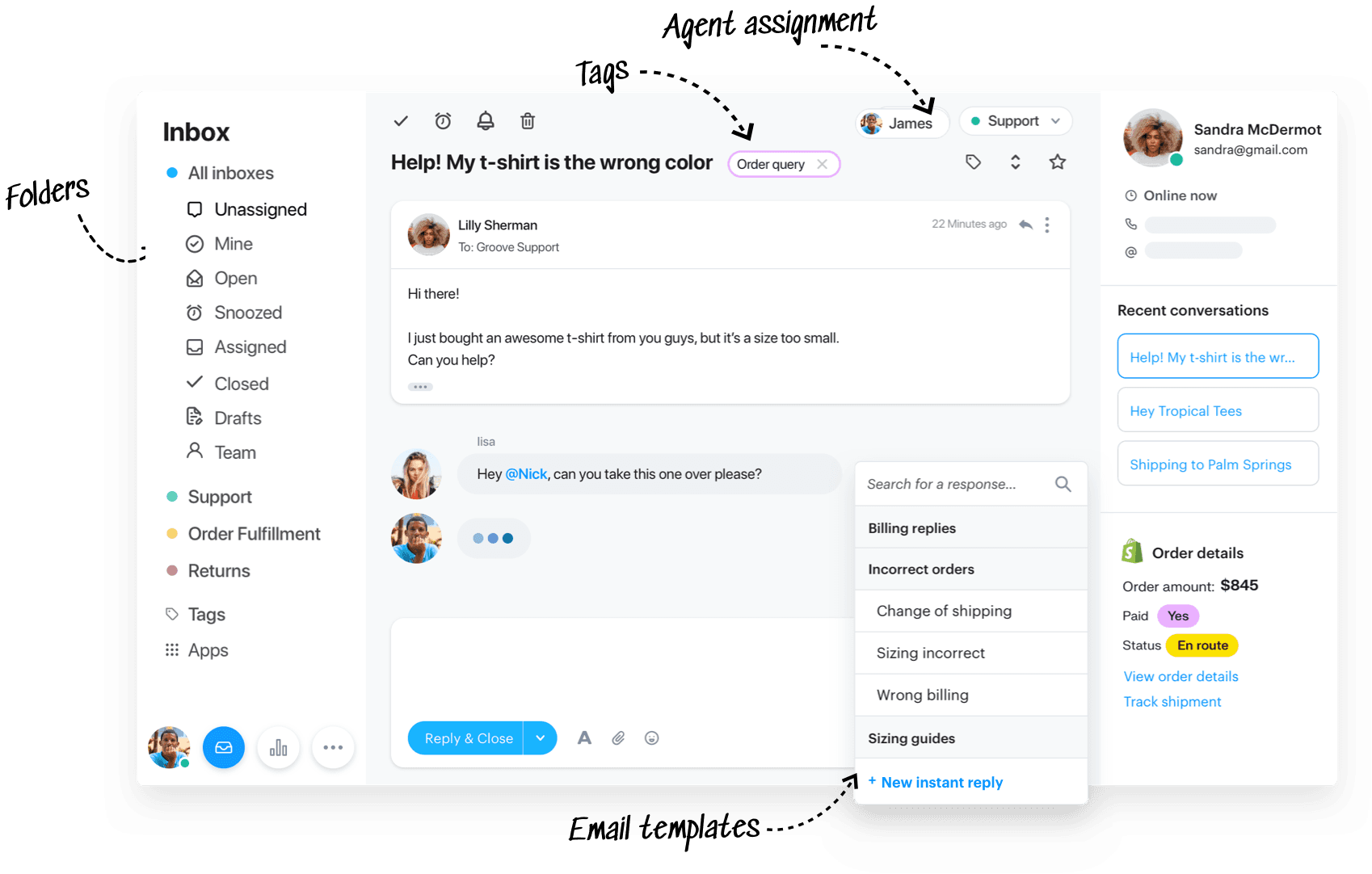
When managing customer service emails, Groove Unified Inbox can be your best friend. Here’s how to make the most of it:
- Centralize Messages: Keep all your customer interactions in one place. You won’t miss out on any conversations, as emails, social media messages, and chats funnel into a single inbox.
- Assign Conversations: Easily delegate emails to team members with the @mention feature.
- Use Tags and Folders: Organize conversations with tags for quick sorting and retrieval.
- Set Up Canned Responses: Save time with pre-written templates for common inquiries.
- Track Performance: Monitor how quickly and effectively your team responds to messages.
Personalization and Connection
Personalization is key. It shows your customers that they are more than just a ticket number.
Address Customers by Name: Always start your emails by addressing customers by their first name. This simple gesture makes a significant impact.
Use Relevant Details: Reference past interactions or purchases to demonstrate that you understand their history with your company.
Mirror the Customer’s Tone: If they’re formal, match that; if they’re more laid-back, you can relax your tone a bit.
Note: Keep in mind that the customer is “too laid-back” or maybe aggressive – don’t match those tones, use your best judgment.
Being Clear and Concise
Aim for a balance between being brief and providing sufficient detail. Your goal is to reduce misunderstandings and follow-up emails.
1. Stick to the Point: Address the customer’s issue directly. Avoid unnecessary details that can clutter the message.
2. Bullet Points Are Your Friends: They break down information, making it digestible. For example:
- Issue resolution steps
- Product options
- Service terms
3. Choose Simple Words: Don’t overwhelm with technical jargon. If you must use it, briefly explain the term in parentheses.
4. Short Paragraphs: Keep your paragraphs to one to three sentences. This keeps the email scannable.
5. Limit the Length: Try to keep the email under five sentences. If more is needed, ensure every sentence adds value.
6. Proofread: Before you hit send, check for clarity and conciseness. Remove filler words like “actually” or “basically.”
7. Active Voice Over Passive: Active voice is straightforward. For example, “We processed your refund” instead of “Your refund has been processed.”
Response Time Expectations
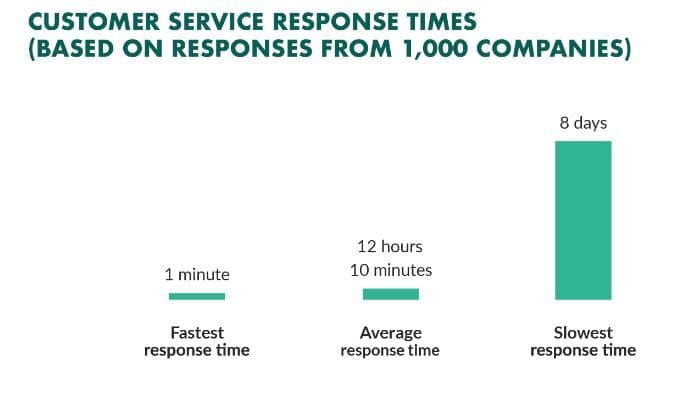
It’s vital to set clear response time expectations. Here’s what you need to know:
Right off the bat, let your customers know when they can expect a reply. For instance:
- Immediate Needs: Within 1-2 hours
- General Inquiries: Within 24 hours
- Complex Issues: Up to 48 hours
Communicate Delays Proactively: If a backlog arises, update your auto-responder to inform customers of longer wait times.
Be Realistic: Don’t promise quicker times if you can’t deliver. It’s better to surprise with an early response than to disappoint with a late one.
Follow Through: If you’ve promised a 24-hour turnaround, stick to it. Consistency builds trust.
Auto-Responses Are Your Ally: Use them to acknowledge receipt of emails and to set the expectation for when your customer will hear back.
Effective Follow-up Strategies
When you’re handling customer queries, it’s easy to think your job is done after the first reply. However, effective follow-up strategies are key to ensuring customer satisfaction and loyalty.
- Timing is Key:
You want to follow up quickly enough so the customer feels valued, but not so quickly that it’s intrusive.
Aim to send a follow-up email 48-72 hours after your initial response if you haven’t heard back. - Personalize Your Correspondence:
Address your customers by name and reference previous interactions.
Use phrases like “We noticed…” or “In your last message…”. This personal touch can build a stronger connection. - Set Clear Expectations:
Tell customers when they can expect to hear from you again.
You could say, “I’ll check back in with you next week to see how things are going.” - Be Proactive:
Don’t wait for a problem to escalate.
If you’re aware of a widespread issue, reach out to affected customers before they reach out to you. - Keep it Concise:
Your follow-up emails should be easy to read and to the point.
Bullet points and short paragraphs are your friends here, allowing your customers to quickly understand your message.
Turning Complaints into Opportunities
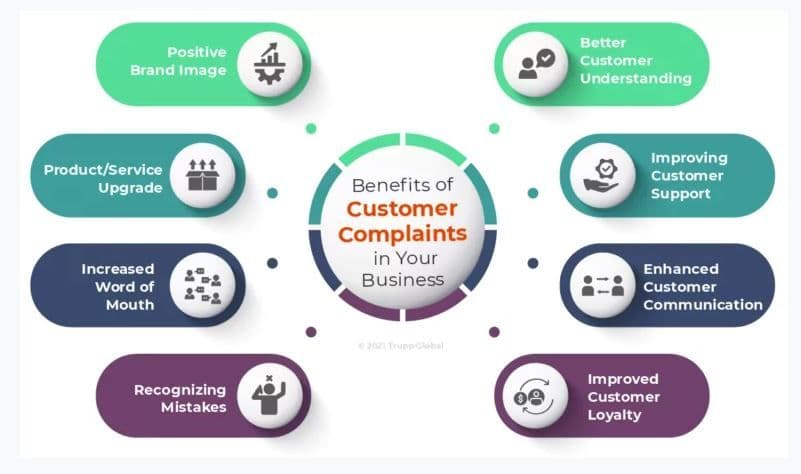
When you receive a complaint, view it as a chance to showcase your commitment to customer satisfaction. Sure, it stings a little, but every complaint is an open door to improving your service and potentially turning a dissatisfied customer into a loyal advocate.
- Listen Actively: Take the time to really understand the issue. Your customers want to feel heard, and it’s your job to make that happen.
- Acknowledge the Issue: A simple “I see where you’re coming from” goes a long way. Recognize their feelings and the inconvenience they’ve experienced.
- Apologize Sincerely: If a mistake’s been made, own it. An honest “We’re sorry” can diffuse tension and show you’re taking responsibility.
StepAction ItemInitial ResponseThank them for bringing the issue to your attention.InvestigationLet them know you’re looking into the matter.SolutionOffer a tangible solution or compensation when appropriate.Follow-UpCheck back to ensure their concern has been fully addressed.
Your goal is to not just resolve the present issue but to build a stronger relationship moving forward. Use your discretion to offer a solution that’s both fair and potentially exceeds expectations. This could involve discounts on future services or expedited support.
Keep your response personal and avoid using canned phrases. Your tone should match their level of frustration—without the frustration on your end, of course.
Approach each problem with the aim of making your service better. After all, every complaint resolved is a step towards a better business.
Dealing with Negative Feedback Constructively
When you receive negative feedback in your inbox, your first instinct may be to defend your company’s actions. However, this is an opportunity for growth. Below are steps to ensure you handle criticism constructively:
- Stay Calm: Take a breath and don’t respond immediately. Negative feedback can feel personal, but it’s often about the customer’s experience, not you.
- Read Thoroughly: Ensure you fully understand the customer’s concerns. Misunderstandings can escalate the situation.
- Acknowledge the Issue: Begin your response by acknowledging the customer’s feelings and the inconvenience they’ve experienced.
- Apologize (if needed): A sincere apology shows that you take their feedback seriously.
- Offer a Solution: Explain how you will address their problem or offer compensation if appropriate.
- Set Expectations: Clearly state what they can expect next and provide a timeframe.
- Request Further Input: Asking if they have additional concerns shows you value their voice.
- Follow-up: Ensure their issue is resolved, and check back with them to show ongoing commitment.
Maintaining Brand Reputation
When you write customer service emails, remember, every word reflects your brand’s image. Here’s how you can keep that reputation shining:
- Be Consistent: Use the same voice and tone in all your emails. If your brand is friendly and casual, stick to that. This consistency makes you reliable in your customers’ eyes.
- Stay Positive: Always have a positive spin, even when delivering not-so-great news. It’s about how you say it, not just what you say.
- Own Mistakes: If there’s a hiccup, admit it promptly. Saying “We’re on it!” is better than making excuses.
- Attention to Details: Typos or incorrect information can tarnish your brand. Proofread before hitting send.
- Be Timely: Respond quickly. A fast reply shows you value your customers and their time.
- Follow Up: Make sure the issue was resolved to their satisfaction. Following up shows you care about their experience, not just their business.
Offering Compensation and Goodwill
When things don’t go as planned and your customers are affected, offering compensation can turn a negative experience into a positive one. Here’s how to get it right:
- Acknowledge the Issue: Start by recognizing the problem. A simple “We’re sorry you’re experiencing this issue” goes a long way.
- Assess the Situation: Determine the level of inconvenience caused. Was it a minor glitch or a major issue?
- Compensate Accordingly:
- Minor issues might just need a sincere apology.
- Moderate inconveniences could warrant a discount on their next purchase.
- Major problems may require a full refund or a significant goodwill gesture.
- Be Proactive: Don’t wait for customers to ask. Offer compensation as soon as you’re aware of the problem.
- Tailor Your Response: Not all customers will be happy with the same type of compensation. Consider offering options when appropriate.
- Ensure Clarity: Clearly explain the compensation process to avoid any further frustration.
Summary
There are many tips in this post that should help you better tailor your email responses to the situation that you are facing with your customer.
But in reality, it is much simpler than all these strategies. Just be honest and helpful. Genuinely try to help.
Sometimes the customer is right, sometimes wrong and at times they can just be frustrated.
Keep in mind that you are there to help and that your goal is to do your best to assist them in reaching the goal.
5 Help Scout Alternatives: Why Growing Support Teams Switch to Groove
Groove Fixes What Teams Don't Like About Help Scout: Flat Pricing, Built-In AI, and Native SLA Management. See the Full Comparison.
How Helply's Hallucination-Proof AI Eliminates the #1 Fear of AI Customer Support
Customer Support Automation That Hits 65% AI Resolution, Guaranteed. Helply's Action-Based AI, Safe Escalations, and Optimization.