How To Use Customer Service Segmentation To Level Up Your Support

If you’re struggling to keep up with the various needs of your customer base, you’re not alone. Customer service segmentation isn’t just another trendy tactic – it’s a powerful tool that helps you approach this challenge like a pro.
This goal is working smarter, not harder. By tailoring your support to different customer groups, you’ll boost both their experience and satisfaction. No more one-size-fits-all solutions that leave everyone feeling a bit underwhelmed.
So here’s what we’ll do. We’ll cut through the jargon and show you how to make customer segmentation work for your business, even if you’re short on time and resources. You’ll learn how to spot your ideal customers, group them effectively, and craft support strategies that hit the mark every time.
Buckle up as we elevate your support strategy!
What Customer Service Segmentation Is (And Why It Matters)
Customer service segmentation is the strategic practice of dividing your customer base into distinct groups. Those groups are based on shared characteristics, needs, or behaviors.
Why should you do this?
Imagine you’re running Sarah’s Soap Shop, a small online retailer. Without segmentation, you might treat the eco-conscious buyer the same as the corporate gift-giver ordering in bulk.
That would be a mistake. Sure, they both want soap, but their needs are worlds apart. The same approach won’t satisfy both groups completely.
A generic one-size-fits-all strategy in customer service comes with significant limitations:
- Missed opportunities. You fail to recognize and capitalize on the unique needs of different customer groups. This means lost sales and fewer loyalty-building moments.
- Poor resource allocation. If you don’t understand which customers need what kind of support, you can easily overinvest in some areas while neglecting others.
- Increased workload. Your team spends more time trying to understand and resolve issues that could have been anticipated with proper customer segmentation.
- Lower customer satisfaction. Generic responses and solutions often fall short of addressing specific customer concerns. This leads to frustration and customer churn.
- Difficulty scaling. As your business grows, a generic approach becomes increasingly difficult to manage (and it becomes more ineffective).
On the flip side, spending time to develop and implement customer service segmentation offers many benefits:
- Personalized customer experience. By understanding the unique needs of each customer segment, you can tailor your support to provide a more personalized experience. This makes buyers feel understood, and leads to stronger relationships with your brand.
- Increased efficiency. Segmentation allows you to anticipate common issues for each group. This enables your team to resolve problems more quickly, and with fewer back-and-forth interactions (and less frustration).
- Improved customer satisfaction and loyalty. When you address the specific concerns of different segments, you’re more likely to meet and exceed customer expectations. This leads to higher overall satisfaction, in turn fostering long-term loyalty and repeat business.
- Cost optimization. By focusing your resources where they matter most for each group, you can provide high-quality support without unnecessary expenditure.
- Targeted marketing and product development. With clear customer segments, you can craft marketing messages that resonate more effectively with each category. You can also develop products or services that better meet their needs.
Now, you might be thinking: “This sounds great for the big guys, but what about us small businesses?”
Let’s go back to Sarah’s soap shop. By segmenting her customers into groups of eco-conscious buyers, gift-givers, and bulk purchasers, Sarah can tailor her entire business approach for each group.
She’ll create specific product lines, marketing messages, and support strategies for each segment. The result? An improvement in customer satisfaction scores and a boost in repeat purchases – all without hiring additional staff.
The point is that segmentation is valuable for pretty much any business, large or small. Unless you’re still at the stage where your customers number in the dozens, it’s worth spending time on.
Plus, doing this now while your customer base is still manageable means you’ll have a robust system in place as your business (and audience) grows!
What Criteria Should You Use To Segment Customers?
When it comes to customer service segmentation, the possibilities are nearly endless. You can categorize your buyers using almost any characteristic or behavior that’s relevant to your business.
The key is to choose criteria that will help you provide more targeted support. Let’s have a look at some common options you’ll want to consider.
Demographics
These basic characteristics offer plenty of insights into support needs:
- Age. Younger customers might prefer digital channels like chat or social media, while older customers might appreciate phone support.
- Gender. While it’s important to avoid stereotypes, there might be gender-specific product issues or communication preferences to consider.
- Location. This affects language preferences, time zones for support hours, and even cultural expectations of service. As one example, urban customers might expect faster delivery times when compared to rural customers.
- Income/Education. These factors might influence the complexity of language used in support interactions, or the level of technical detail customers are comfortable with.
Behavior
Behavioral segmentation looks at how customers interact with your business. You can focus on:
- Purchase history. Frequent buyers or high-value customers might warrant priority support or a dedicated account manager. First-time buyers, on the other hand, may need more guidance on using your product.
- Product usage. Power users might require more advanced technical support or early access to new features, while infrequent users can benefit from tips to get more value from your product.
- Engagement level. Highly engaged customers, like those who open and respond to your follow-up emails and participate in webinars, could benefit from proactive outreach or beta testing opportunities. Less active customers can be targeted with re-engagement campaigns.
- Customer lifecycle stage. New customers often need onboarding support, while long-term users appreciate loyalty rewards or exclusive services.
Psychographics
Understanding what your buyers care about helps you communicate more effectively. Here are some examples of what psychographic segmentation might focus on:
- Values. Eco-conscious customers appreciate information about your sustainability practices, while socially responsible customers are often interested in community initiatives.
- Lifestyle. Busy professionals value efficiency and quick problem solving in support interactions. Hobbyists might enjoy more in-depth and conversational support about your product.
- Interests. Tech enthusiasts enjoy learning about your product’s advanced features or upcoming innovations, while budget-focused customers are interested in cost-saving tips or special offers.
Needs and Expectations
This criteria segments customers based on support preferences. That could include:
- Communication style. Some might prefer prompt and to-the-point responses, while others value a more personal and relationship-based approach.
- Response time expectations. B2B customers might expect faster response times during business hours, while B2C customers need 24/7 availability.
- Channel preferences. Some customers prefer email for its documentation trail, some value the immediacy of chat, and others usually opt for phone support.
- Self-service vs. assisted service. Some customers prefer to solve issues on their own using knowledge bases or FAQs, while others always want to speak to a human.
When choosing which criteria to focus on, consider your business’ goals, the nature of your products or services, and the data you have available.
Often, the most effective segmentation strategies use a combination of criteria to create more precise and actionable customer groups. What we have discussed here are just starting points. You might find that other factors are more relevant to your business.
What matters at the end of the day is that whatever customer segmentation criteria you settle for are:
- Measurable. You can quantify and track them.
- Accessible. You can reach these segments through your communication channels.
- Substantial. The segments are large enough to be worth targeting.
- Differentiable. The segments respond differently to your support efforts.
- Actionable. You can create specific strategies for each segment.
How To Build Customer Segments (3 Steps)
Now that we’ve explored the criteria for customer service segmentation, let’s dive into the practical steps. This process transforms raw data into actionable insights for building a stronger support strategy.
Step 1: Data Collection
The first stage involves gathering comprehensive data about your customer base. How you do that depends on what you already have on hand, what you need to gather, and what tools are available/affordable for your business.
With that being said, here are our recommendations for getting started.
Analyze Customer Interactions
A centralized support inbox contains a wealth of customer interaction data. Every email and support ticket provides valuable insights into buyer behavior and preferences.
Here at Groove, we’ve designed our shared inbox to be your command center for customer support. It’s not only about organizing emails; it’s about unlocking the patterns and preferences that will supercharge your segmentation strategy.
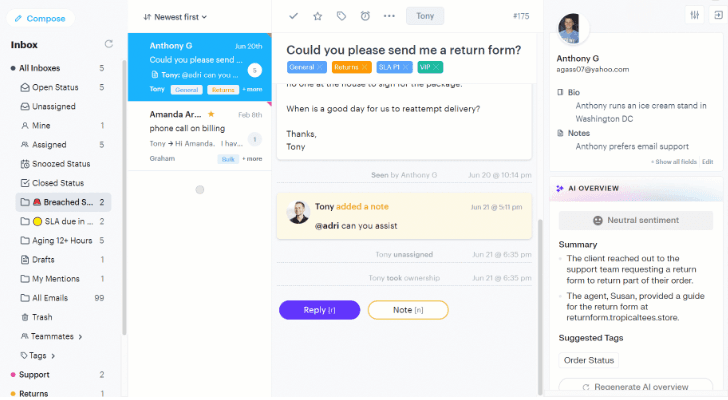
Remember that email isn’t the only support channel. You probably get inquiries in other ways, such as live chat, social platforms, etc. Referencing those histories tells you a lot about your customers – what they want, what they complain about, what they’re confused by.
If you’re using a help desk like Groove, all of that information is already in one convenient place, ready to be mined for segmentation insights. If you’re not, now is the perfect time to streamline your customer support.
Review Key Support Metrics
Customer histories provide valuable qualitative information. But hard numbers are useful too.
Analytics can seem intimidating, but you don’t have to track everything. A few key data points can tell you a lot about your customers, especially when put into context with their direct feedback.
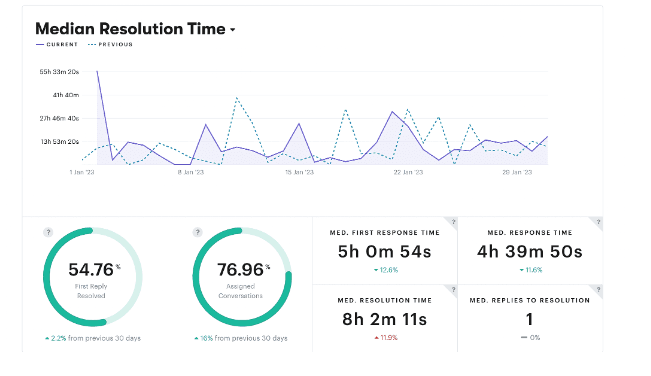
We’d suggest starting with key support KPIs like response times and resolution rates. If you’re using Groove, these are tracked automatically on both a team-wide and agent-specific basis.
Conduct Surveys
What’s the best way to learn about your customers? Ask them questions about themselves!
There are a few kinds of surveys you might use. You can start with simple customer satisfaction surveys, which give you immediate feedback about how buyers feel regarding specific support interactions.
These can be set up in Groove to send automatically when a ticket is closed. You’ll get individual and average satisfaction rates. Plus, customers will have a chance to share other thoughts via a free response field.
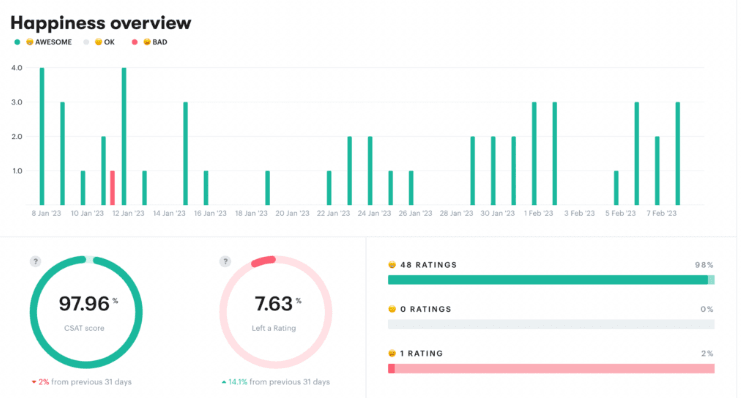
For more detailed feedback, you can integrate survey tools like Delighted with your help desk. Ask targeted questions about your customers, and you’ll get a wealth of data to inform your segmentation strategy.
Step 2: Segment Identification
Once you’ve collected your data, it’s time to analyze it and identify meaningful customer groups. Again, this needs to be informed by your goals and what you’ve learned about your buyers.
Start by examining the data you’ve gathered from various sources, everything from surveys to purchase histories. Compile as much as you can in one place (using whatever spreadsheet/organizational tools you prefer).
Then it’s time to organize. Group feedback and data into categories, based around potential segmentation groups. Start looking for trends that emerge, particularly any patterns within poor customer satisfaction scores/feedback.
As an example, maybe you’re focusing on the content of customer conversations. You can look for common themes or issues that might indicate distinct segments. To do that, filter conversations by keywords, tags, or custom fields that indicate buyers with differing characteristics or situations.
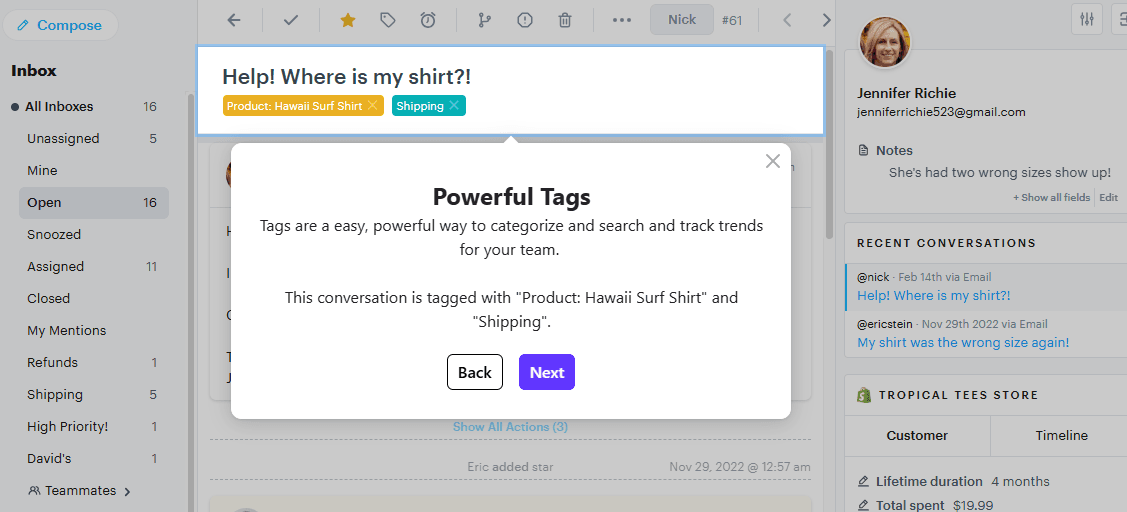
On the more technical side, you can use data analysis techniques on quantitative data. Employ statistical methods and data visualization tools to identify clusters or groups within your customer base. Some common techniques include:
- Cluster analysis: Groups customers with similar characteristics
- RFM (Recency, Frequency, Monetary) analysis: Segments customers based on their purchase behaviors
- Decision trees: Helps identify key factors that distinguish different customer groups
Based on what you learn, select the most relevant criteria for segmentation. Your segments don’t need to be (and often shouldn’t be) based on a single factor each. Instead, look for meaningful combinations.
Perhaps a sizable segment of your SaaS customers are recent college graduates with entry-level tech jobs and tight budgets (they tend to purchase low-tier plans and use a particular set of features). Then there’s another key group made up of mid-level website developers highly interested in customization and depth of functionality (they sign up for high-tier plans and make heavy use of APIs and integrations).
Whatever your segments are, don’t forget to ensure that they’re both meaningful and actionable. They should be:
- Substantial: Large enough to be worth targeting
- Accessible: Interact with your customer service enough to be worth personalizing their interactions
- Differentiable: Have at least moderately different support needs
- Actionable: You can create specific strategies for each segment
Step 3: Segment Profiling
Once you’ve identified your segments, it’s time to create detailed profiles for each one. This preserves what you’ve learned, and equips your support team with the insights they need to provide tailored and effective support to each customer group.
For each segment, you’ll want to outline:
- Key characteristics. What criteria define these customers? Who are they, what do they care about, and what do they value?
- Needs and pain points. What common issues or requests are associated with each segment?
- Support preferences. What are these customers’ preferred communication channels?
- Value to business. What does their purchase history look like, and are they ‘low value’ or ‘high value’ customers?
So for instance, let’s look at a hypothetical “Tech-Savvy Millennials” segment:
- Characteristics: Age range (25-40), Location (Urban), Preferred contact (Chat)
- Needs (identified via tags): #quick-resolution, #self-service, #feature-requests
- Common Issues: Advanced feature inquiries, integration questions
- Notes: Prefers video tutorials in knowledge base, active on Twitter for support
The final step is to make this information easily available for your support agents. If possible, you’ll want it to be accessible right in your help desk. In Groove, you can create and customize detailed customer profiles, and supplement your segmentation via tags:
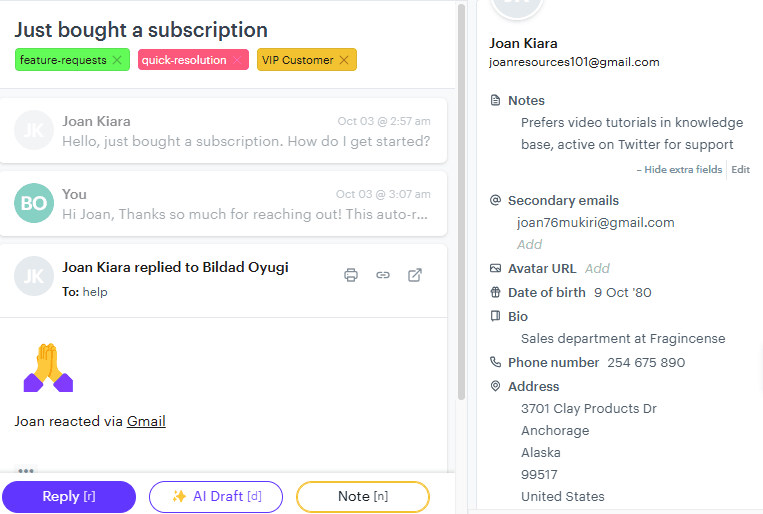
Agents can quickly access this information directly from the customer’s profile while handling each ticket. That way, they’re prepared upfront with the details they need to provide high-quality, personalized service.
5 Tips for Using Segmentation To Improve Your Customer Service
It’s time to put your segments to work! Before we wrap up, we’ll explore five ways to leverage your customer service segmentation effectively.
1. Channel Optimization
In today’s multi-channel world, customers expect to reach you through their preferred methods of communication. Channel optimization involves aligning your support channels with the desires of each segment.
By meeting customers on their preferred platforms, you reduce friction in the support process and improve satisfaction. Here’s how to implement channel optimization:
- Analyze channel preferences. Use your customer service tracking system to generate reports on customer interactions across different channels. Filter these reports by customer segments, and look for patterns in channel usage and satisfaction scores.
- Customize responses. Use Instant Replies to create templates that suggest preferred channels for different segments. You can include links or instructions in these templates to guide customers to the most effective channels for their needs.
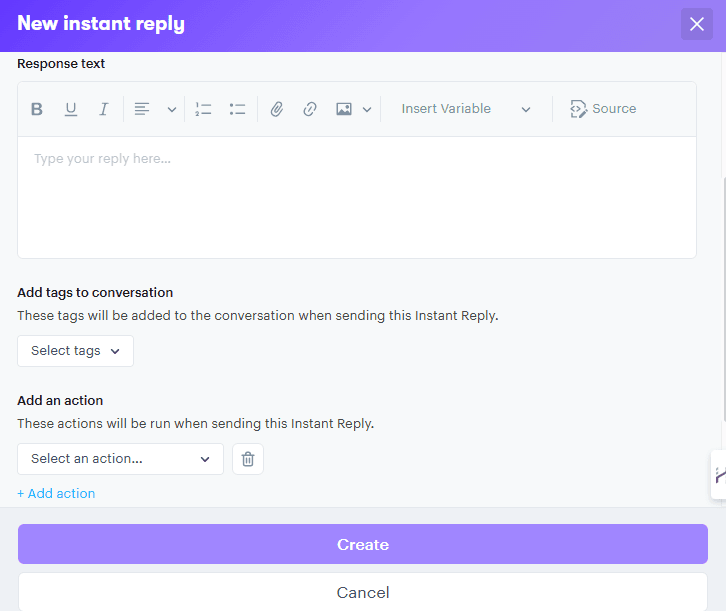
- Set up automated routing. Create automated rules based on customer segment identifiers. That could include tags, email domains, or custom fields. Then configure these rules to automatically assign incoming inquiries to the appropriate channel-specific team or agents.
- Train your team. Create internal documentation on channel preferences for each segment. Then use notes in your help desk to add reminders about preferred channels to customer profiles.
2. Content Personalization
One size doesn’t fit all when it comes to support content. Content personalization involves creating targeted resources, such as FAQs, knowledge base articles, and tutorials, that are tailored to each segment’s specific needs and level of expertise.
Personalized content can significantly reduce the time customers spend searching for answers, leading to faster resolution times and a reduced workload for your team. It also shows customers that you understand their unique challenges, and are committed to providing relevant support.
Here’s how we’d recommend approaching content personalization:
- Segment-specific knowledge base resources. In your external knowledge base, you can create dedicated categories for each customer segment, organizing articles that address their unique needs and pain points.
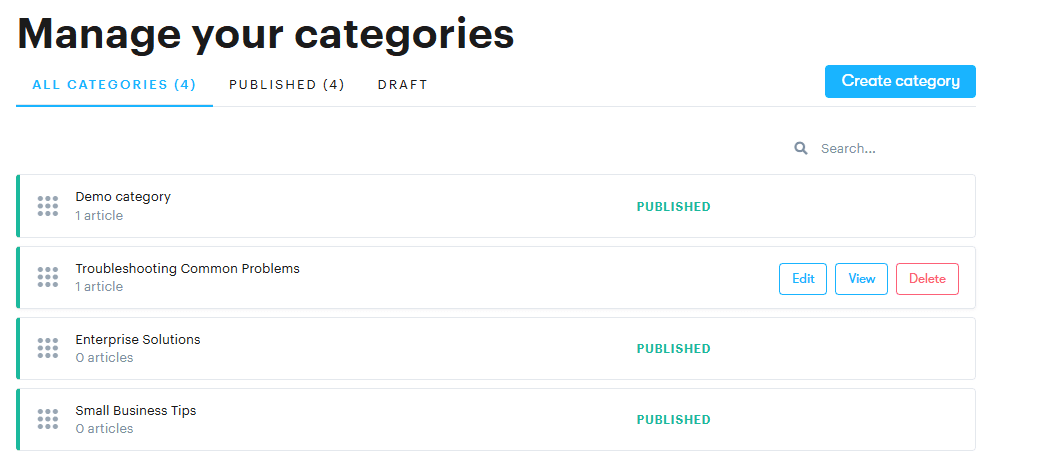
- Data-driven content creation. Look for patterns in ticket topics or frequently asked questions. Use these insights to create targeted content that addresses the specific issues each segment faces.
- Smart tagging for easy access. Use custom fields to tag knowledge base articles with relevant segment identifiers, making it easier for agents to share appropriate resources.
3. Support Team Specialization
Every customer segment has its own set of needs, challenges, and expectations. Support team specialization involves training specific agents or teams to handle inquiries from particular groups.
This allows your team to develop deep expertise in the unique needs of each segment. Specialized agents can provide more efficient, empathetic, and effective support. They’re better equipped to understand the context of issues, speak the customer’s language, and provide tailored solutions.
To ensure that your customer segments receive the best support from your team, you can:
- Use a customized tagging system to categorize tickets by segment.
- Set up rules to automatically assign tickets from specific segments to specialized agents or teams.
- Use your reporting dashboard to track agent performance and identify areas for further training.
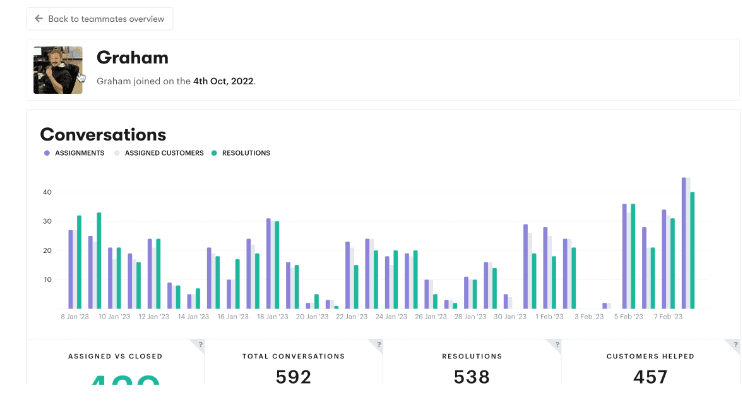
4. Proactive Support
Reactive support is good, but proactive support is better! It involves using customer service segmentation data to anticipate needs and reach out with helpful information or resources before issues arise.
This reduces ticket volume, and demonstrates to customers that you’re attentive to their needs. It’s a great way to boost customer satisfaction, increase loyalty, and even create upsell opportunities. It transforms your support from a problem-solving function into a value-adding service.
A few ways to offer enhanced proactive support:
- Track important dates or milestones for each segment, such as onboarding stages and renewal dates. (In Groove, you can do this using custom fields.)
- Set up automated emails to send targeted and helpful content at key points in the customer journey.
- Use metric reports to identify common issues for each segment, and create proactive outreach campaigns to address them
5. Continuous Refinement
Customer needs aren’t static, and your segments shouldn’t be either. It’s important to regularly review and update your segments based on new data and changing customer behaviors.
By keeping your segments up to date, you ensure that your support strategy remains effective and relevant. It also allows you to identify emerging trends and continuously improve your support offerings. In other words, it’s key to maintaining a competitive edge in customer service.
For ongoing segmentation optimization, you can:
- Regularly review analytics to identify shifts in customer behavior or support needs.
- Use custom fields to track changes in customer characteristics over time.
- Set up periodic reviews of your segmentation strategy, using data to inform any necessary adjustments.
- Send regular customer satisfaction surveys and periodic long-form surveys to keep in touch with your customer base.
Elevate Your Support Game Through Customer Service Segmentation
You now have the tools and knowledge to transform your support from a one-size-fits-all approach to a tailor-made experience. All that’s left is to put the work in, which takes time.
The journey to customer support excellence is unending, and evolves alongside your business and your customers. Keep listening and adapting, and watch as your customer satisfaction scores hit the roof.
And don’t forget – you can make every part of this process quicker and easier with Groove! Start a free trial today, and see firsthand how segmentation can revolutionize your customer support.
5 Help Scout Alternatives: Why Growing Support Teams Switch to Groove
Groove Fixes What Teams Don't Like About Help Scout: Flat Pricing, Built-In AI, and Native SLA Management. See the Full Comparison.
How Helply's Hallucination-Proof AI Eliminates the #1 Fear of AI Customer Support
Customer Support Automation That Hits 65% AI Resolution, Guaranteed. Helply's Action-Based AI, Safe Escalations, and Optimization.