
Customer Service Software: A Guide to Finding the Right Fit for Your Business

Customer service software should be intuitive and easy to use, leveraging technology to simply connect people to people.
At least, that’s what we believe at Groove.
Customer care is the key to growing a strong user base and building a world-class product.
It shouldn’t be siloed off to one department. Or trapped behind bulky support systems.
Everyone at your company should have access to the customer. Providing help and guidance when needed, but more importantly, listening to their feedback and taking action based on customer data.
If you’re not using customer support software yet or considering switching platforms, we’re offering a 7-day free trial of Groove. Get everything you need to create a customer-centric strategy at your business.
What is customer service software?
Customer service software is a system of tools designed to help customers in need, gather data on customer requests, and streamline support team efforts.
Specifically, those tools include email mailboxes, a messaging center, self-service databases, reporting tools, and integrations to funnel all your customer communications into an omnichannel solution.
In other words, everything. The quick response you get via Twitter. The personalized reply from an agent who knows your backstory. The help center you bookmarked for reference. All powered by customer service software.
How does a customer service system work?
When customers need your help, they reach out via email, phone calls, chatbots, social media, or real-time messaging. A customer service system pulls all these multi-channel inquiries into a single platform.
Your support agents save time by keeping case management in one area, rather than manning a handful of different communication channels. Plus, all customer information and previous customer interactions (regardless of channel) are stored within the same ticket management system, allowing agents to provide informed and personalized responses.
The best customer service software also takes the role of support agent itself (or really, several agents). With automations, you can…
- Trigger auto-replies based on certain conditions
- Instantly organize similar queries
- Set up folders to sort questions by priority or topic
- Use tags to identify what’s in a conversation
- Then, create rules to systematize your entire contact center.
The right customer service software removes all those mindless tasks blocking your support team. Agents can focus on what they do best: Talking to customers.
Who needs customer support software?
If you run a business, you need customer support software. Be it an early-stage startup, a growing small business, or an enterprise-level organization. Every business needs customers, and therefore, a platform to assist them.
The benefits of customer service software are vast. The difference lies in how you use the software.
SaaS (Software as a Service) companies
At Rymera Web Co, they use their customer support platform to engage with the over 500,000 website owners who use their WordPress plugins & WooCommerce extensions.
With multiple products and request types, it’s important for the company to direct each inquiry to the right place. Customers select from multiple drop downs and identifiers when filling out a support request form.
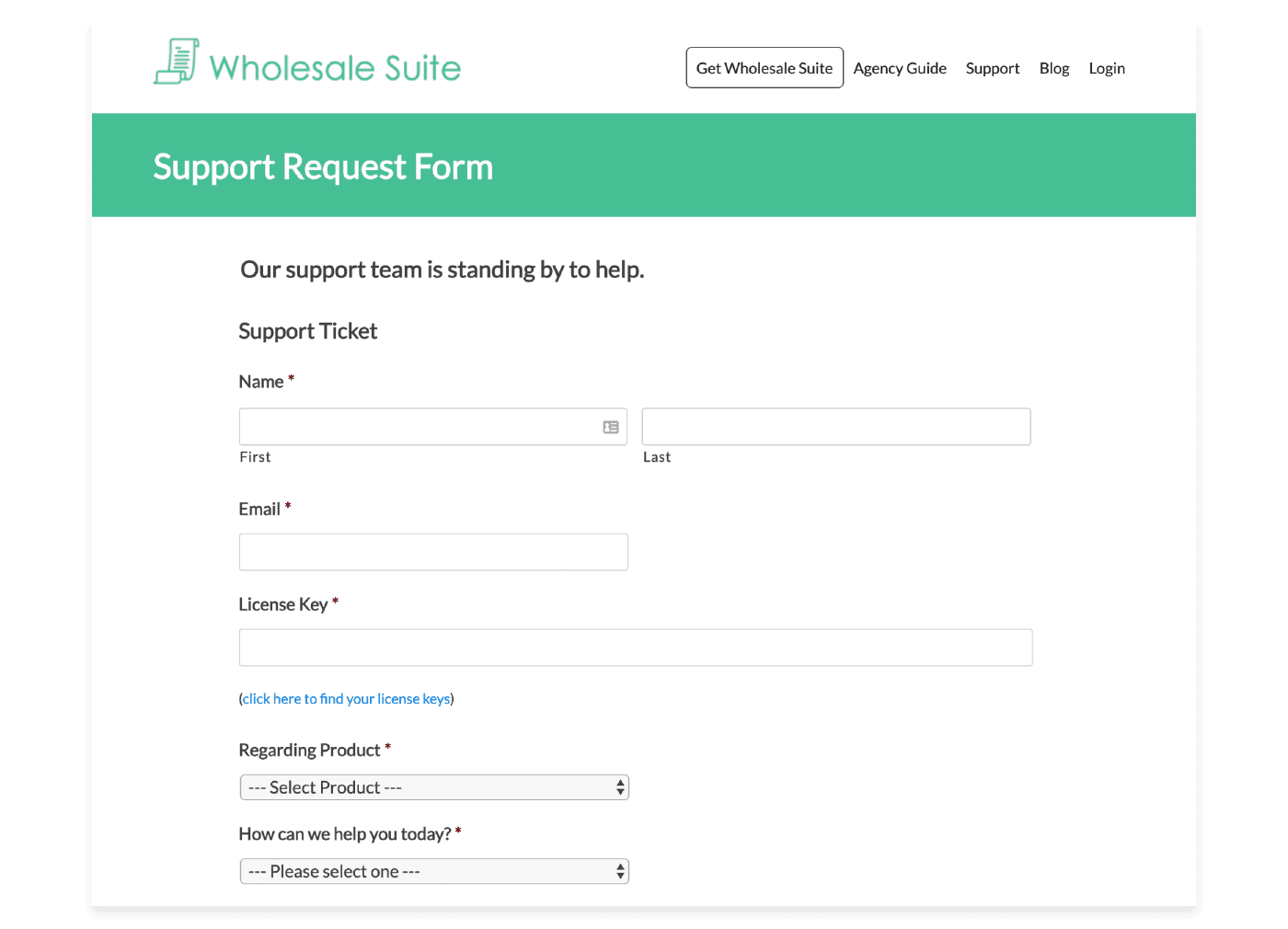
On Rymera’s end, they’ll use this information to filter and organize their inbox. Before even opening an email, they can get a clear view of the customer relationship, product, and issue at hand.
Rymera’s founder is able to get a high level view of customer concerns at all times. Meanwhile, team members can easily knock out replies by prioritizing issues and responses.
E-commerce stores
Parabo Press uses Groove’s support platform to deliver awesome customer service to photo takers looking to print their work in a unique way.
As an e-commerce company, customers expect clear and quick answers to their questions with minimal effort. Parabo uses Groove’s Knowledge Base to answer FAQs.
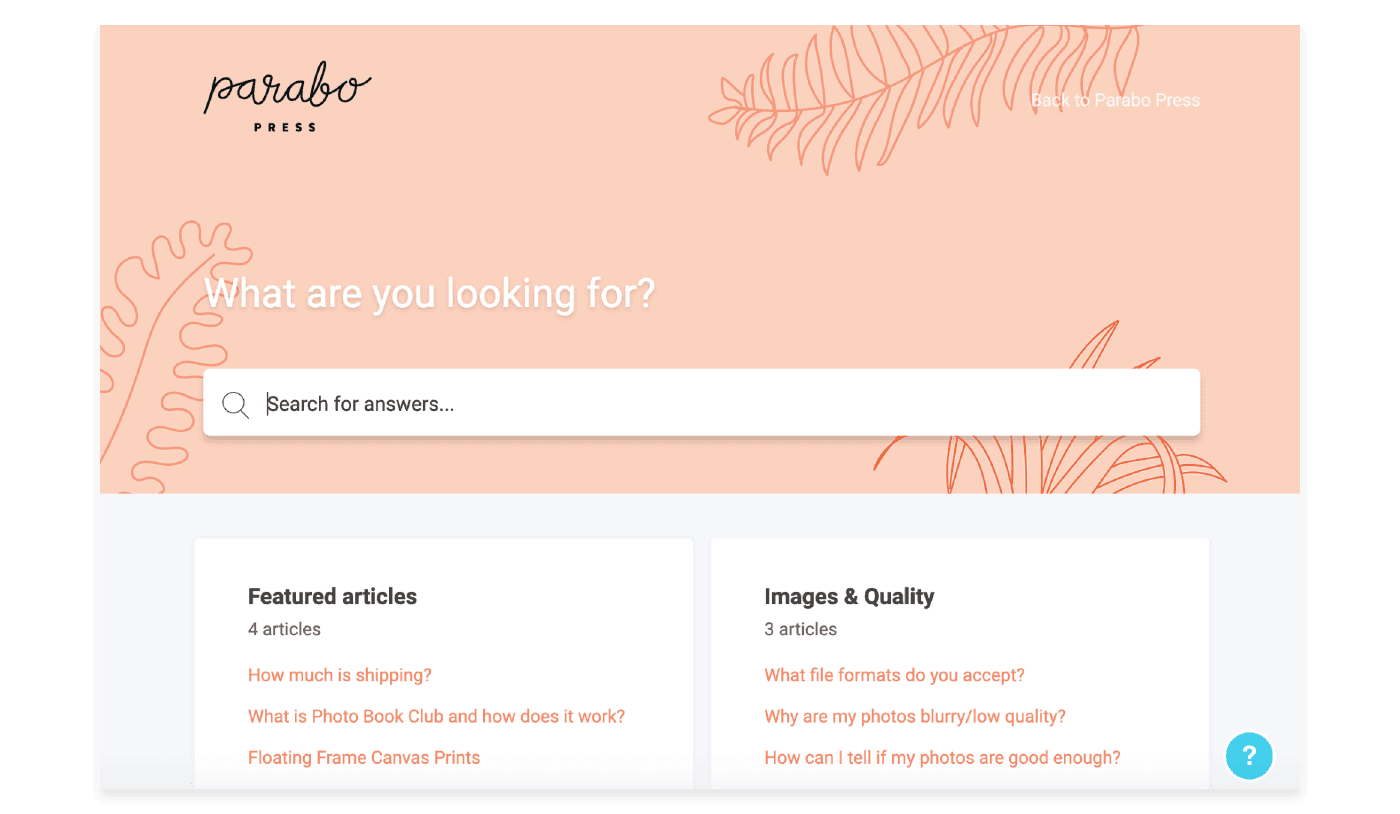
Parabo prevents customers from bouncing by anticipating common concerns. They can increase sales and customer satisfaction, while decreasing support email volume, with their self-service portal.
Consulting and development services
Lolly Labs keeps their consulting and software development clients happy with Groove’s customer support system.
The margin for error is slim at a growing startup. Prior to Groove, Lolly Labs used free Google tools such as Gmail and Spreadsheets to keep track of sales leads, support issues, and customer feedback.

Using Gmail, we had multiple cases when more than one person would send a similar response to the same email. Other times, emails were just getting lost.”- Todd Levesque, Designer at Lolly Labs
Emails continued to pour in as Lolly Labs researched new support solutions. They needed a software solution that was easy to learn and quick to implement.
Groove scored highest in their expectations for price, features, and ease of use. Without any training, Lolly Labs ramped up on the new software and breathed a sigh of relief as their support efforts finally fell into line.
Note: 2,000+ companies use Groove to delight customers with fast, personal support at scale. All without breaking the bank. Start your free 7-day trial today! (No credit card required)
What do I look for when researching customer service systems?
Choosing the right support solution comes down to satisfying the unique needs of your business. Start with your customer service teamsupport, determine their needs, and then take into account the current and future needs of your business.
Put together a list of options, then test-drive each one. Evaluate based on the following features:
Inbox
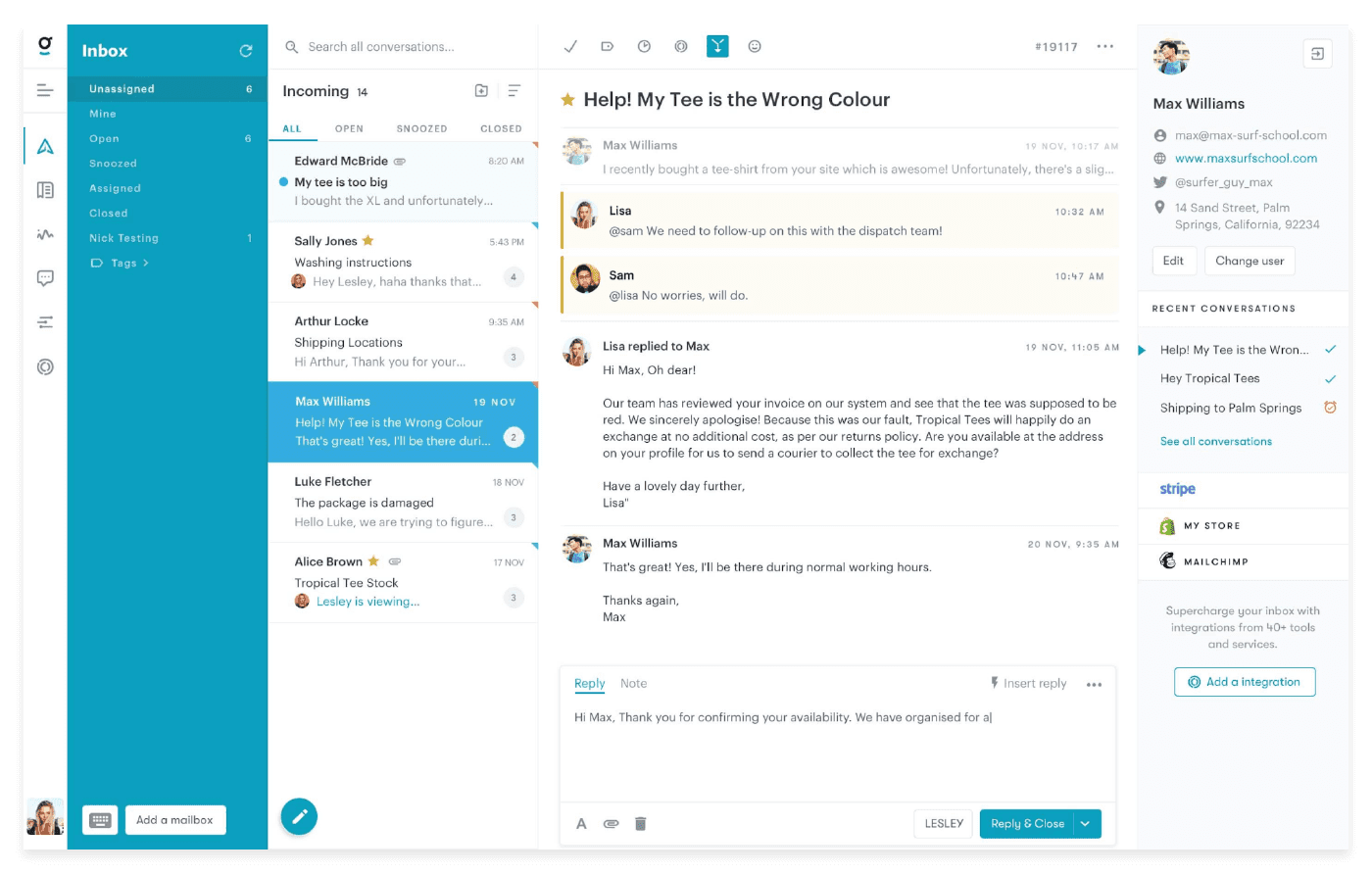
Chat directly with your customers from the inbox, whether through email, phone, social media, or live chat. Collaborate with teammates without ever leaving your help desk software. Leave notes, tag issues, and organize everything in a simple and intuitive way.
Knowledge base
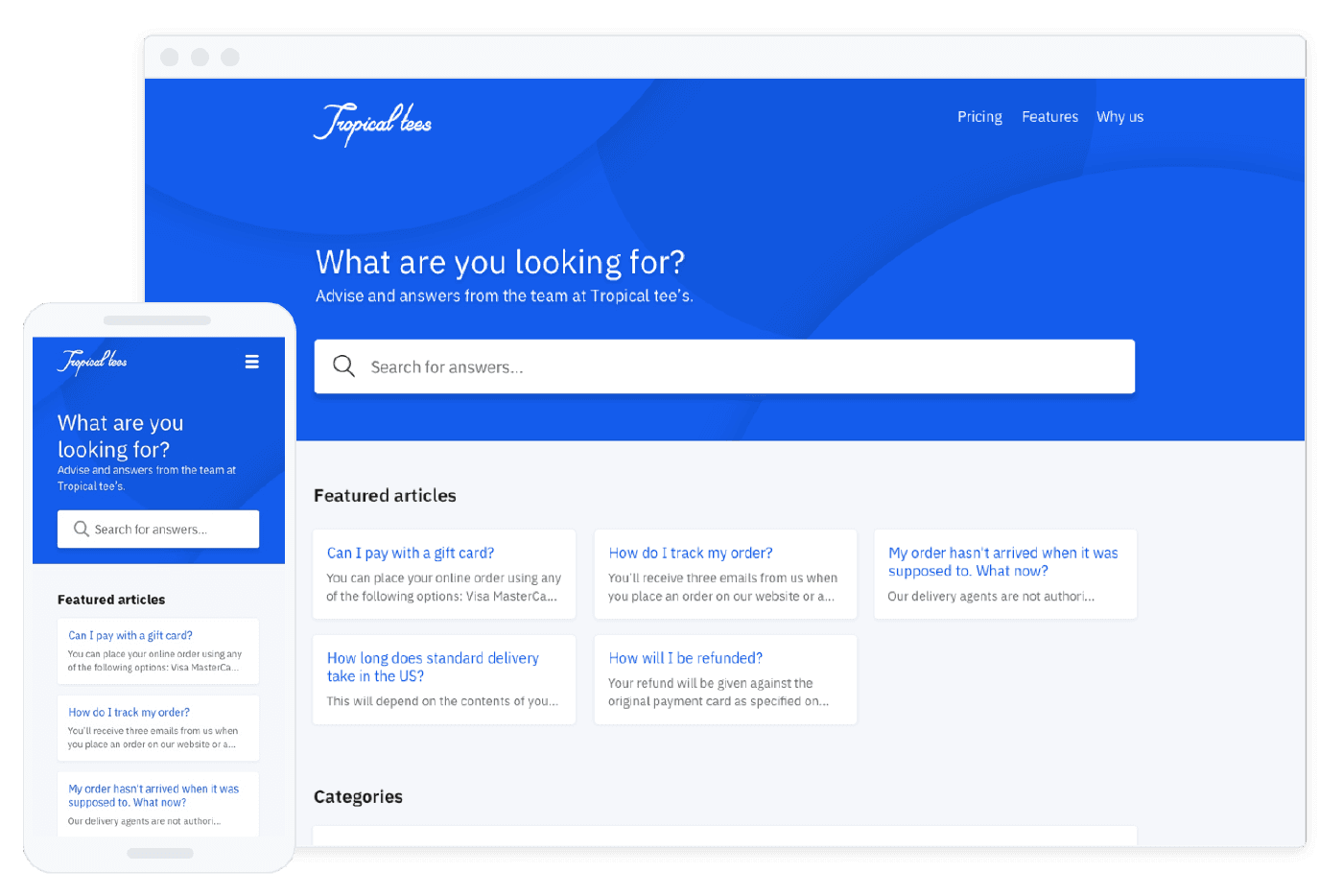
Reduce your support volume and increase satisfaction with a 24/7 customer self-service knowledge base. Check for easily customizable templates and editing tools to keep your brand consistent and stay ahead of issues as your business grows. Analyze reports to track customer engagement and optimize content.
Automation
Your customer service software should be your best employee. And the easiest to train.
Automate robotic tasks like sorting emails and sending canned replies. Keep your staff focused on more valuable tasks, like personalizing interactions and enhancing the overall customer experience. Leave the artificial intelligence to the bots.
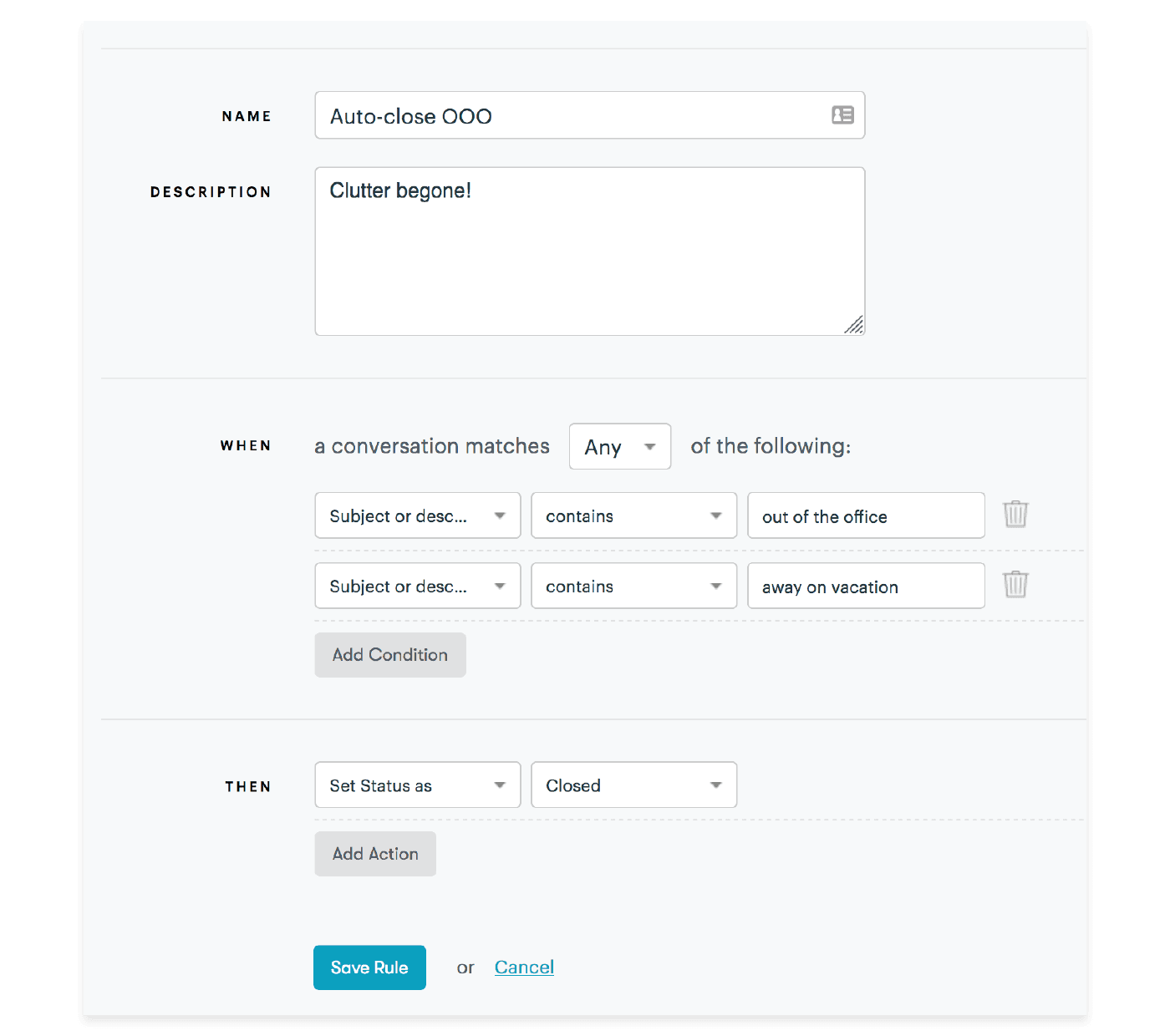
Reports
Dive deep into the metrics behind your conversations with reports. Easy-to-understand data points help you set benchmarks and hit SLA (service level agreement) goals. Quickly understand your team’s workload and identify trends to staff up when needed or train appropriately.
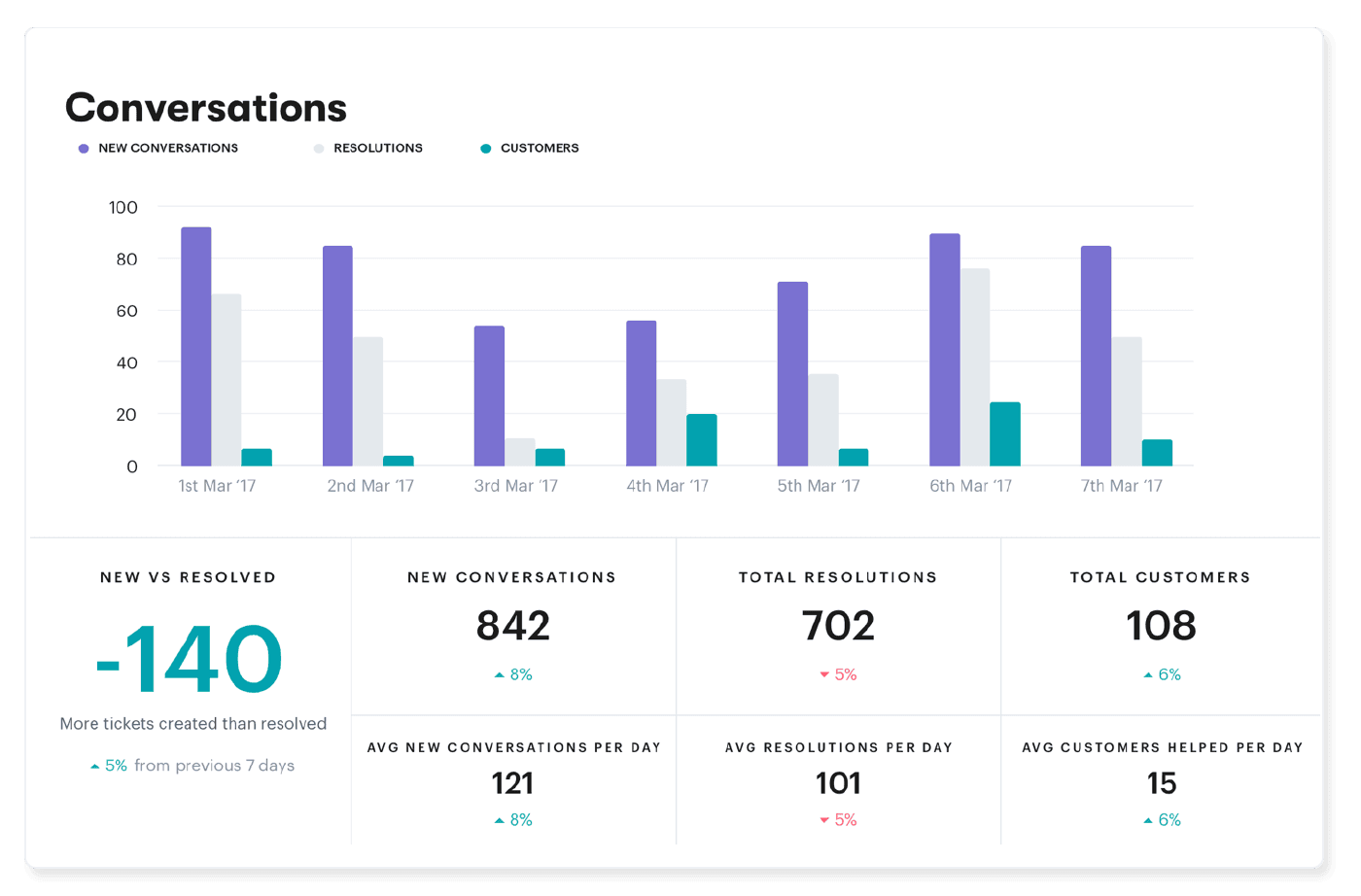
Integrations
Streamline your workflow by placing all your tools in one toolbox. Integrations allow you to connect existing business tools (like your call center, marketing automation platform, ticketing system, time tracking widget, or live chat software) with your help desk.
Common integrations include apps like Facebook, Shopify, and Salesforce.
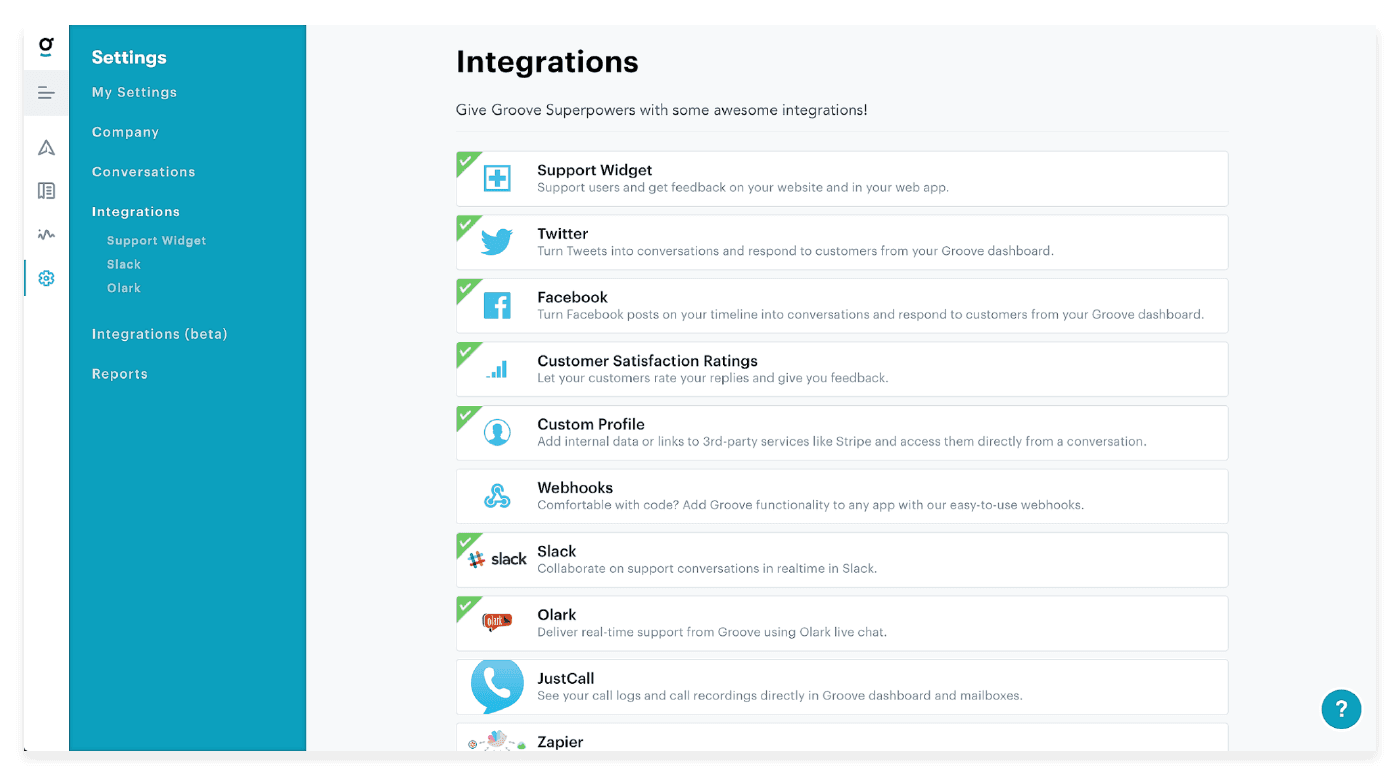
Your customer support software should be the centerpiece around which all other workflows orbit, providing agents with every detail necessary to resolve customer issues.
Choose the right customer service software for your business
Decision-making begins with research-gathering. At Groove, we’ve done the research for you.
Our article on help desk software lists five steps to choosing the right solution:
- Start with your customer service team
- Determine your business’ specific needs
- Put together a complete list of options
- Evaluate and narrow down your choices
- Test-drive your shortlist, then drive it
And, our post on customer service tools offers a tool-by-tool checklist of ten customer service tool types for small businesses. Rather than an unwieldy “listicle,” we explore how each type works from the inside out and the outside in.
The customer service solution you choose will end up becoming second-nature and indispensable to your company. Set your business up for sustainable, exponential growth with the right customer service management platform, and improve customer loyalty for years to come.
Note: 2,000+ companies use Groove to delight customers with fast, personal support at scale. All without breaking the bank. Start your free 7-day trial today! (No credit card required)
5 Help Scout Alternatives: Why Growing Support Teams Switch to Groove
Groove Fixes What Teams Don't Like About Help Scout: Flat Pricing, Built-In AI, and Native SLA Management. See the Full Comparison.
How Helply's Hallucination-Proof AI Eliminates the #1 Fear of AI Customer Support
Customer Support Automation That Hits 65% AI Resolution, Guaranteed. Helply's Action-Based AI, Safe Escalations, and Optimization.