
Customer Testimonials: Where, When, and How to Use Compelling Stories to Build Trust and Credibility

Customers rely on testimonials to gauge if a product or service is worth taking a leap of faith for.
In fact, 84% of customers trust online reviews as much as personal recommendations. Whether it’s choosing a new coffee maker or trying out software to increase team productivity, we all look out for social proof—reviews, mentions, referrals—for assurance that we’re making the right decision based on what others have experienced with this product.
You probably already have customers personally telling you how much they love your company. It’s time to turn those words of support into public testimonials and convert even more loyal customers.
In this guide, we’ll show you how top performing companies use customer testimonials to build trust. By the end, you’ll know:
- Who to ask for a customer testimonial
- When to ask customers to write a testimonial
- How to design testimonials so they tell a story that resonates with your customers
- Where to publish these stories so they get the most exposure
It pays to focus your time and effort on gathering good quality customer testimonials, as powerful stories can increase conversion rates by as much as 15%. Let’s dive into each step of the process of using customer testimonials, and how you can implement these strategies to grow your own business.
Sugar vs. Energy: Creating a great customer testimonial that converts
What are customer testimonials?
Customer testimonials are stories about a customer’s experience with your product, service, or brand. They’re positive experiences your customers remember so well, they want to spread the good word to others looking for a similar solution to their problems.
Authentic and well-written customer testimonials are valuable because of the impact they have on the customer’s decision-making process. They:
- Build credibility and trust. In a study by Vendasta, 68% of consumers trust a local business more after reading positive reviews about them.
- Increase click through rates in online search rankings, giving you an edge over tough competition. In a BrightLocal survey, 56% of searchers choose a product from the results based on the reviews.
- Drive new customers to the business. Testimonials turn browsers into buyers. Browsers are 58% more likely to convert after reading reviews and testimonials.
But for customer testimonials, “power in numbers” doesn’t always apply. Collecting hundreds of generic, sugary testimonials by a random Joe Shmo doesn’t convert as well as inspirational, energizing customer stories.
Sugary testimonials taste sweet, but are like empty calories. They don’t fuel customer action. They don’t have any substance behind them, either because they are too vague to be compelling, or because they are obviously fake like overly sweet diet soda. For example:

“Great service.”
— Bob S., New York
“This accounting calculator changed my life because it’s just so amazing and awesome. I love it more than any program I’ve ever installed on my phone, ever.”
— Betty S., San Francisco
Energy testimonials are engaging and authentic. They have meat to them, and are specific enough that the testimonial resonates with prospects. Energy testimonials might be from industry leaders who are obviously excited about the product, and that energy shines through in their words.


These momentum-generating stories are more specific, relatable, and motivational as they plot the customer’s journey from the day they signed up to the defining moment your product solved their biggest pain point. Extra points to be gained if they’re written by authoritative figures of your industry, as Neil Patel shares how conversion rates decreased when they showcased small to medium businesses versus Fortune 500 companies as clients to prospects:
“When we showed our potential clients all of the small and medium businesses we worked with versus only showing them large brands we worked with, our conversion rate of locking them in as a customer decreased by almost half.”
Who should you approach for a customer testimonial?
High-converting testimonials are more than just a quick two-line review about “excellent service” or “fast shipping.”
Instead, they’re specific about the voice behind the testament and their position within their business and industry. As you build your database of quality customer stories, you’ll want to keep these customers under your radar:
- Customers who belong to your target audience’s industry: these are folks who share the same pain points as many of your other customers, and so their experiences are relatable.
- Customer who are of a notable position in their company: if you’re targeting a specific niche (e.g. executives, team leaders, or work-from-home moms), you’ll want to feature testimonials by people of the same or similar position within their company or organization. High-profile testimonials by thought leaders of your industry are equally valuable, as people tend to trust what authoritative figures would recommend and approve of.
- Customers who believe your product can solve their problems: having meaningful conversations with customers opens windows of opportunity to learn more about why they chose your product, how you helped them succeed, and live to tell the tale about it.
When should you ask for a customer testimonial?
With your ideal customers in mind, the next step would be to reach out for a positive testimonial.
Seems easy enough, right?
They’re your biggest advocates. They’re happy with your service and are more than willing to write up a review of your product.
But you want great reviews with your customers’ experiences fresh in their mind, not mere afterthoughts in short sentences. This means capturing these experiences at the right time by knowing when to ask for a customer testimonial.
Here are a few great examples of when to approach customers for a testimonial:
- After they have signed up for your product: Set the stage for great testimonials early by setting a baseline. Every single person who signs up for Groove gets an email that asks why they signed up. It’s a great way to initiate a meaningful conversation and to highlight specific problems your product can address.
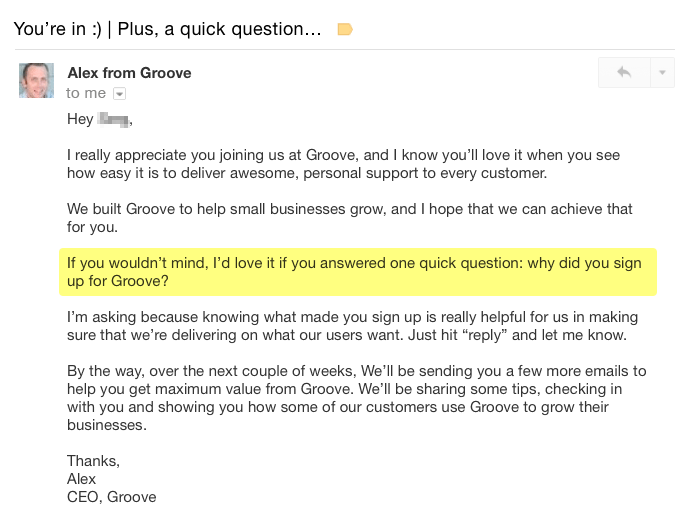
We then follow-up with the customer in a few weeks or months to see how they are doing. If they’ve reached their goals or underwent significant change thanks for a specific feature of the product, we ask if we can share their success publicly. Sharing these inspiring customer stories allows us to connect with prospects undergoing similar challenges on an even deeper level.
- When they’ve said great things about you elsewhere: this can be a direct email to support, a mention on Twitter or Facebook, or posts in online community platforms like Reddit. You’ll want to reach out to these people, let them know you hear them and appreciate them, and ask if it’d be possible to feature their testimonials in your marketing materials.
- When they’ve become successful with your product: customers who’ve achieved their goals through your product are eager to provide concrete details about how your product brought down their biggest roadblocks, whether that’s saving more time, bringing in more sales, surfacing more detailed insights about their work, and more. Customer success teams can identify these customers during quarterly business reviews.
At Groove, our customer success team @mentions the marketing team directly in Groove whenever a customer shares positive feedback over email. The team responds to the customer, inviting them to share their success story with Groove or testimonial on the website.
How do you structure testimonials to tell a compelling story?
The difference between a mediocre review and a powerful customer testimonial lies in the details.
It’s knowing who is behind the testimony, where are they coming from, what they’re struggling with, and how your product solved their problems.
Capturing these intricate details depends on how you guide customers to tell their story. Rather than simply asking for a review, you’ll want to take the extra step to encourage customers to dig deeper into their experiences with your company.
You can use these tips to structure and design customer testimonials so they tell a great story about your product:
Ask specific questions about your customer’s journey
Customers don’t always know what to say when they’re writing a testimonial, and we’re not making it easier by simply asking for one. To gather powerful testimonials, Sean d’Souza of Copyblogger stresses the importance of asking specific questions about your customer’s journey. Here are some examples:
- What was your biggest pain point that drove you to sign up for the product?
- What specific feature benefited you and your team the most?
- What was the result? How did the product solve your problems?
These illustrate what d’Souza calls the “reverse testimonial” in which a testimonial begins with doubt and skepticism (e.g. “My team and I had been struggling to deliver good customer support, and we weren’t sure where to begin looking.”) and ends with how the product helped them overcome and succeed (e.g. “Groove’s Shared Inbox has made it so much easier to provide quality support and hit our SLAs without anything slipping through the cracks.”)
Showcase the results in a case study
A great way to showcase the benefits of your product is through a detailed description of how your customers achieved success with your product.
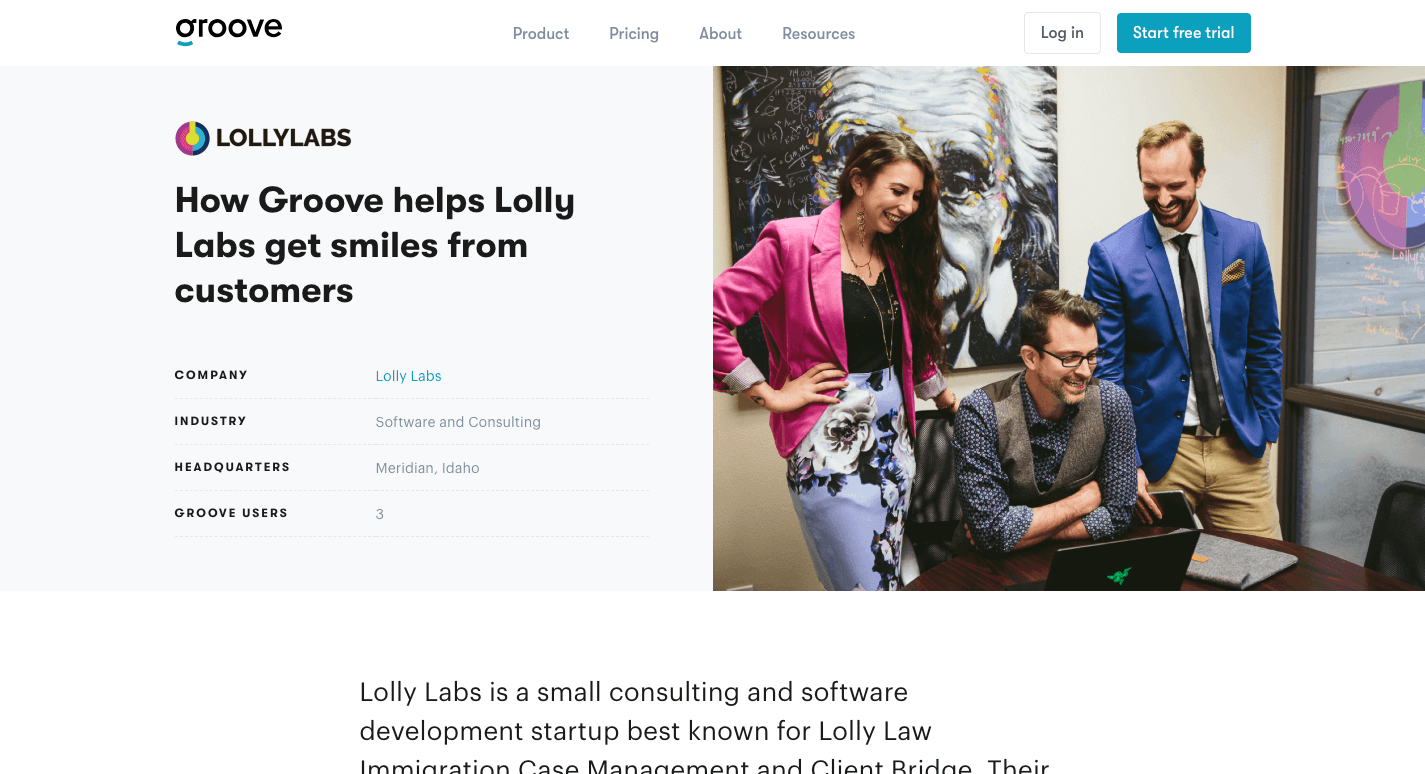
Case studies are a great format for these types of testimonials and can be published on a dedicated page on your website (more on this later) or as a PDF for prospects to download. At Groove, we publish case studies on a dedicated section of the site.
Use visual content
Engage your prospects further by turning customer testimonials into visual stories through video, photography, or both. Feature customer’s faces, their work environment, and the product in your content to really connect with the viewer.
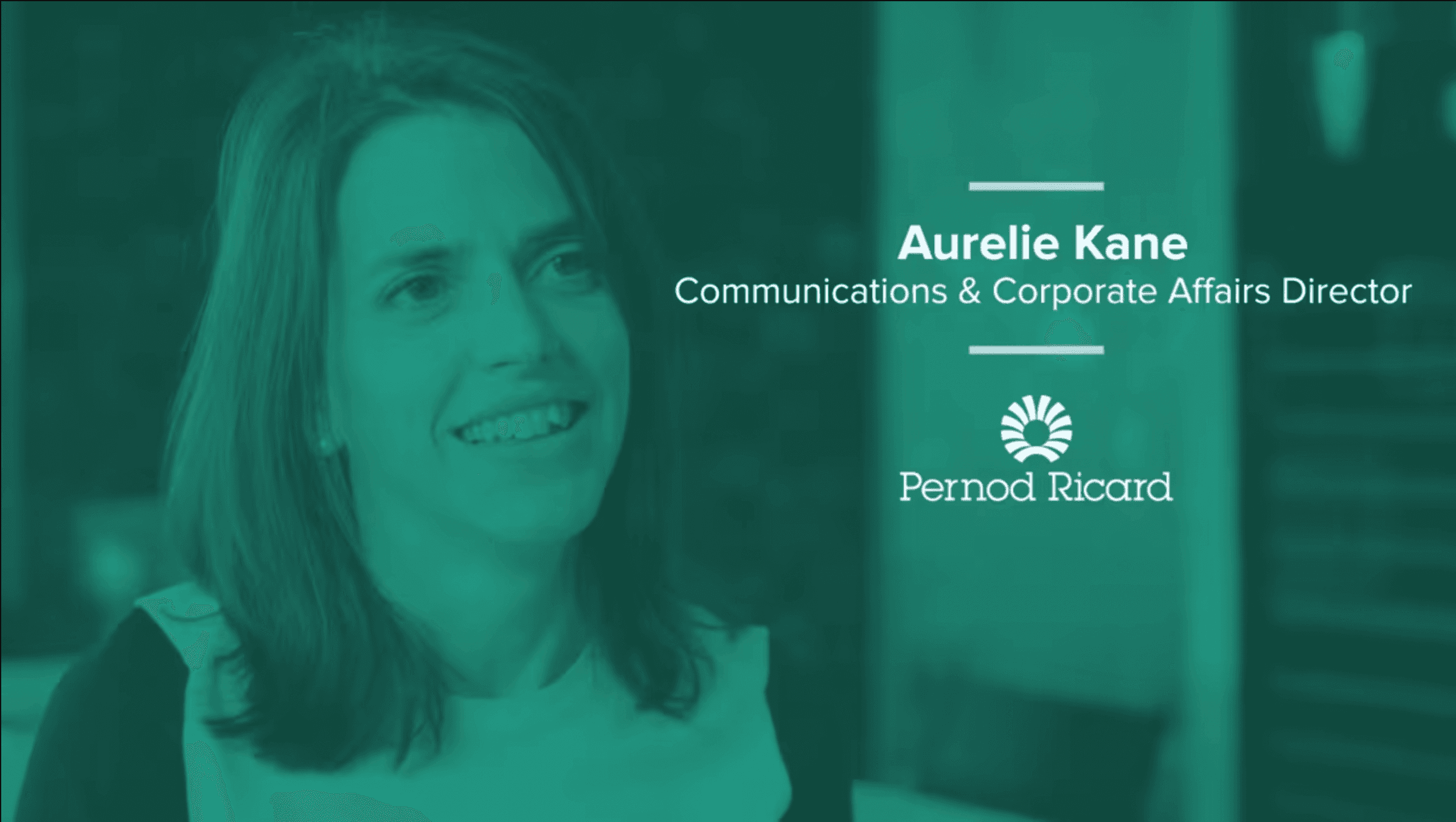
With a video testimonial, customers who work in similar industries are able to see exactly how the product works in context to Kane’s specific problems. You can have your own marketing team create these videos, or invest in a good video agency to provide the content for you.
Feature company logos
A logo on your website or beside a customer testimonial can be just as powerful a story as it is a driver of trust and credibility. They tell interested visitors that these customers trust you with their business, and that you can provide what they need.
Note: The best customer testimonials are authentic, unbiased, and given freely. Make sure you’re featuring testimonials you’ve asked permission for, and that you can include the reviewer’s full name, website URL, and position to uphold authenticity. If you’re nervous the customer might see something you’ve published about them—err on the side of caution and run it by them first!
[box]
Who’s behind this? We’re the team that makes Groove, dynamic and intuitive help desk software. While Groove is easy to use and delivers great experiences for customers, we understand it’s not the ideal solution for everyone. To that end, our goal is to guide you to the right support platform for you and your customers. If that’s Groove, then great. If another tool fits the bill better, that’s great too.
Where should you publish customer testimonials?
Your website is often the first place customers visit to gauge if your product is a good fit for their needs.
While it makes sense to publish all the great testimonials you’ve gathered front and center on the homepage, you’re leaving money on the table by not considering where else they can convert just as well.
In other words, base your decisions on data you can collect about your website.
As Neil Patel outlines on the Crazy Egg blog, use tools like heatmaps and A/B tests to see where customer testimonials are engaging your customers best, whether that’s through click rates or number of trial signups.
Besides your website’s homepage, customer testimonials can live in a number of other places including:
Landing pages
Trello does this extremely well with the Trello Inspiration Board, which showcases template boards for specific projects, themes, and purposes people can copy and customize for their own use.
You’ll also see a slideshow featuring boards created by well-known figures like Kevan Lee of Buffer or Jay Acunzo of Unthinkable Media, with a description that highlights the objectives or issues they faced, and how this board is designed to solve these issues.
User-generated content
You may not know it, but notable members of your industry may already be talking about you and your product.
You’ll find these user-generated testimonials on a blog or podcast where users test and share their thoughts about a product for others to read before making a purchase.
Here's my review of two task management apps: @todoist and @TickTickTeam
Which do I prefer?
Also a mention to @carthoughtswithdavehttps://t.co/tUBeMnJ5gP#productivity #podcast #podcaster #podcastshow #todo #productivitytools #podcasting #Review #todolists #PodernFamily pic.twitter.com/3NGZooOAG9
— Productivity Matters (@ProdMatters) March 2, 2019
What makes user-generated content special is their unbiased take on your product. There was no schmoozing, cold calling, or direct marketing that led to the making of these reviews. They are definitely worth sharing on your social media feeds and including in your own marketing!
You may consider reaching out to the author to thank them for a great review and to offer an incentive that readers may want to take advantage of. This can be a free month on top of the first 30 days of their trial or a coupon code for 10% off for their first year.
Case studies
Case studies expound on a customer’s journey from the day they realized they needed a better solution to the moment they’ve accomplished their goals and objectives, all thanks to your product. They’re longer in length and richer in form, so it makes sense to create a dedicated page on your website to feature these stories prominently.
CoSchedule, an editorial calendar and marketing platform for teams, published a dedicated page where prospects can read different customer stories from companies of various sizes and industries. A link on their footer takes you to their library, with a call-to-action button situated at the end of each article that lets you sign up for an account.
You can take the extra step of customizing case studies to encourage readers to ask questions or learn more about your product. Besides customer information and substantial data about their progress and growth, CoSchedule highlight features that were particularly instrumental to the customer’s success.
Other places you can consider publishing customer testimonials:
- Exit intent popups
- Knowledge base articles
- Contact Us page
- In your blog’s sidebar
Again, feel free to experiment and see which of these areas work well in encouraging customers to engage with your testimonials and learn more about what your business can do for them as well.
How to Apply This to Your Business
If you haven’t considered using customer testimonials already, the easiest place to start would be talking with your existing customers.
Take time to converse with your customers to learn who they are, the issues they’re struggling with, and how your product has made an impact on their business. Not only does it give you the materials for a great customer testimonial, but it also opens up opportunities to discuss how customers succeed with your product.
With a handful of your best customer testimonials, whether on your website or your marketing materials, you can cut through the noise to establish your credibility. Your prospects are sure to feel they’re ready to take that leap of faith and trust that you have exactly what they need to solve their biggest problems.
5 Help Scout Alternatives: Why Growing Support Teams Switch to Groove
Groove Fixes What Teams Don't Like About Help Scout: Flat Pricing, Built-In AI, and Native SLA Management. See the Full Comparison.
How Helply's Hallucination-Proof AI Eliminates the #1 Fear of AI Customer Support
Customer Support Automation That Hits 65% AI Resolution, Guaranteed. Helply's Action-Based AI, Safe Escalations, and Optimization.