
How To Grow Your Business By Providing Strong Customer Value

When setting out your business strategy, it’s vital to avoid falling into the ‘churn-and-burn’ trap. This is when you focus on getting the customer’s money as soon as possible, and neglect to put enough effort into ensuring a high-quality product or service.
While you probably wouldn’t do this on purpose, it’s easy to focus so much on hooking new customers that you neglect retention. This hurts your business’ growth over the long term, particularly when you consider:
- How long the customer acquisition cycle can take
- How high the customer acquisition cost (CAC) can be
It’s much cheaper and more profitable to keep customers than to attract new ones. So in this post, we will discuss how to make sure you provide so much value that they never want to leave.
What Is Customer Value?
In a nutshell, customer value is the “bang for your buck” that you offer buyers. It’s what your customer feels your product or service is worth, especially when compared to the alternatives.
Customer value can be further broken down into a few key categories:
- Perceived Value: Your customers’ opinion on whether your product or service is worth the price.
- Psychological Value: The experience customers have when buying and using your product.
- Value Proposition: The promise you make about the worth and benefits of what you’re selling.
When customers decide whether to take a chance on your business, they’re sizing up whether the cool features, reliability, and brand reputation make them feel like they’re getting a sweet deal.
Of course, to some degree this perception of value is subjective. What’s valuable for one buyer might be less so for someone else. Each customer is unique, and so is their perception of what’s worthwhile.
Still, with the right approach you can maximize the odds that what you’re offering is genuinely valuable to the bulk of your target market.
The Key Components of Customer Value
People don’t think about value in isolation. They look for value for money, comparing the benefits they receive against the costs they incur.
Total Customer Benefits
Total customer benefits includes everything the buyer gains from your product or service. This includes the obvious aspects, like features and quality, but also intangibles such as convenience and reputation.
Here’s what they’ll be looking for:
- Product benefits. For physical products, quality and features matter a lot. Is it durable? Does it do what the customer needs efficiently?
- Service benefits. With services, features still matter but quality is king. Are customers getting the support they need? Is the service making their work or life easier?
- Emotional benefits. Sometimes what’s important is how a product or service makes you feel. Does it ease stress, or improve the customer’s confidence in tackling an important task?
- Convenience. Is the product or service easy to access and use? These days, this matters a lot.
Total Customer Costs
The total ‘costs’ to the customer include more than just the price tag. They involve every kind of cost you face when getting a new product or service.
Here’s what will affect customers the most:
- Monetary cost. It’s not all about money, but money matters a lot to most buyers.
- Time cost. The time customers spend buying and learning to use the product is also impactful. Time is money, after all!
- Energy cost. If the customer has to put in a lot of effort to learn or use your product, that’s a downside.
- Psychological cost. This includes worrying about a purchase, and the stress of dealing with poor service.
By weighing these factors, the customer will get an overall sense of the value a product or service offers. Of course, some of these might be more or less relevant to your particular offerings and market, so make sure you understand what your customers care about.
Measuring Customer Value
Measuring customer value is essential to understanding what drives your customers’ choices and loyalty. There are both qualitative and quantitative measures that offer unique insights into customer satisfaction.
Qualitative Measures
To get the full story from your customers, you need to listen to their words. Qualitative measures are all about the why behind the numbers. You can gather rich data from customer feedback using tools like:
- Interviews: Have a casual chat with your customers to gain deeper insights.
- Focus groups: A group discussion can uncover a wealth of feedback.
- Open-ended questions on surveys: Encourage customers to share their thoughts in their own words.
This feedback paints a picture of your customers’ true feelings, and the perceived value they get from your products or services.
Quantitative Measures
Now, on to the hard stats. Quantitative measures rely on numerical data to give you an objective look at customer value. You can use:
- Satisfaction surveys: Scale-based questions that let customers rate their experience.
- Net Promoter Score (NPS): A quick survey measuring the likelihood that customers will recommend your company.
- Customer Lifetime Value (CLV): A metric that tracks how valuable a customer is to your business over time.
Using these methods, you can track trends, forecast behavior, and understand what areas of your business or offerings might need tweaking to boost customer satisfaction.
The Role of Brand in Customer Value
When you think about your favorite products, chances are it’s not just the product itself you’re attached to – it’s the brand behind it as well. That’s because branding significantly affects customer value.
There are a few key elements in that equation:
- Brand Image. The visual and emotional impression customers get from a brand. Their perception of your brand’s image could be a deciding factor. The logo, the colors, the marketing – they all create a persona that speaks to potential buyers.
- Trust and Reliability. How much customers can count on the brand to meet your expectations. When a brand consistently delivers high-quality goods or services, it earns trust. This reliability makes buying decisions easier and enhances the brand’s value in customers’ eyes.
- Brand Reputation. The collective opinions about a brand’s character and quality. A strong reputation is a form of social proof that can attract new customers and retain existing ones.
Attractive brands pull people in, not just with products but with a persona that resonates with them. Think of brands as friends. Your target customers are more likely to stick with your brand when it’s reliable, trustworthy, and has a great reputation.
4 Tips for Enhancing Your Customer Value
There are many ways to improve the value you provide to customers. Let’s take a look at four top approaches you can implement right now.
1. Understand What Your Customers Want
When you’re looking to increase the value for your customers, remember that the one-size-fits-all approach is as outdated as flip phones.
Each customer segment craves something unique, a little tailor-made attention that can lead to them sticking around and purchasing more.
First things first: You’ll need to segment your customer base. Picture a high-end boutique; it organizes its products not just by type but by who’s likely to buy them. You can do the same by diving into your existing customers’ demographics, behaviors, and needs.
Here’s a quick breakdown of what to consider:
- Demographic segmentation: Age, income, and occupation could influence purchasing behavior.
- Behavioral segmentation: Look at purchasing habits or product usage frequency.
- Psychographic segmentation: This is about understanding your customers’ beliefs, values, and lifestyle.
Once you have your segments, it’s time to tailor your offerings. Each segment has its own set of needs and preferences. If you start by identifying what these are, you can then adjust your product or service accordingly.
Let’s say you have a segment that’s all about eco-friendly products. Maybe you can highlight your eco-lineup for them specifically. Tweaking your message so it speaks directly to a segment’s core desires can be powerful.
When it comes to actually communicating that message, imagine you’re telling a friend why they’d love a certain product. You’d want to keep it casual, use language they relate to, and make sure they see the value it adds to their life.
Here’s one simple way you could track your goals and approaches:
Customer SegmentTailored OfferingsMarketing ApproachEco-ConsciousGreen products showcasedEmphasize sustainabilityBargain HuntersDiscounts & value packsHighlight savingsTech SavvyLatest gadgets front and centerTalk tech specifics
By zoning in on what makes each segment tick, you’ll turn them into loyal fans who feel seen and valued. And they’ll probably thank you by coming back for more.
2. Optimize Your Marketing and Communication
When you’re looking to connect with your customers on a deeper level and improve perceived value, the right mix of marketing and communication strategies can do wonders. It’s all about creating and delivering value that meets the customers’ needs.
First, you’ll need to map out a plan. Marketing is your playbook for how you’ll let potential customers know you’ve got what they need. Before you can get started, you’ll need to:
- Identify your offerings: Jot down what makes your product or service stand out.
- Know your audience: Figure out who would love your offerings. That’s your target market.
Now, how do you get the word out? Communication is the key. In particular, you’ll want to:
- Create tailored messages: Speak their language and address how you can solve their problems.
- Maintain consistency: Keep your message on point and unified across all channels.
Sure, you want to boost those sales numbers. However, remember that it’s not just about bombarding folks with ads. It’s about convincing them that they need what you’re offering.
3. Encourage Customer Loyalty
Customer value and customer loyalty have a lot of things in common. The strategies you apply when trying to build loyalty are very similar to those that build value for your customers.
Think of customer loyalty as a two-way street. You give customers reasons to stick around, and they keep coming back for more.
You might want to start with a rewards program. Rewards can come in different flavors, such as:
- Points for each purchase, which they can exchange for discounts or products.
- Tier systems that unlock exclusive benefits as customers interact more with your brand.
- Renewal perks for those who stick with your services over time.
Next, be sure to personalize your approach. Use data to understand buying patterns, which helps you craft offers and communications that resonate with your audience by:
- Personalizing emails: Use their name, and recommend products they might like.
- Remember important dates: Send a birthday discount.
- Ask for feedback: Show that their opinion shapes your business.
Finally, you can measure your customer lifetime value (CLV). This is the total worth of a customer during their relationship with your company.
High CLV often aligns with loyalty, so keep an eye out for trends and adjust your strategies to keep this number growing. Just keep in mind that the quality of your products or services still has to come first.
4. Leverage Customer Service To Enhance Value
To enhance customer value, it’s pivotal that you upgrade your customer service game. Quick responses to issues and real, useful help can turn a one-time buyer into a lifelong advocate.
Practice Quality Communication Skills
At its core, delivering excellent customer service involves going beyond what’s expected to surprise and delight your customers. Here are a few tips for getting started:
- Engage in active listening: Paying close attention to what customers say allows you to provide solutions that hit the mark.
- Practice empathy: Showing genuine care and understanding for your customers’ situations builds a strong relational foundation.
By focusing on excellence in every communication, you create memorable experiences that keep customers returning.
Provide an Omnichannel experience
Customers expect a seamless experience, regardless of the support channel they use. Omnichannel customer service integrates all of your communication platforms, so customers enjoy consistent service.
Here’s what focusing on an omnichannel approach does for you:
- Unified Brand Experience: Your brand voice stays consistent whether a customer contacts you via email, social media, or live chat.
- Easy Switching: Customers can jump from one channel to another without any hiccups or repeated information.
By adopting an omnichannel approach, you remove friction and make support more accessible for your customers.
Use a Quality Customer Support Platform like Groove
It’s hard to provide top-notch customer support when your communications with buyers are disorganized. For your support team to perform at their best, they’ll need tools that help them respond quickly, efficiently, and accurately.
With that in mind, you can improve interactions with customers and perceived customer value by using Groove. Our platform helps you keep keep track of customer preferences and support conversations.
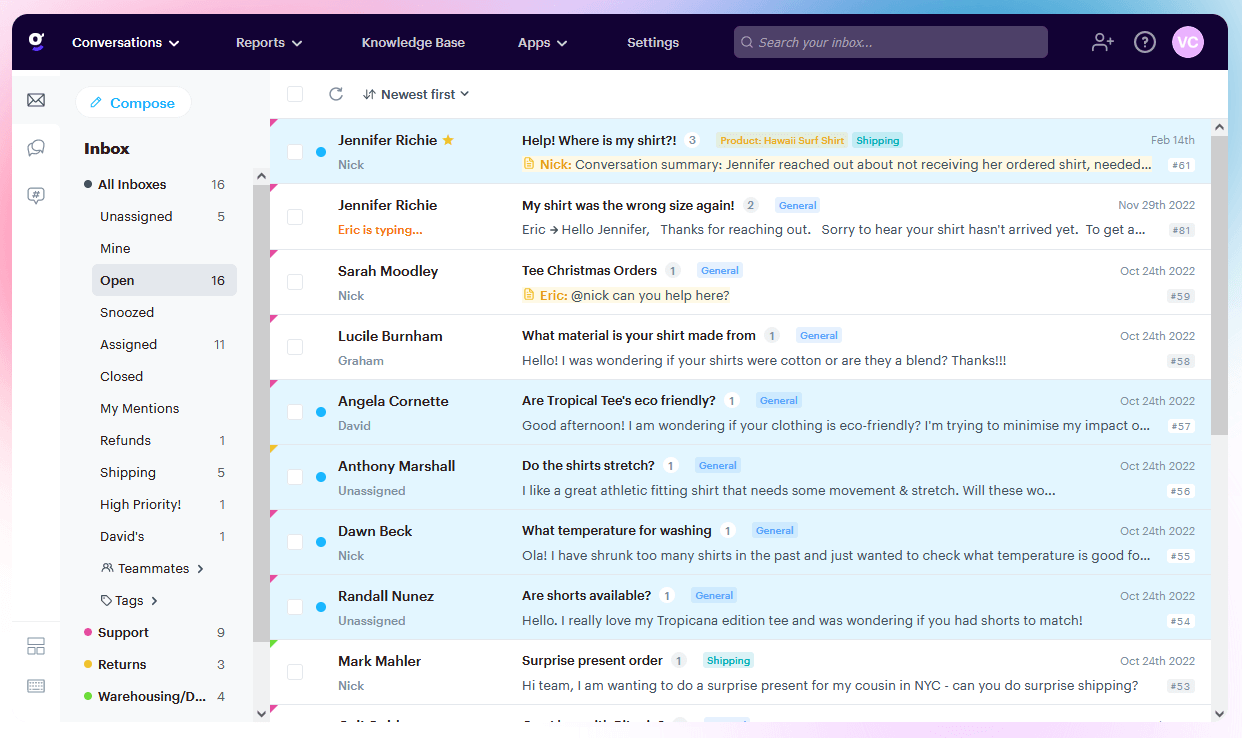
You’ll also be able to:
- Organize conversations: Keep all of your customer emails, chats, and calls in one place, and organize them based on categories or prioritization levels.
- Communicate via live chat: Fast and personalized support can increase customer value significantly.
- Provide buyers with a knowledge base: Creating a comprehensive knowledge base helps more independent customers learn features and solve problems on their own.
- Access key reporting features: Detailed reporting will show you where the main issues are, and fuel your customer support and product feature improvements.
By using Groove as the central hub for all your customer support activities, you can ensure that no detail slips through the cracks and every customer feels heard and valued.
Starting Your Journey Towards Maximum Customer Value
Tracking your business’ key analytics and metrics is important. However, what may get lost in all the numbers and statistics is each customer’s unique perception of the value your product or service provides.
Understanding exactly what they want and how well you’re currently providing it is key to maximizing your customer value. Make buyers your northern star in all situations, and you’ll do more than make sales – you’ll earn loyal customers for life.
To do that, you’ll want to make sure your customer support team has a platform that organizes and streamlines their workflows. Check out Groove today!
5 Help Scout Alternatives: Why Growing Support Teams Switch to Groove
Groove Fixes What Teams Don't Like About Help Scout: Flat Pricing, Built-In AI, and Native SLA Management. See the Full Comparison.
How Helply's Hallucination-Proof AI Eliminates the #1 Fear of AI Customer Support
Customer Support Automation That Hits 65% AI Resolution, Guaranteed. Helply's Action-Based AI, Safe Escalations, and Optimization.