5 Steps for Creating a Customer Winback Campaign

Mark Cuban’s takeover of the Dallas Mavericks is one of the best examples of a successful winback campaign.
The team was in dire straits, and Cuban understood that winning back customers was crucial to the team’s revival. So he took a bold, personal approach, setting up his desk in the sales office and directly calling former season ticket holders.
Cuban’s strategy was to tackle fan complaints head-on. He also emphasized the value proposition of attending games (even comparing ticket prices to everyday costs!), and forged emotional connections by tapping into nostalgia and promising a memorable experience. This customer winback campaign was instrumental in revitalizing the Mavericks’ fanbase.
You run a small business, not a basketball team. But the same principles apply. By following examples like this, you can reclaim your own customer base and build a more resilient brand.
Step 1: Figure Out Why Customers Are Leaving
To develop an effective customer winback campaign, you need to understand why buyers leave. Often, what may seem like small missteps leave negative impressions that push customers away.
Those missteps can fall under many categories. When trying to understand the causes of churn, consider whether your customers are facing any of these issues:
- Feeling undervalued. When you make them feel unimportant, customers often jump ship. This sense of indifference can stem from a lack of personalization (e.g., generic email blasts), impersonal communication (e.g., robotic customer service interactions), or simply feeling like “just a number” in a large, anonymous system.
- Frustrating processes. Inconvenience, unnecessary hurdles, and the feeling that they’re doing your company’s work for you can quickly send customers looking for alternatives. Even if something (your product, website, etc.) works, it can be a hassle and waste of time to use.
- Broken promises. Failing to deliver on your promises is a death sentence. Those promises can be implicit or explicit, and related to product quality, service expectations, communication timelines, etc. This severely erodes trust and damages the customer relationship.
- Poor customer service. Negative experiences with customer service representatives leaves a real impact. Rude or unhelpful interactions, difficulty reaching support, and unresolved issues can leave them feeling frustrated and unheard.
- Lack of engagement and communication. Many customers want you to stay in touch and provide value beyond the initial purchase. If you don’t engage them through loyalty programs or newsletters, they’ll feel forgotten (or simply forget about you).
- Competitive offers. Sometimes, customers leave simply because your competitors are giving them a better deal. That’s why you need to consistently monitor your industry and ensure that you’re providing a compelling value proposition.
That’s a lot of potential issues! And although many probably don’t apply to your business, it’s likely there are at least a few areas where you can improve.
Gathering Customer Data and Feedback
If you’re not sure what’s causing churn, there are two ways to find out. They’re most effective when used together.
First, gather quantitative data on your customer base. Make sure you’re tracking key customer experience metrics and customer service analytics. Then look for trends in customer behavior, and see how they correlate. If churn increases along with dips in customer service response times (for example), this points you towards the source of the issue.
Need an easy way to track those metrics? Our support helpdesk Groove offers a suite of features that streamline customer service, gather feedback, and analyze behavior.
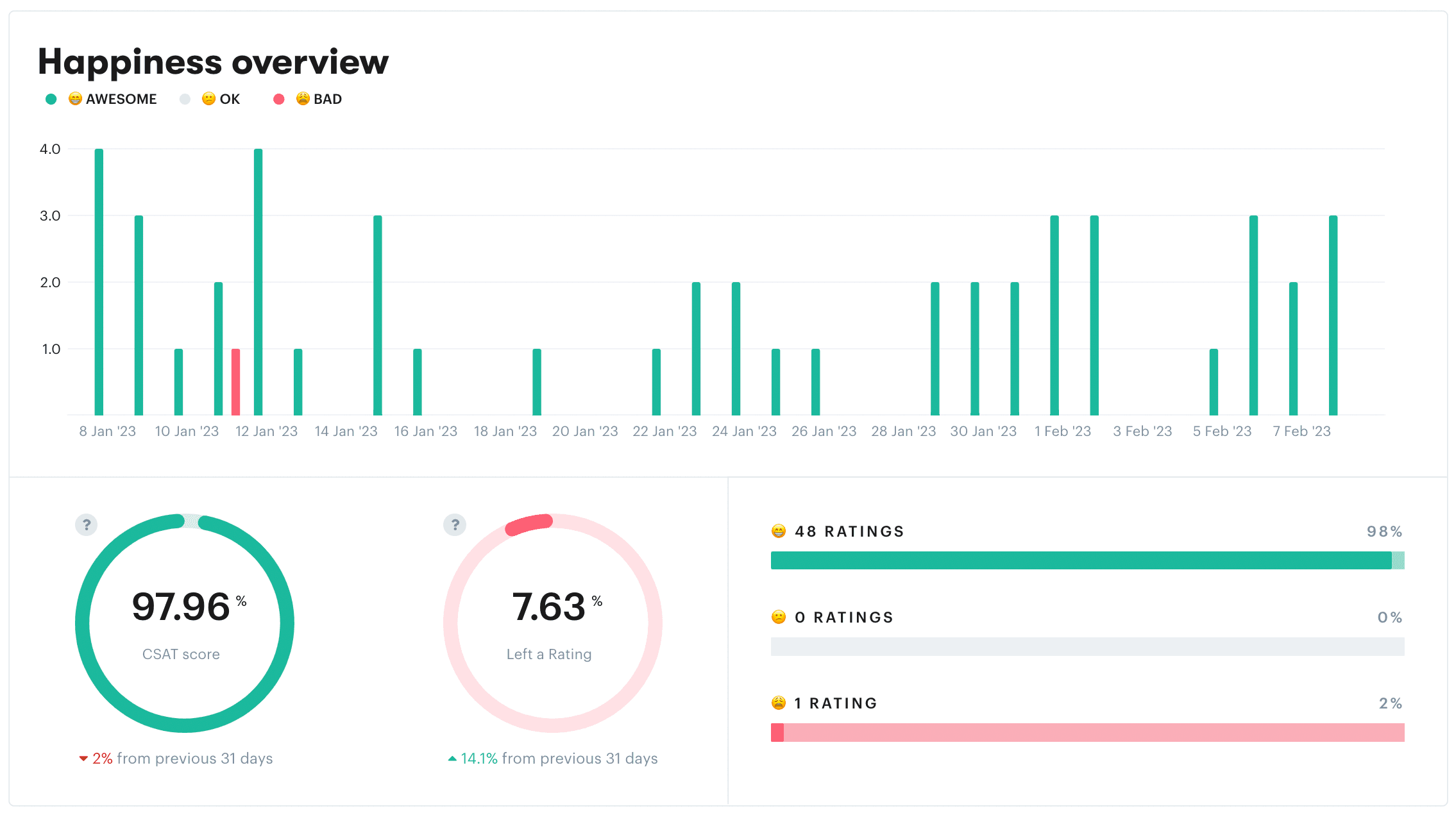
With it, you can:
- Benefit from automatic reporting features. Groove’s reporting tools require no configuration, and let you monitor key metrics like response times and resolution rates (both team-wide and for individual agents). Customizable reports allow you to focus on the metrics most relevant to your business.
- Send customer satisfaction surveys. Automatically trigger simple ‘are you satisfied’ surveys after support interactions. You can view both your average satisfaction score and individual responses.
Second, gather qualitative feedback directly from your buyers by:
- Keeping an eye on social media and reviews, as frustrations are often voiced publicly.
- Soliciting direct customer feedback via surveys, and checking for recurring themes in complaints or questions.
- Sending personalized emails to recently churned customers, and asking them about their reasons for leaving and improvements they’d suggest.
- Analyzing ticket data. This is something else Groove can help with. All customer support interactions are centralized via a shared inbox, so you can easily analyze tickets for recurring complaints or questions. The ability to tag and categorize tickets makes identifying trends even simpler.
No matter how many issues turn up, keep in mind that trying to win back everyone at once can be ineffective. It’s better to focus your initial campaign on a specific segment of lost customers who share a common reason for leaving. Once you’ve addressed their issue, you can move on to the next.
Step 2: Determine What Will Bring Them Back
Now that you understand why buyers left, it’s time to figure out what might entice them to return. This step is crucial for crafting a successful customer winback campaign.
First, you’ll want to analyze and address specific pain points. Review the data and feedback you’ve gathered, as well as the trend you’ve identified and will be prioritizing first. Then consider what tailored solution will directly address those customers’ primary reason for leaving.
If at all possible, your solution should be concrete, specific, and easy to explain. For example:
- Pricing issues: Offer a comeback discount or a more flexible pricing tier.
- Technical difficulties: Share recent improvements or offer personalized onboarding support.
- Lack of features: Showcase new functionalities that address specific customer needs.
However, keep in mind that you may need to offer more than a fix. Customers who have stopped doing business with your brand may be understandably hesitant to return. They might not trust your company enough to believe that the original issue is resolved, or that they won’t encounter other problems.
For that reason, it’s essential to enhance your value proposition and make your offer irresistible, such as by:
- Providing a steep discount on a first purchase, or a free month of subscription time
- Offering exclusive benefits for returning customers, such as priority support or early access
- Introducing new features or services that differentiate you from competitors
- Providing educational resources or training to ease customers’ return and make them feel seen
Step 3: Settle On a Medium and Method
Next, it’s time to choose the right medium and method for reaching your customers. A successful customer winback campaign relies not only on the quality of what you offer, but on how well-crafted and convincing your message is.
There’s no one right choice for every business. To settle on the best approach:
- Know your audience. Make sure you know what your customers’ preferred communication channels are, so you can reach them where they’re most likely to listen.
- Time your message carefully. Again, this requires deep knowledge of your target audience. The optimal timing for outreach might be shortly after they’ve churned, or when renewal time comes around if you sell subscriptions.
- Consider a multi-channel approach. Diversify your outreach to increase engagement rates. You could consider a combination of email campaigns, social media outreach, retargeting ads, and direct phone calls (for high-value customers). This is handy if your customer base is diverse, and a lot easier if you’re using a customer support helpdesk like Groove.
- Make sure you can track engagement. You’ll need the ability to monitor open rates, click-through rates, responses, and so on. Otherwise, you can’t know if your efforts are making a difference.
Whatever channels you choose, they should allow you to provide an easy opt-out option for your winback communications. This shows that you respect customer choices, and provides another source of feedback about your campaign’s effectiveness.
Step 4: Craft Your Winback Message
It’s time to craft your message! The goal is threefold: reconnect with lost customers, address their concerns in a satisfying way, and win back their business.
In most cases, you don’t want to jump right into the offer. Instead, these past buyers need to feel heard and valued. That starts by showing genuine remorse and demonstrating your commitment to their experience:
- Take responsibility. Acknowledge shortcomings that may have contributed to the customer’s departure. This shows that you’re trustworthy, and are willing to learn and improve.
- Offer sincere (and specific) apologies. Don’t just say “we’re sorry.” Let them know that you fully understand the issue, why it’s a problem, and why it prompted them to leave.
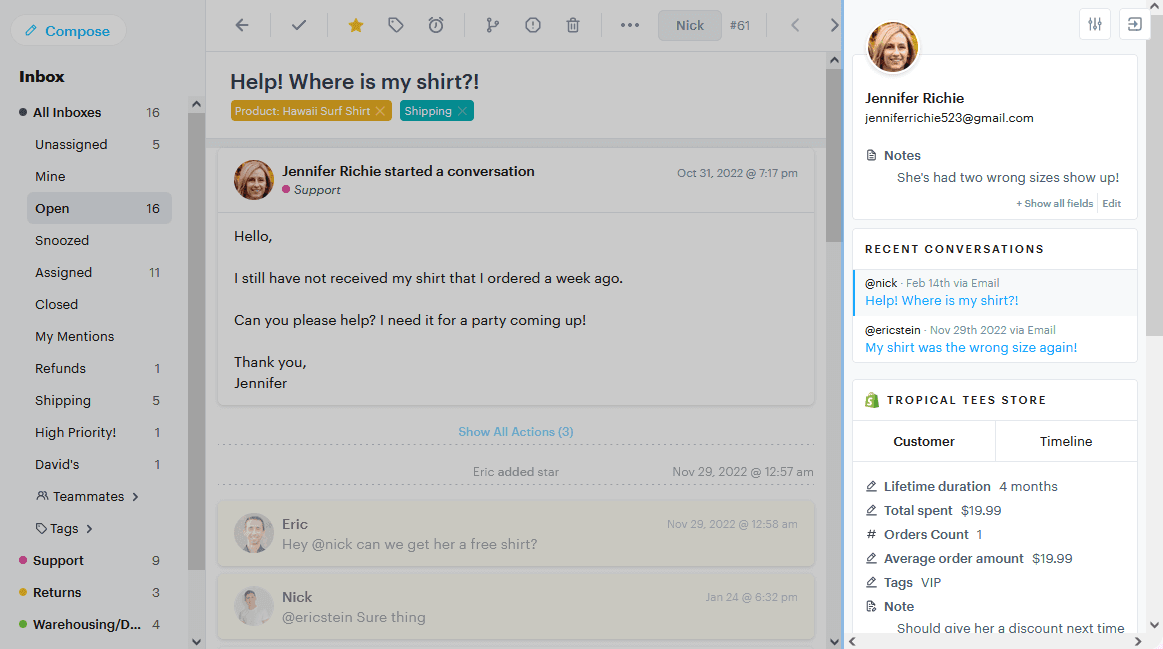
- Personalize your message. Make customers feel like you’ve reached out to them personally, by using their name and other key details. You can use Groove’s customer profiles and conversation history to personalize outreach (by referencing past interactions or purchases).
Next, you can reaffirm your value proposition. Most of our advice for that is back in Step 2, but remember to:
- Remind lost customers why they first chose you. Outline the main benefits and value your business offers. Especially if it’s been a while, a recap of your key selling proposition and differentiators can be vital.
- Emphasize what they’re missing out on. Highlight any relevant updates, new features, or improvements you’ve made recently, especially any that address other common concerns.
- Offer a compelling incentive to return. This could be a discount, a free trial, exclusive access to content, or a personalized offer based on past behavior.
Finally, you’ll need a strong call to action for maximum impact:
- Align your CTA with your message and brand. Your call to action should be clear, concise, and relevant to the overall message and the tone of your communication.
- Make it easy for customers to take action. Give customers clear instructions and direct links to relevant pages. The latter could be a dedicated landing page with your winback offer.
- Use action-oriented language. Employ verbs that encourage immediate action, such as “Redeem Now”, “Get Started”, or “Sign Up”.

“Click here to redeem your exclusive 20% off discount, and rediscover the [Your Brand] experience!”
“Get started with your free 14-day trial, and see how we’ve improved [specific feature]!”
Don’t rush this phase. Take time to craft a sincere, compelling, and action-oriented message, and you’ll be well positioned to re-engage lost customers.
Step 5: Run a Small Test Campaign, Then Scale Up
Before launching a full-scale campaign for winning back customers, it’s wise to start small. Conducting a few tests lets you refine your approach before risking a more significant investment.
Select a small group of lost customers who reflect your customer base as a whole, as well as the specific trend you’re focusing on. Launch your customer winback campaign to that group, and track the results. You might look at:
- Engagement rate: The number of customers who interacted with your campaign
- Reactivation rate: The number of returning customers
- Revenue generated: The financial impact of the campaign
Based on the data and feedback you get, you can refine your campaign – adjusting your message, offer, timing, and/or medium. Once you’re satisfied with the test results, scale up by applying your refined approach to a larger segment of lost customers.
Finally, remember that continuous improvement is key. Keep monitoring results and gathering feedback. The results can inform later winback campaigns to target other common causes of churn.
Set Your Customer Winback Campaign Up for Success
Winning back buyers rebuilds valuable relationships, and demonstrates your commitment to customer satisfaction. It can even turn churned customers into brand advocates.
You may only get once chance with these past customers, however, before they tune out or block future communications. So take it slow, and invest plenty of time into research, analysis, and message crafting. That’s the best way to maximize the impact of your customer winback campaigns.
Struggling to find the information you need about churned customers? Need a tool to streamline the process of sending your campaign and tracking the results?
Groove can help! Our customer support helpdesk is built for small businesses, and it provides the tools you need to understand churn, automate outreach, personalize messaging, and measure success. Start your free trial today, and bring back those lost buyers!
How To Use AI for Small Business Marketing
Feeling overwhelmed by all the buzz around AI? Not sure if and how it applies to your small business marketing campaigns? If so, you’re not alone. Many small business owners are concerned about the cost and practicality of implementing AI solutions. And there’s no one right answer for everyone. But AI can be a useful and low-cost […]
A Beginners’ Guide To Implementing PPC for Your Small Business
Are you tired of struggling to get consistent traffic and sales? Pay-Per-Click (PPC) campaigns put your business in front of relevant customers just as they’re looking to buy. However, many PPC ads are unsuccessful due to a lack of information or time investment (or both). That’s where this guide comes in. We’re going to equip […]