
4 Game-Changing Lessons Learned From Working With a Business Coach

We’ve been working with a growth coach for two quarters now. Here’s what we’ve learned.
If you want to connect with our coach for your business, contact me (alex [at] groovehq.com) and I’ll provide an intro 🙂
If you’ve been following along, then you know that six months ago, we hired a business coach.
We’ve been working with our business coach in the hopes of making our entire team more focused, productive and effective.
It’s a significant investment, and one that not every startup can make (yet).
And so, with the hopes of helping others learn the same things we’re learning, and do the same things we’re doing, we’ve been sharing our coaching journey.
We’ve gotten a lot of great results from our short time working with him so far (more on that here), and last week, we had our third planning session with him.
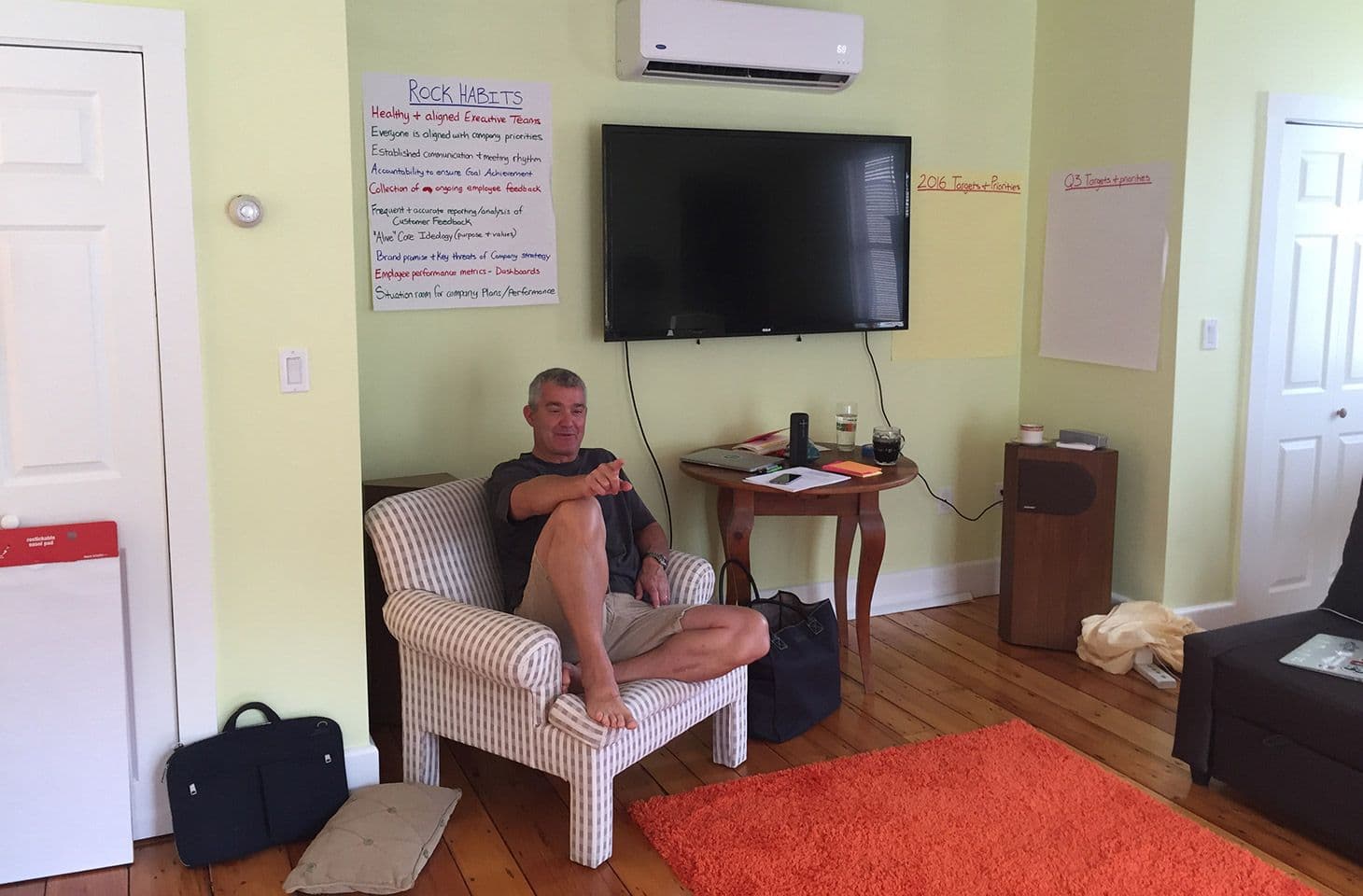
For three days, four of us—Jordan, Lesley, Len and me—traveled to Boston to spend time looking back on Q2, thinking about where we are, and planning our steps for the next three months.
From a tactical perspective, we did many of the same things that we did in our previous meetings.
But the results, and the things that we came away with, were new.
A lot has changed in the six months that we’ve been working with a coach, and our last session, we learned (and re-learned) some very important lessons about following a process to build a business.
Today, I want to share those lessons with you.
But first, some context.
Why Hire a Coach, and How to Use These Lessons Without One
Darya Klishina, one of the top long jumpers in the world, was asked what the key to her success was.
Her answer?
“I trust and believe in my coach.”
The two biggest benefits that I considered when I decided to hire a coach—and the two biggest reasons that top athletes do the same—were:
- Accountability: Until we started working with the coach, our team had been accountable to nobody but ourselves for the growth of the company. Particularly at the top, nobody was holding our feet to the fire and regularly asking us: "did you accomplish what you set out to accomplish?" It sounds simple, but having someone whom you’re accountable to can be a big motivator to push yourself. The fact that we’re paying for that accountability gives us even more skin in the game and reason to follow through.
- Process: A great coach is an expert at process. We aren’t. We might be very good at building help desk software and selling it, but that’s not enough to grow to where we want to be. As much as we’re proud of how far we’ve come on our own, we had grown through being scrappy, moving fast and breaking things along the way. While we’ve continued to keep those values, our coach has been showing us how to channel them into the systems and processes that can help us truly scale the business in a predictable and repeatable way.
So, that’s why we hired a coach.
But even if you can’t—or choose not to—hire one, that’s fine. You can still use the lessons we’re learning to grow your business. The key is taking these two principles (accountability and process) and giving them a valued and visible place in your business.
What does that mean?
Set goals. Tell someone outside of the company (an investor, an advisor, a fellow entrepreneur that you trust) about them. Put together a plan for every step that everyone in your organization needs to accomplish in the next three months to achieve your quarterly goal. Execute on that plan. And after each quarter, reflect on how well you executed, what you could have done better, and what you’ll do for the following three months.
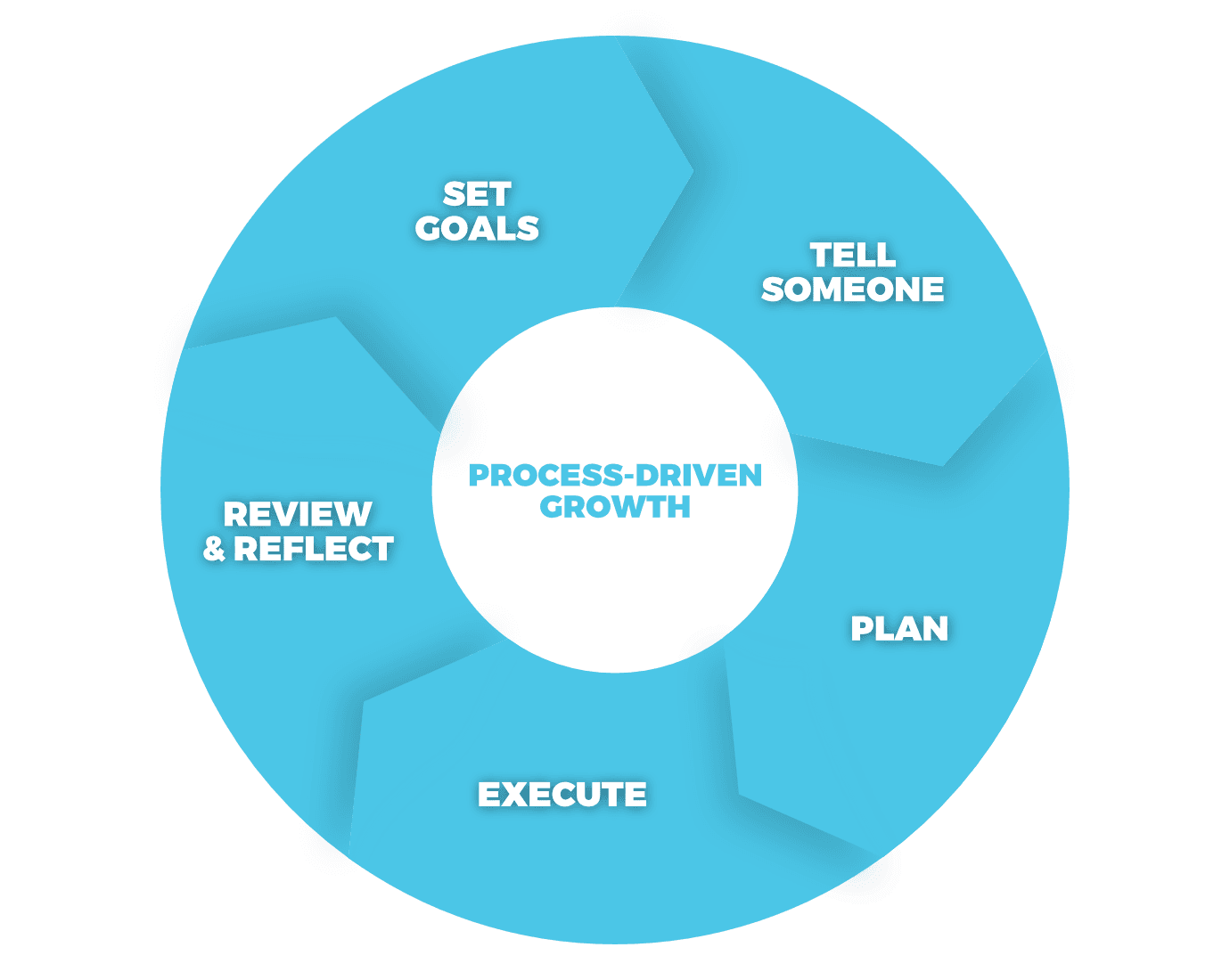
It’s a simple process. A coach will guide you through that process, but if you’re disciplined enough, you’ll still get huge benefits from following that process alone.
With that established, I hope that these lessons will help you bring more clarity and focus to your business, whether you’re working with a coach or not.
4 Key Lessons We Learned After Six Months Working With a Growth Coach
Here’s what we came away with from our Q3 planning session:
1) We (Still) Suck at Estimates, but We’re Getting Better
When we came back from our last retreat, I wrote this:

While we hit some of our quarterly goals, we didn’t hit them all. And while we were disappointed, he told us not to worry.
“It happens to every single business that I work with. At first, you bite off far more than you can chew.”
For a long time, we had operated in a pretty scattered way, working on dozens of different things at once. Learning about the value of focus—and the dangers of ignoring it—has been one of my most humbling lessons as an entrepreneur.
But even with that lesson behind us, we still overshot.
Goal-setting is incredibly valuable and has helped us progress more, from a productivity standpoint, in three months than in the entire year before, but it takes some time to get it right.
This is still true.
While we did better than last time, we still overshot on some of our estimates.
This quarter, we’re going even more conservative. In fact, each department in the company is only responsible for a maximum of two projects.
It may not sound like much, but I’d rather right-size our ambitions and give ourselves permission to attack our goals with laser focus than continue to bite off more than we can chew.
Coach gave us a great (and very helpful) way to think about setting goals that are ambitious but achievable:
You don’t want to be finished with a month left, and you don’t want to fall short. Set your goals so that you’re sliding into home plate in the last week of the quarter.
2) The Value of a Strong Process Compounds Over Time
The very first time we met, our schedule looked (very) roughly like this:
First Session
Day One: Full Day – Review Previous Quarter Day Two: Half Day – Set, Discuss and Revise Goals for Next 90 Days Half Day – Make Step-by-Step Plans for Next 90 Days
By our second meeting, we had a better idea of what to expect, and so things moved a bit faster:
Second Session
Day One: Half Day – Review Previous Quarter Day Two: Half Day – Set, Discuss and Revise Goals for Next 90 Days Half Day – Make Step-by-Step Plans for Next 90 Days
And by our third meeting, we were a lot more comfortable with the process, anticipated the questions and tasks we’d be facing, and had already each spent time preparing for our meeting. We finished everything in a single day.
Third Session
Day One: Two Hours – Review Previous Quarter Two Hours – Set, Discuss and Revise Goals for Next 90 Days One Hour – Make Step-by-Step Plans for Next 90 Days
The longer you stick to a process, the faster that process gets, and the more effective your entire team gets.
The more we do it, the better we get at it. And that efficiency means that we free up more of our retreat time for important things like culture and team-building.
Speaking of which…
3) The Closer Your Team Is, the More Effective You’ll Be
Last time, I said this:
I can’t stress this enough. I said this in the post about our first retreat:
“As a remote team, we don’t get the chance to get together that often. And for a couple of us, this would be the first time that we met in person.
Getting that time together was so, so important. We gelled more in just a few days together than we’ve been able to in years on Slack.”
The impact was even stronger in the second meeting, as we were already past the “getting to know each other” phase, and felt comfortable from the outset.
We’ve already started the planning process to get the entire team together, and I can’t wait to see what it does for our culture and business.
This time, this point was driven home even further. The more comfortable we feel with each other, the more likely we are to have an open, honest conversation where things are said without hesitation, challenged without fear, and settled without either ego or shy deference getting in the way.
These connections get made and strengthened in a number of different ways remotely, but they make huge, huge strides in person.
That full-team meeting is planned for Q1 of 2017.
4) There’s So Much More to “Getting Stuff Done” Than You Might Think
The way that we used to think about “getting stuff done” is this:
We have 10 employees, and we’re getting X done at 40 hours per week per employee. To accomplish 10% more, we could either add one employee, or all work 4 extra hours per week.
To be fair, this is a bit oversimplifying things, but it’s not all that far off from how we used to think about resource allocation (and we’re not alone); that is, your variables are team size and time worked.
But as we’ve seen over the last six months, there are things that have much, much bigger impact on a team’s output than those two things.
And it’s not a 10% difference, or a 20% difference, that we’re talking about. Changing the way that you work as a team can have a 100%, 200% or even bigger effect on your growth than scaling the resource hours.
To us, the three most high-impact ways we’ve changed our approach are:
- Having an immediate plan: Our quarterly planning sessions mean that we work in 90-day blocks. We plan for those 90-day blocks, and anything non-essential that comes up that’s not on the plan gets tabled until next quarter. That’s incredibly liberating to both your time and focus, and empowers you to accomplish so much more than when you have no plan and are always reacting to things.
- Having a long-term vision: Just like we have 90-day plans, we also have a one- and three- year vision that the entire team is aligned around. Having everyone on the team know exactly what that vision is means that decision-making is easy: which decision helps us accomplish that goal? More than half of the typical business decisions that most companies have to make in a given day can be eliminated by simply holding that decision up to a clearly defined goal or vision, which means that hundreds of hours each month can be freed up for higher productivity.
- Identifying obstacles before they become excuses: Every time we put a quarterly goal on the wall, he asks us: "what’s going to get in the way?" That is, at the end of the quarter when you didn’t accomplish your goal, what are you going to use as an excuse? People rarely think about their plans this way. To borrow an often-repeated Mike Tyson quote, "everyone has a plan until they get punched in the mouth." For that reason, it’s important to see yourself getting punched in the mouth before it happens, and know exactly what you’re going to do when it does. You won’t be very good at this at first (we certainly weren’t), but the more you do it, the better you’ll get at spotting roadblocks—and removing them—before they happen.
How to Apply This to Your Business
I highly recommend that any business that wants to unlock more rapid growth should consider hiring a growth coach.
But I also know that not everyone can afford one. For the first couple of years of our business, there’s no way that we would have been able to swing it.
But we’re getting a lot of value from it now, and my hope is that by sharing our experiences here, that you’ll be able to benefit from our journey, whether you’re able to hire your own coach or not.
5 Approaches To Total Quality Management
If you’re operating a small business, you’re always thinking about how to make your product or service as good as it can be. And you’re putting the best of those ideas into action. But are those changes having a tangible impact on customer satisfaction? Are there other areas where your resources would be better spent? […]
Becoming an Entrepreneur: How I Started My Very First Business with Just $300
My story of becoming an entrepreneur—and how I nearly lost everything on the very first day. “BOOM.” The vehicle shook, and I startled. “What the hell was that?,” I thought. And then, as my little car slowed to a crawl, and then to a stop, my excitement turned to a sigh of irritation as I […]