Steal Our Marketing Persona Template (And the Customer Research Process That Goes With It)

A marketing persona template and research process to help your business grow.
Before coming to Groove, I worked as a full-time freelance writer and marketing consultant, mostly working in the B2B space.
Many of the companies I worked with sent me their marketing personas (sometimes called “customer avatars”) as we started working together.
Most (almost all, really), were pretty useless.
Many were pretty generic, full of surface-level bullet points that didn’t help me get to know the people I would be marketing to.
A lot looked similar to this one, which is from a HubSpot presentation from 2014:
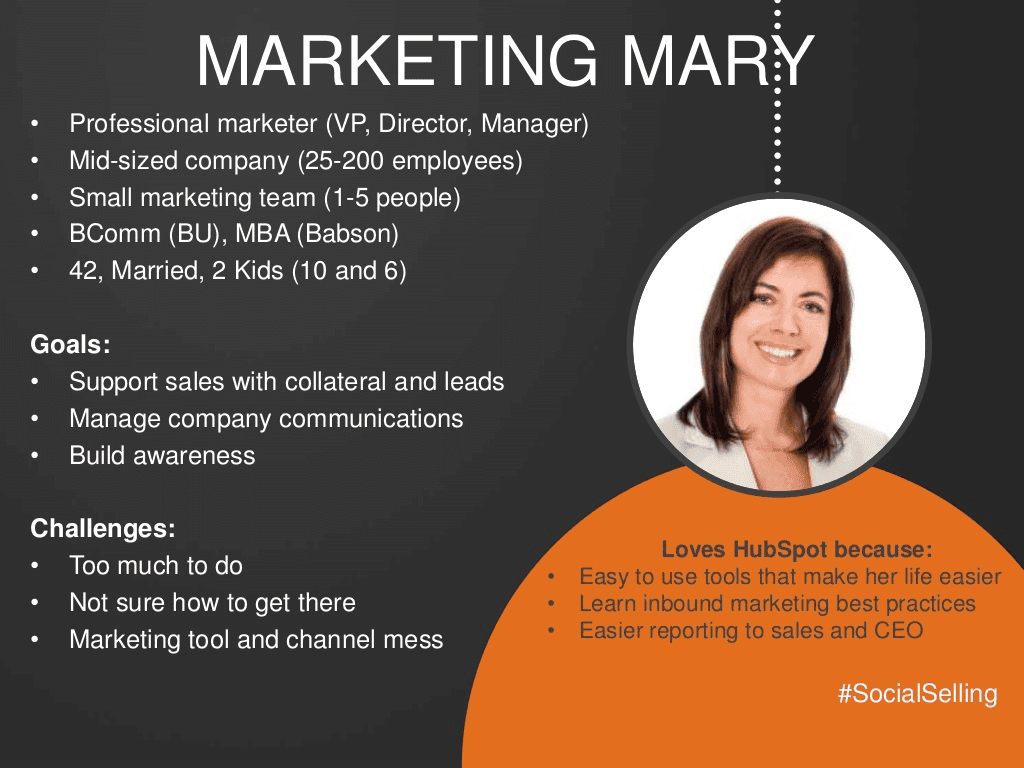
This is a good start—it tells me a few things about the audience I’ll be trying to reach. But one slide with less than 100 words isn’t exactly a thorough introduction.
As you’ll see in this article, at Groove, we spend a lot of time working to understand our customers and our target audiences.
We’re not exaggerating when we say that persona research and customer conversations are the way we make decisions—and not just in marketing.
In this article, we’ll show you the exact steps we use to develop and update our marketing personas—and why we find the process so valuable.
Grab the persona template we use here at Groove
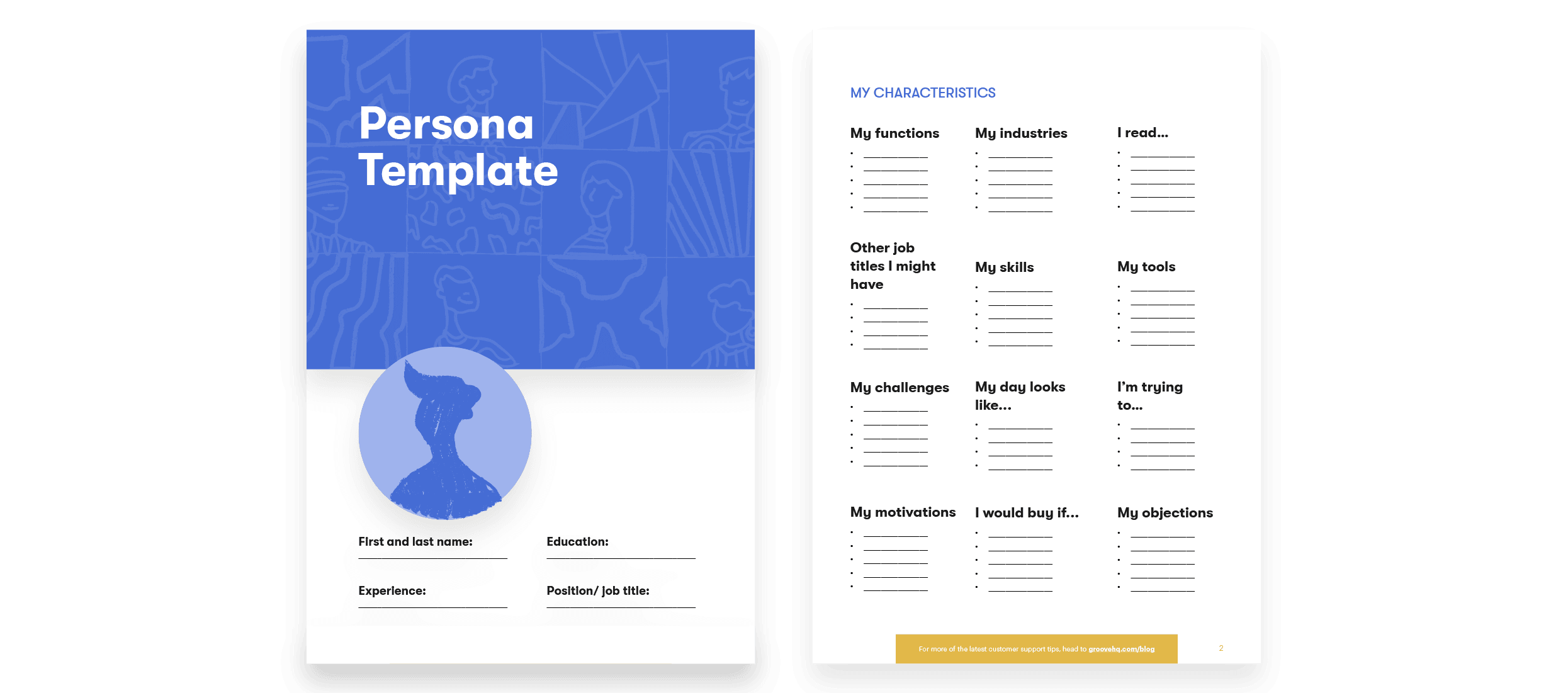
Before I go too far into this, here’s the template we’ve created for marketing personas here at Groove.
It’s simple, straightforward, and (as you’ll see shortly), far more detailed than most persona templates floating around the web.
What’s the point of a marketing persona anyway?

The point of a marketing persona is to give anyone who reviews it a detailed introduction to the people who use your products and the audiences you’re trying to reach with your marketing.
One-page personas don’t come close to meeting that objective, which is why we advocate for a much more comprehensive approach.
If you look at our marketing persona template, you’ll see that it is not one page, and it includes sections for:
- Characteristics
- Functions
- Industries
- Publications
- Job titles
- Tools
- Challenges
- An average day
- Goals
- Motivations
- Buying criteria
- Objections
- “Ah-ha” moments
- Why us?
- Keywords
- Recordings of interviews with real people from the persona group
If this level of information feels overwhelming, I promise it’s not as difficult to create these kinds of personas as you might think.
It just takes a little legwork.
How we create crazy helpful marketing personas: A 5-step process
Right now, we have two primary marketing personas that we use as reference documents when making both customer marketing and product development decisions:
- “The Customer Support Manager”
- “The Founder”
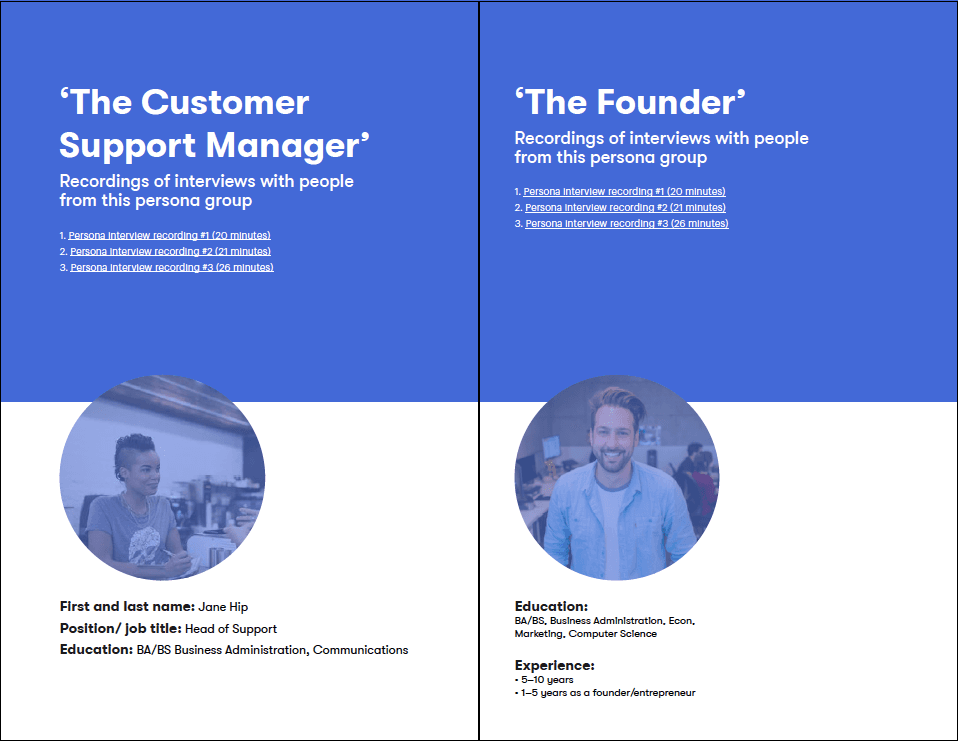
Soon, we’ll be adding personas for sales and marketing managers to represent the new audiences we’ll serve when we launch CRM and Live Chat solutions later in the year.
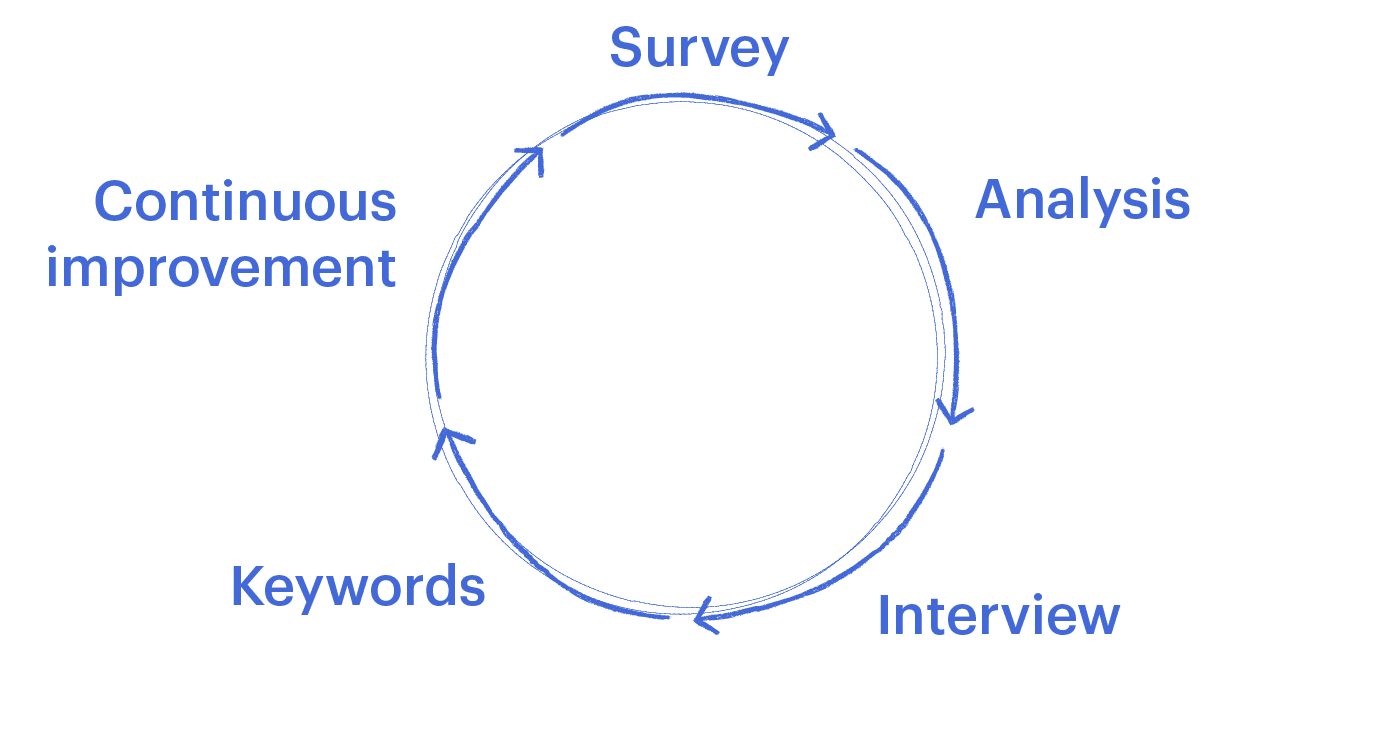
To create our personas, we use a five-step process.
Step 1: Conduct a survey (even if you don’t have a list)
We’re lucky to have a large email database—a major advantage for doing this kind of work. Once a year, we survey our list with a variety of questions to help us better understand who they are.
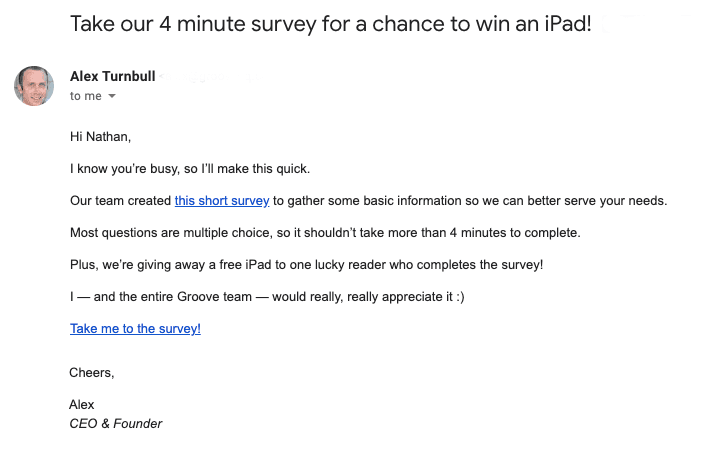
We keep it simple, using the credibility Alex (our founder) has built over the years to invite people to participate.
Pro tip: Offering a giveaway dramatically increases the response rate.
The survey questions
Using Typeform, we create a survey with our questions. For most, we include multiple-choice options—along with an “Other” option for anything we missed:
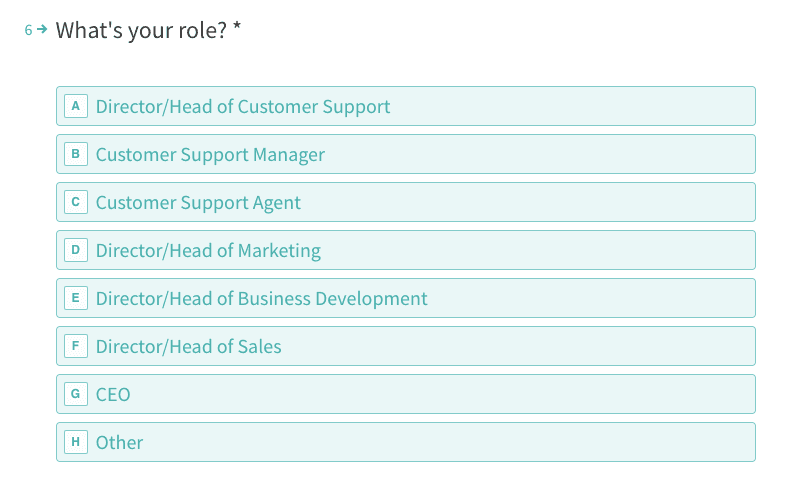
In our latest survey, we used the following questions:
- How would you describe your company?
- What business stage are you in?
- What’s your industry?
- How many people are in your company?
- How many people are on the customer service/customer support team?
- What’s your role?
- How long have you been working in this role (whether at this company or another)?
- What’s the single most important metric you track?
- What’s the biggest challenge currently facing your support team?
- Are you personally active on social media?
- What social media platforms do you use the most?
- What is your age? (optional)
- What is your gender? (optional)
- Where are you located?
The full survey is still live if you want to see the options we used and how the logic worked.
We include at least one open-ended question in our surveys, which gives people a chance to describe something about themselves in their own words.

It takes days to read through the thousands of responses we receive on these, so we keep open-ended questions to a minimum—if only to maintain our sanity.
Even so, these are among the most valuable questions we ask in our surveys—as you’ll see in the next section.
If you don’t have a list
If you don’t have a list of people you can survey, you have two other options:
- Rent space in someone else’s email list
- Create a survey and promote it the way you would a piece of content
Even if you have an existing audience, you can also promote your survey to increase the number of responses you get.
As an example, Andy Crestonia of Orbit Media has a survey he promotes widely every year and is very successful at getting people to participate.
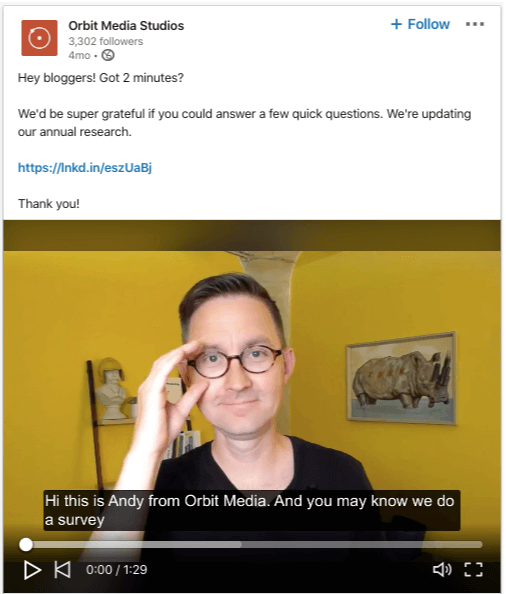
Takeaway: A survey is a first step in a larger persona development effort. It provides the quantitative and qualitative data you’ll need to guide the rest of the process.
Step 2: Segment and analyze the data
Data is just data of course.
The real work is turning all that data into something useful.
How we segmented
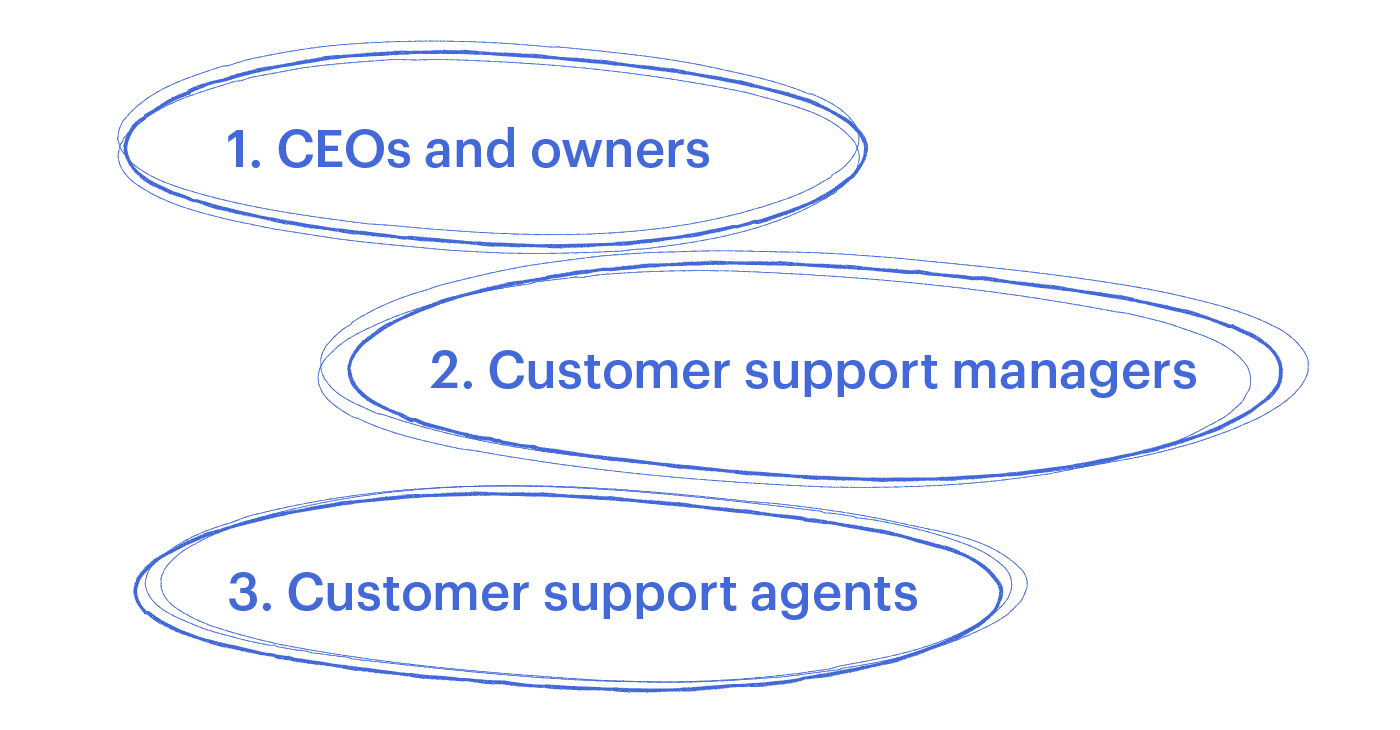
When we review the data we’ve gathered from a survey, our first step is to segment the answers into customers vs. non-customers.
Then we segment again by persona—pulling out answers from three key groups:
- CEOs and owners
- Customer support managers
- Customer support agents
The first two (CEOs and managers) are the most important because these are people directly within our two primary persona groups.
The third group (agents) are super-important too, since their answers give us the voice of the everyday user—the people most familiar with our product.
Turning data into insight
When doing this kind of research, remember that you’re not doing the kind of research done by universities or polling organizations. From a pure statistics standpoint, this kind of survey data is influenced by both:
- Self-selection bias
- A non-representative sample
For that reason, we can’t make conclusions about our data the way we could if we were working at a research institution.
Take the results for question No. 3 from our survey: “What’s your industry?”
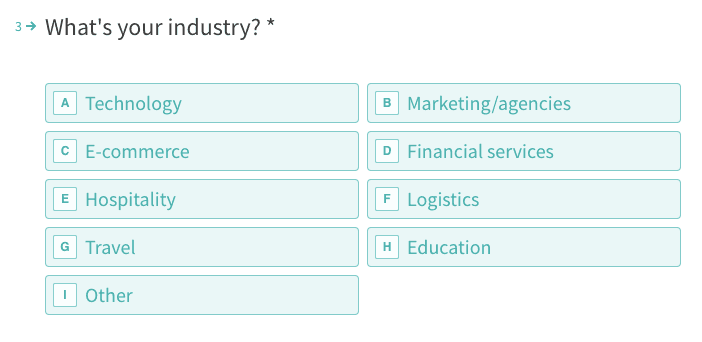
Looking just at non-customers, the results of this question look like this:
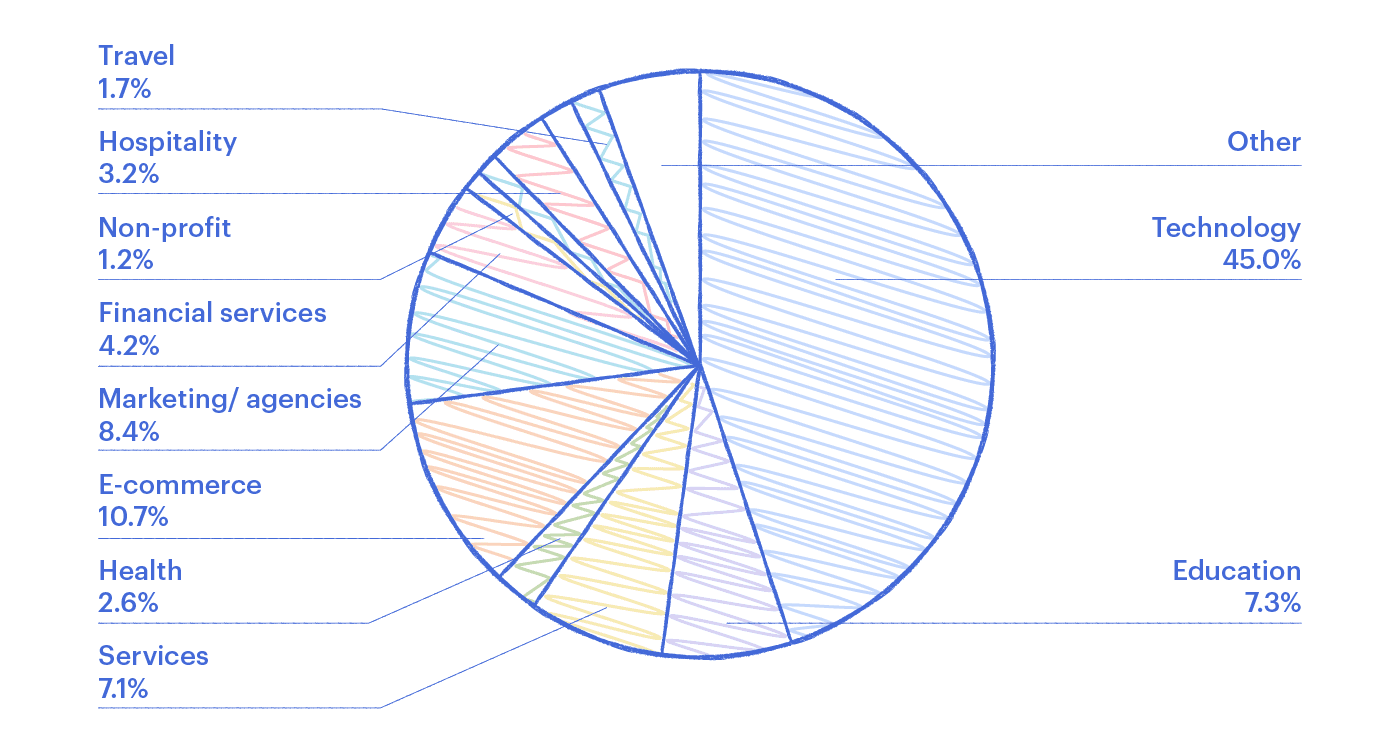
Based on this chart, I cannot say that 45% of our email list is from the technology industry. Instead, all I can say is that 45% of our respondents are in technology.
A subtle difference, perhaps, but an important one, because it keeps me from making recommendations about things the data have not shown definitely.
Even so, I can learn a great deal about our audience from the answers to a question like this. Specifically, I can say with confidence that there are three major cohorts in our existing audience:
- Technology
- Professional services (The combination of agencies, financial services, services, etc.)
- E-commerce
Strategically, it’s enough to know that there are large groups of people from these three cohorts.
The number of customers who were in E-commerce, for example, was a bit of a surprise to us in our latest round of data.
Based on that insight, we moved up several new features—including an upgraded Shopify integration—to serve those customers better.
What we learned in our last survey
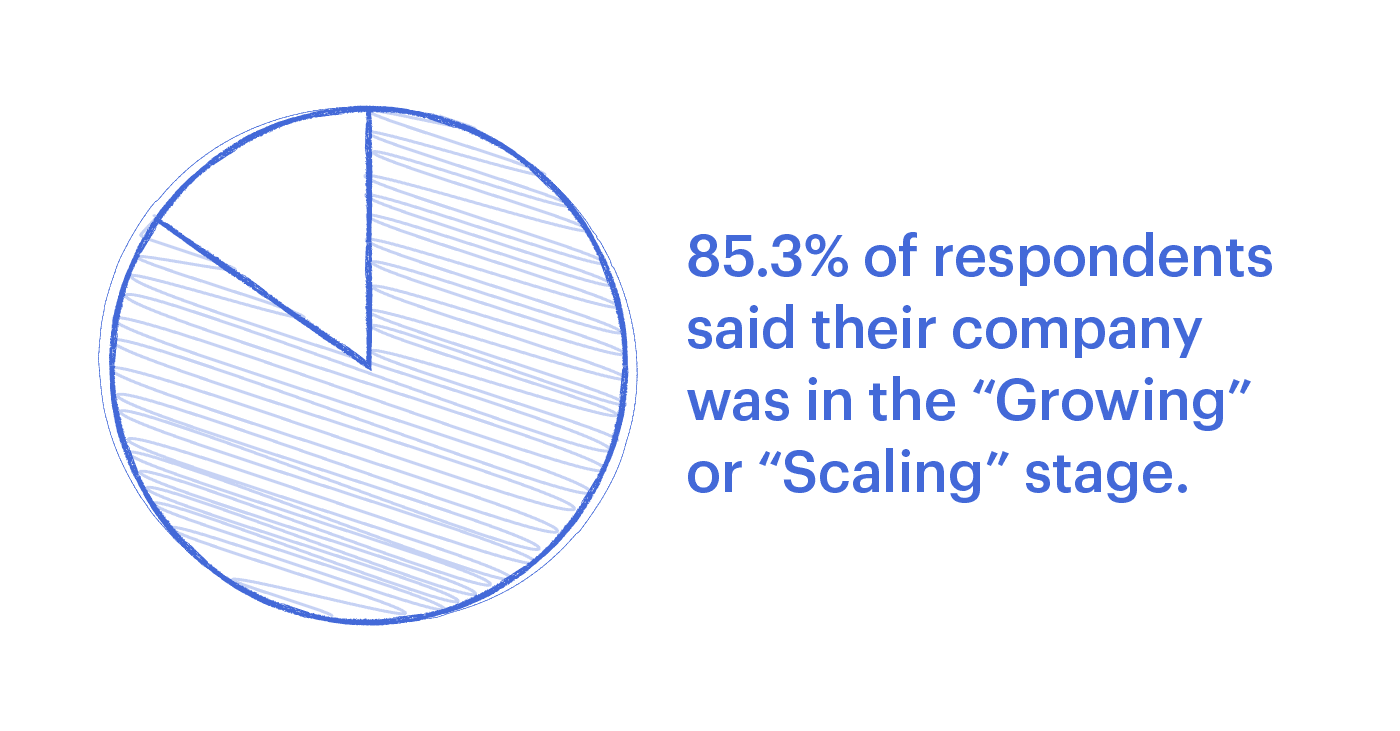
Every time we do a survey, we learn all kinds of unexpected things. For example, in our last survey, we found:
- 85.3% of respondents said their company was in the “Growing” or “Scaling” stage.
- 62.1% of respondents were male.
- 68.6% of respondents classified their business as either a “startup” or a “small business.”
Qualitative answers are even more important—since they tell us so much about the problems our customers face every day.
Take this answer about using customer support software, for example, which came from someone in the CEO/owner segment:
- “When the customer is opening multiple tickets for the same thing but using different email addresses. This wastes our time because we usually reply to them separately, without realizing they were the same.”
That right there? That’s a feature request in disguise. If enough people are talking about this problem, we can start researching how to solve it.
We get thousands of answers like this. Here are a few other examples to give you a feel for it:
- “We need to improve triage for complex issues and make sure we have quick first-replies for complex issues. Some issues can take several days to fix, and we aren’t properly doing follow-ups.”
- “Balancing support with development (The developers currently do the support).”
- “Handling angry or toxic customers.”
With that much qualitative data, you’ll start to see the same answers over and over again. Some of the trends we found in our latest survey included:
- Customer support managers feel like their team is understaffed.
- Companies of all sizes are trying to get people to use self-service options—such as a Knowledge Base—before they send a support request by email.
- Dealing with angry/toxic customers is a consistent challenge across all industries.
These are the insights that start to tell us the biggest challenges faced by the people who use our products.
Takeaway: Survey analysis is the process of transforming raw data into actionable insights that drive decisions for both product development and marketing.
Step 3: Conduct persona interviews
Fact: The vast majority of Groove’s content ideas come from persona interviews.
I’m a former journalist, so it won’t surprise you that I love doing interviews.
After we survey our email list for broad trend data, the next step is to actually talk to those people.
By talk, I don’t mean you should email them a few questions. I mean you should talk to people personally—by web conference, phone, or in person.
I don’t know why, but many marketers and owners I’ve met are not in the habit of doing this.
They rely on their sales and customer support teams to tell them what’s happening with their customer base, but they rarely get on a call with one of their customers themselves.
Between Alex and those of us in marketing and customer success, we have several calls a week with customers or people from our target markets.
For persona research interviews, we line up 20-minute calls, and we try to talk to both customers and non-customers. Our goal is always the same: to better understand the day-to-day experience of the people we serve with our products.
What we ask during a persona interview
We keep our persona interviews simple.
We ask for 20 minutes, and we use a basic set of standard interview questions as a starting place:
- Name
- Position
- “How long have you worked here?”
- “What’s an average day look like for you?”
- “Any common frustrations? They don’t have to be related to Groove.”
- “Do you have any unique areas of expertise?”
- “Anything we didn’t ask you that we should have?”
Here’s a secret: During a persona interview, 99% of the major insights come from follow-up questions.
When I’m doing an interview, I always get the best information from simple follow-up questions that sound like this:
- “Okay wait. You have to tell me more about that.”
- “That’s fascinating. How did that start?”
- “Let me make sure I understand…”
This is why we always do persona interviews by web conference and never by email. The whole point of a persona interview is to hear candid responses, and you just don’t get that from an email or a chat conversation.
Record the interviews so you can share them with your organization
A picture is worth a thousand words, right?
In the same way, a recording of a customer interview is worth far more than any one-page persona.
There’s just nothing like hearing people talk about their work in their own words.
For this reason, we put links to persona interview recordings at the very top of our persona documents. To us, these recordings are more valuable than anything else in the personas.
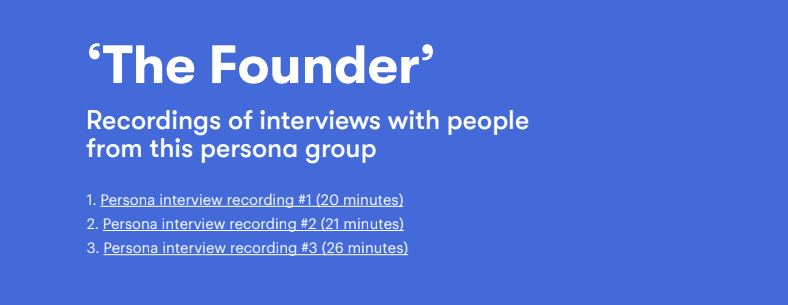
We use Zoom and Calendly to help us schedule and record interviews straight to the cloud, giving us a record we can share internally and add to our persona documents.
Think about this from a new hire’s point of view.
They’re new. They’re trying to make an impact as soon as they can. But also… they don’t know this audience they’ve been hired to serve.
This is a perfect use case for a marketing persona—to give a new hire a comprehensive introduction to the people you serve with your products.
What if you could give that new hire a library of customer interview recordings so they could hear customers and prospects talking about all the challenges they face on a day-to-day basis?
I would have loved to have had something like that back when I was freelancing. I would have done a much better job for my clients much sooner.
Takeaway: Survey answers are great, but nothing beats hearing people talk about their lives—in their own voices.
Step 4: Do keyword research
Wait.
Isn’t keyword research an SEO thing?
Yes, it is. But that’s not the only thing you can use it for.
Keyword research shows us how often people use specific words or phrases when searching in Google.
SEO professionals (and content marketers) use keyword data to plan ways to get people to find their sites when people search those terms.
But…
Search volume also gives us a window into language trends in general.
For example, from SEMRush estimates, I know that people search both of the following terms when searching for software like ours:
- “Customer service software”: 1,300 searches/month
- “Customer support software”: 390 searches/month
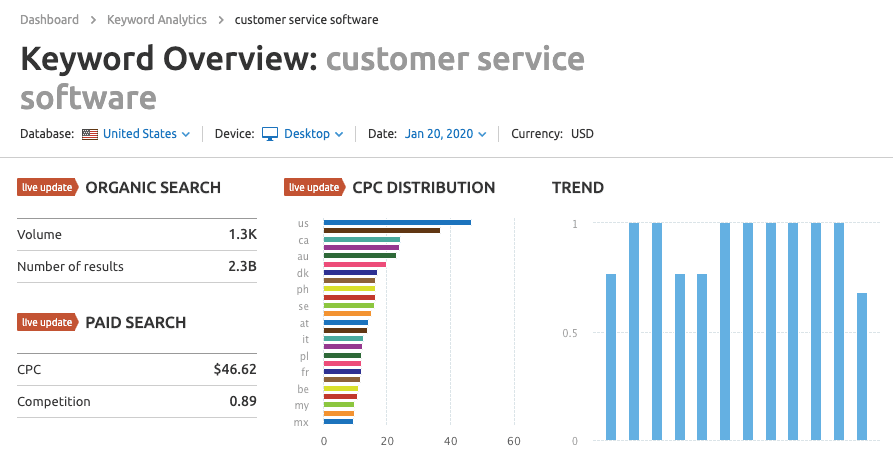
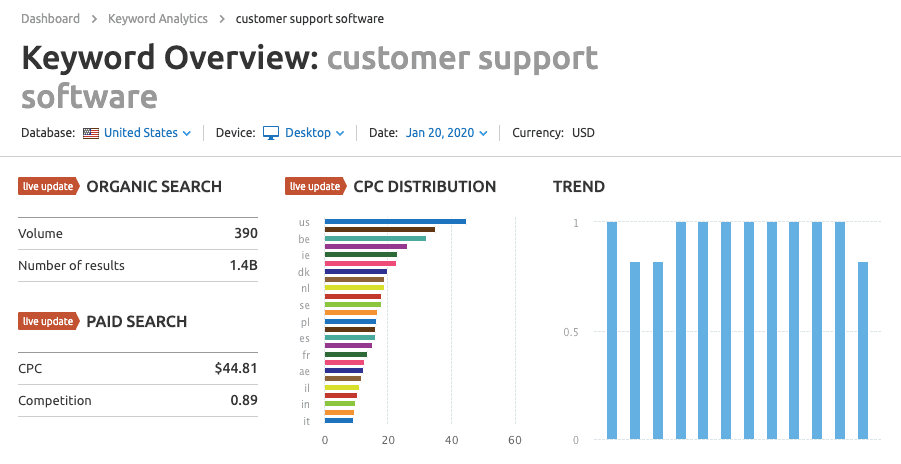
For this application, I’m not concerned about the total volume of searches.
Instead, I’m looking for the exact words and phrases used by people in our target market. For that purpose, I can see that both of these terms are common enough to be important to us.
From that, it’s obvious that we should be using both terms throughout our marketing material.
In every stage of the sales funnel—from website visit all the way to sales demo and onboarding—keyword research informs the language we use in our materials and our conversations—not just in materials we publish online.
Takeaway: Learn the words and phrases people already use when talking about products like yours—then add them to your marketing and sales messages.
Step 5: Continuous improvement
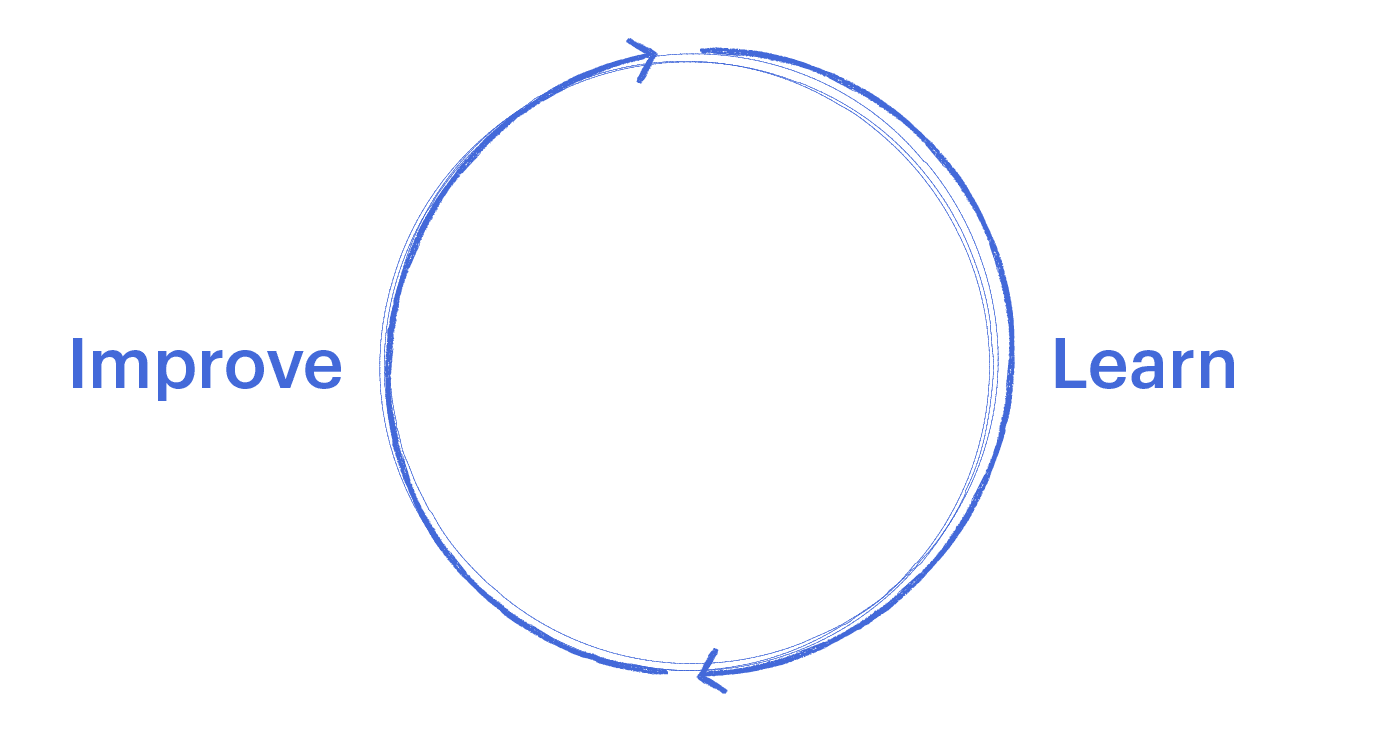
Pro tip: Personas are like products—they’re never finished.
Software companies are always improving their products—and we’re no exception.
As we learn more about what our customers want, we make improvements. Then we learn more. And we improve again.
And the cycle continues—forever.
Personas should be the same.
They are never done, because you should never, ever stop learning about the people you serve with your products.
Markets change over time, and you need to keep up with the trends that are happening for the people who use your products.
Keep doing surveys, interviews, and keyword research. As you learn more about your audiences, update your personas with the new insights.
Takeaway: Never stop improving your personas.
Good marketing personas are a strategic advantage
Question: When was the last time you actually looked at your marketing personas? Or gave them to someone who actually got something out of them?
Done well, personas can (and should!) help you make decisions in every area of your business.
But, sadly, many marketing personas get created, designed, admired, approved… and then stuffed in a drawer—never to be looked at ever again.
Where are your personas right now?
Are they valuable, regularly-used tools that inform your marketing and product development decisions?
Or are they stuffed in a drawer? Locked in a file on your shared drive? Pinned to the wall of a conference room but mostly ignored by the members of your team?
If it’s the latter, I hope the persona template will help you transform your personas from something forgotten into something that gives you a strategic advantage.
As we’ve seen here at Groove, gaining a deeper understanding of your user base is never a wasted effort.
You just never know what you’ll learn when you get on the phone with a customer.
Sometimes, you learn something that reveals completely new business opportunities you would never have dreamed of otherwise.
Groove HQ Reviews: What It Is and What Are Users Saying About It in 2026
Looking for honest Groove HQ reviews? We cover pricing, features, pros and cons, and real customer feedback. Find out if Groove is right for your team.
E-commerce Entrepreneur: How One Wedding DJ Started One of the Fastest Growing Businesses in Texas
Whenever we get a chance to talk to a customer here at Groove, we take it. So when Josh Pather of Photo Booth International dropped this line in a conversation with Erika from our support team… We knew we had to reach out. We thought we’d talk to Josh about Groove and maybe write up […]