
5 Tips for Onboarding Your Team to New Customer Support Software

Under normal circumstances, moving your team to a new software system is taxing. Combine that with a worldwide pandemic and a sudden shift to remote work, and you’ve got a recipe for anxiety.
We’re seeing all sorts of new companies sign up for Groove these days.
Customer service teams that used to work together are now working remotely. Many that relied on call centers are shifting to email support to cover all their bases.
Sometimes “new” can be exciting.
Right now, it’s just a bit scary.
Today, we’re highlighting some of the ways you can help your team understand the benefits of switching to a new support platform and make the change as painless as possible.
1. Understand the apprehension of learning new software
First of all, you need to understand why some employeess might be hesitant or nervous about the process of switching to a new customer support tool.
The healthiest mindset to have is to assume the best case scenario when it comes to difficult situations or changes.
So, for example, instead of assuming that someone is resisting because they’re lazy or uncooperative, try to think about the real root issues that might be causing it.
There are two main types of reasons for apprehension when it comes to switching to a new software:
The first kind is closely connected to your team members’ personal sense of accomplishment:
- They’re worried that they won’t be able to learn the ropes fast enough and will be left behind,
- They don’t see what’s in it for them on a personal level,
…and the other side of it is not fully seeing the general, big picture benefits of the switch:
- They don’t see how the new solution is better than the old one,
- They don’t see what the benefit is for the company’s bottom line.
If you think about it, all of these issues are completely understandable.
Your customer service agents either want to perform well and are worried that they might not be able to with the new support solution. Or they just aren’t familiar enough with the features and benefits of the software to fully realize its potential.
Now, let’s talk about how you can take all these concerns and turn them around.
2. Create and share the onboaring process with your employees
Assure everyone on your support team that the complexity of switching to a new tool is understood.
This means that nobody should feel like they’re expected to miraculously become an expert at it overnight.
Especially if you’re coming from using email as your support tool, learning to use a new software takes time—and everyone needs to know that this time is given to them.
The best way to assure a no-panic onboarding is doing it very, very gradually. Instead of switching overnight and expecting everyone to ramp up cold-turkey.
Here’s our process for onboarding new software at Groove:
- Announce that you’ve chosen a new software and link to it.
- Schedule a meeting with your team—the agenda being introducing and discussing the new tool.
- Have the meeting demonstrating the software and what it can do (this needs to be done by someone who knows it really well—fumbling around just causes insecurity).
- Discuss. Ask if anyone on the team has immediate questions or concerns.
- Invite everyone to sign up and play around for a few days before actually switching.
- Hold another short call or meeting to ask if anyone has questions.
- Switch over completely.
- Keep checking back to see if anyone’s having issues.
Share this process to your whole team to set up transparent expectations.
Seeing that they will be helped through every step and given plenty of time to adjust will ease their mind before they even start onboarding new software.
3. Explain the personal benefits of new software
Rather than expecting people to give you what you want, start by understanding what they want.
We use this customer service skill everyday on customers. Turns out, it works just as well on coworkers.
This Carnegie quote helps explain the mentality:

Personally I am very fond of strawberries and cream, but I have found that for some strange reason, fish prefer worms. So when I went fishing, I didn’t think about what I wanted. I thought about what they wanted. I didn’t bait the hook with strawberries and cream. Rather, I dangled a worm or grasshopper in front of the fish and said: “Wouldn’t you like to have that?” Why not use the same common sense when fishing for people?
Dale Carnegie
Think about the “worms” for your team members—and not on a company level. On a personal level, what do they want?
There’s a good chance that everyone on your support team wants to:
- Be productive and get more done,
- Gain new, useful skills,
- Feel valued and appreciated by their team members.
So, take those things and explain how the right support software can help achieve them.
- Productivity: New customer support software will eliminate a lot of repetitive and time-consuming tasks, which will allow them to get more done and feel great about it.
- Learning: Once they get the hang of it, the software be another tool to add to their list of skills. They have the opportunity to become an expert and get valuable on-the-job training.
- Feeling appreciated: Getting more done and collaborating more efficiently will benefit the whole company, and it won’t go unnoticed.
Our managers are quick to praise team members during onboarding. We’ve found the carrot always works better than the stick.
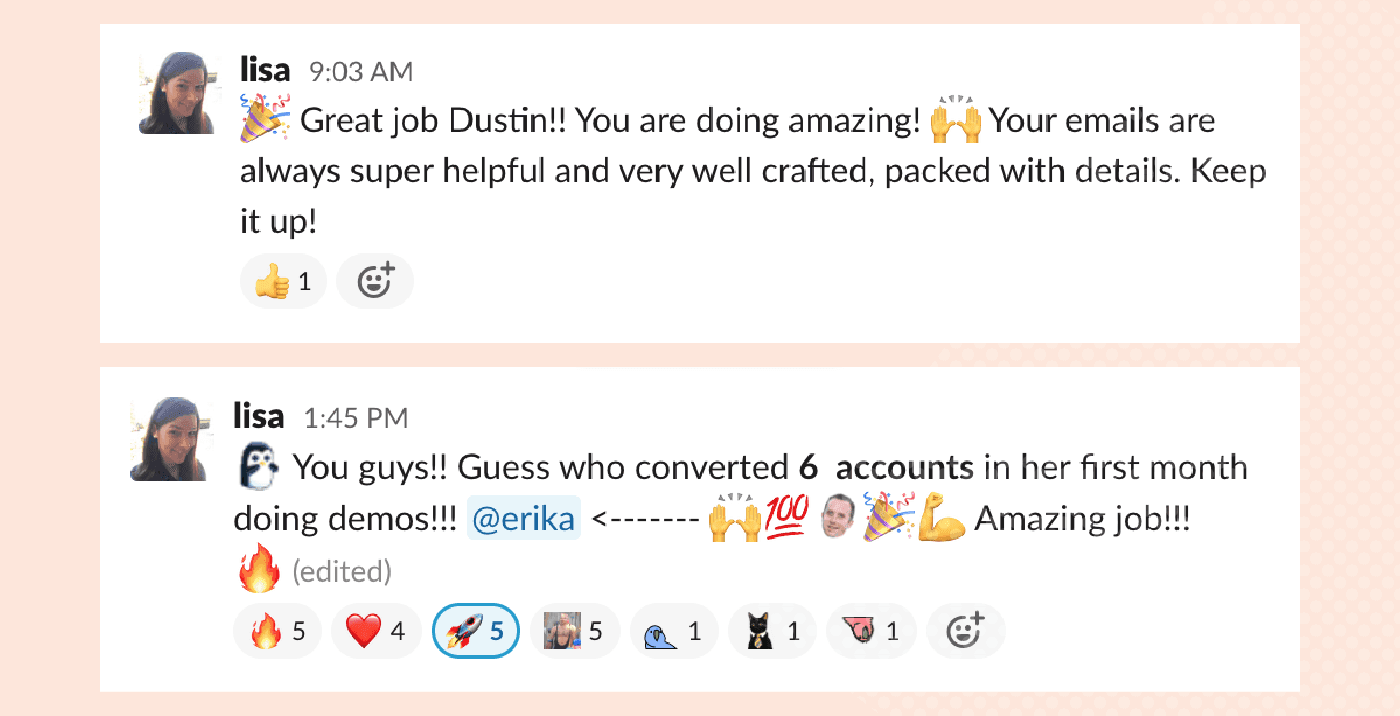
Let your team know that their personal happiness and productivity was a deciding factor in choosing the new software. It will help put them in a more accepting mindset—maybe even get them excited about it.
4. Map out the company-wide benefits
“How is it better than what we were using before?”
This is one of the main things your support agents might be wondering. And it makes sense—if the new solution isn’t clearly better than the old one… why even switch?
To make sure everyone understands the main benefits of your new software, you need to communicate them as clearly as possible.
We focus on two main topics:
- Pain points you had with your previous solution (and how the new one wipes them out),
- Features the new solution has that the old one didn’t (and why they’re awesome).
Talk about the struggles your support team had with your previous tool and how the new software takes care of them.
For example:
With Gmail, we had incidents where multiple agents replied to the same customer because there was no easy way of knowing if the issue was already being handled by another team member.
With Groove, you can immediately see if an agent has already been assigned to a customer request or is currently responding to one.
And then highlight things that the support software can do that your team might have not even thought about.
For example:
Groove has reports which show us some of the most important customer support metrics such as average reply time and customer satisfaction ratings.
This means that we can see how we’re actually doing when it comes to support and actively work on improving our efficiency as a team.
Document these remedies and discuss them in person with your team to explain the expected outcome of the new platform.
Making the specific benefits of the software well-known to everyone means that they’ll go into using it with a much more positive mindset.
5. Explain how it affects high level business goals and metrics
Exceptional support is incredibly valuable to any company—both when it comes to customer loyalty as well as the actual bottom line.
In research on actual customer transactions published in the Harvard Business Review, researchers found that among thousands of customers studied, customers who had the best past experiences spend 140% more compared to those who had the poorest past experience.
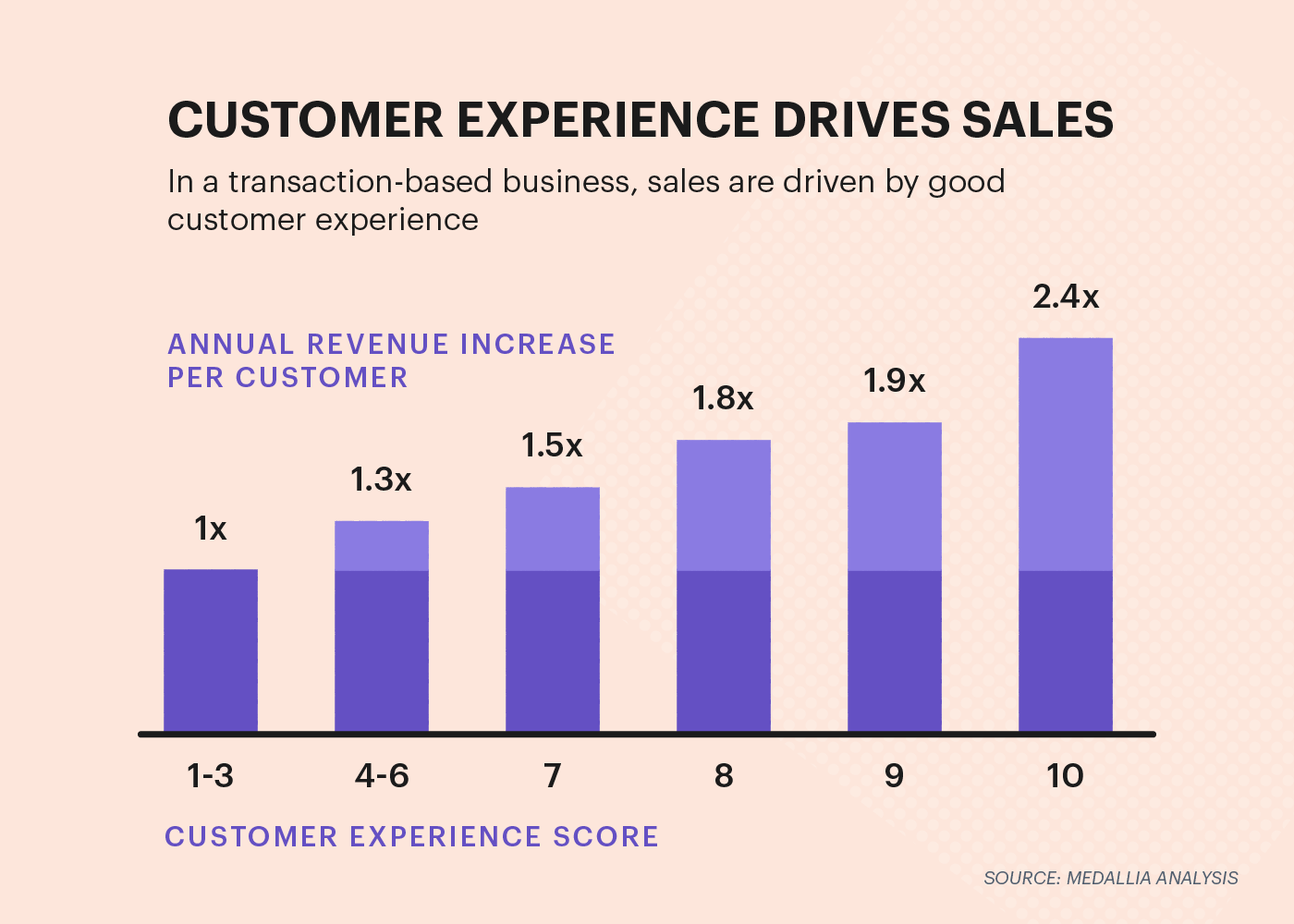
Basically, a smoother operating customer service team equals better customer experience equals more money.
This all circles back to your initial reasons for switching to new customer support software. By clearly defining the benefits that the new solution will provide, you can explain how the customer experience will be that much better, too:
- Easier collaboration means fewer mishaps with double replies (or even worse—no replies at all),
- Smarter analytics mean a clearer overview of customer happiness and how to improve it,
- Intuitive automation features mean faster replies to customers and less busy work for your team.
…and on, and on.
Providing great customer support is first and foremost about investing in a relationship with your consumers.
But that doesn’t mean your company and its interests should fall to the background.
By helping customers get the most out of your product and service through amazing support, you create an experience they’ll be willing to pay for.
Give your support team the support they need
Getting your team aboard a new customer support solution doesn’t have to be a pain—but you have to play it right.
Figure out what your team is thinking, what they want, and what they’re worried about. Then approach all of it in a gradual, supportive way.
Once everyone is on the same page about the clear benefits of switching over—both on a personal and company level—you’ll be good to go.
5 Help Scout Alternatives: Why Growing Support Teams Switch to Groove
Groove Fixes What Teams Don't Like About Help Scout: Flat Pricing, Built-In AI, and Native SLA Management. See the Full Comparison.
How Helply's Hallucination-Proof AI Eliminates the #1 Fear of AI Customer Support
Customer Support Automation That Hits 65% AI Resolution, Guaranteed. Helply's Action-Based AI, Safe Escalations, and Optimization.