7 Tips for Optimizing Your Customer Touchpoints
If you’re at the helm of a small business, you know that every interaction matters. But optimizing customer touchpoints across various channels can be a real challenge, especially when you’re short on time and resources.
Are you unsure which touchpoints need your attention most? Creating personalized experiences often feels like a luxury, while balancing automation with genuine human interaction is a tightrope walk. On top of that, you need to keep up with the ever-changing expectations of your buyers.
In this guide, we’ll cut through the fluff and offer practical strategies to enhance key interactions and CX. The goal? To create a seamless brand experience across all channels, even with limited resources. Let’s dive in!
Mapping the Customer Journey and Identifying Touchpoints
Customer journey mapping is creating a roadmap of your customer’s experience, from their first interaction with your brand all the way to (hopefully) becoming a loyal advocate. It’s not about plotting every possible scenario, but understanding the key stages most buyers go through.
If you haven’t done so yet, now is the time to create that customer journey map. It’s an essential starting point and guide. Don’t forget to put tracking in place as well, so you can refine your maps over time from projection to reality.
Then it’s time to identify key touchpoints throughout the customer journey. ‘Touchpoints’ are any interaction a customer has with your business, and putting them in context is vital. It show you what order touchpoints occur in, helps to identify gaps or overlaps, and assists in prioritization.
The potential touchpoints are endless, falling into a number of broad categories:
- Marketing Touchpoints. From content marketing to social media ads, these touchpoints shape how potential customers perceive your brand. They play a significant role in attracting and engaging your target audience. Examples include seeing your PPC ad in a Google search, or opening a promotional email.
- Post-Purchase Touchpoints. Interactions after the sale are vital for building long-term customer relationships. Post-purchase touchpoints can be follow-up emails, loyalty programs, and re-engagement campaigns.
- Product Touchpoints. The actual use of your product or service is a crucial touchpoint. This includes the unboxing experience, user interface design, product performance, and how you handle product updates or recalls. Even physical touchpoints like packaging and delivery experiences can influence customer perception.
- Customer Service Touchpoints. These encompass how you handle inquiries, complaints, and other support requests. Touchpoints via email support, live chat, chatbots, and your customer service helpdesk fall into this category.
Prioritizing Which Customer Touchpoints To Optimize
Even if you only include the most important touchpoints, there will probably be a lot of them. Once you’ve mapped them, focus on identifying the most critical ones. If in doubt, ask if they:
- Have a significant impact on customer decisions
- Occur at crucial moments in the customer journey (such as decision points or common predictors of churn)
- Receive frequent customer complaints
If you’re struggling to identify or prioritize touchpoints, you might need more data. You can leverage quantitative data from website analytics, social media insights, and customer service logs to identify frequently used touchpoints.
You can also use simple surveys or conversations with customers to understand which touchpoints they find most impactful or problematic. And your team should have valuable insights as well, especially anyone who interacts directly with buyers.
7 Practical Strategies To Optimize Your Customer Touchpoints
Once you’ve mapped out your touchpoints and identified the critical ones, you’re prepared to implement targeted optimization strategies. The overriding goal is to make each interaction count. With that in mind, let’s dive into seven strategies that will set you apart from the competition.
1. Improve Your Website’s First Impression
Even if you don’t sell physical products, your website is your digital storefront. It’s often the first impression customers have of your business (or at least, the first in-depth experience after seeing an ad or a search result). If your website doesn’t impress, you’ll lose them quickly.
Imagine that you walk into a store where everything is a mess, and you can’t figure out what it’s selling and whether it has what you need. Naturally, that would be frustrating, and it’s exactly how visitors feel when they land on a cluttered, confusing homepage. You can remedy this by:
- Keeping it clean and simple. Your visitors should know what you’re about in seconds, not minutes. ‘Above the fold’ content – what people can see without scrolling – should reflect your product/service, branding, and unique selling proportion, and include a clear CTA.
- Ditching the jargon. Speak your customer’s language, not industry lingo. And don’t obscure your message with wordiness or overly-promotional messaging. Let visitors know how you can help them, in as clear and straightforward a way as possible.
- Making sure your website loads quickly, especially on mobile. A slow site is like a store with a locked door – people will just move on. Quick load times, especially when paired with a clean and professional design, communicate reliability.
All of the above can be applied to your site as a whole, too. But pay special attention to that home page. After that, the most vital website-based touchpoints are usually your landing pages, which serve as alternate ‘home pages’ for your marketing campaigns.
A strong landing page is where you turn visitors into customers. It’s like having a great salesperson always on the job, who knows exactly what each customer wants. Here’s how to make your landing pages work harder:
- Match the message. If your ad promised a solution to problem X, your landing page needs to address that problem and solution directly. If you’re targeting a specific customer segment, make sure the landing page they end up on is matched to their interests and characteristics.
- Sprinkle in some social proof. Customer testimonials are like having your best buyers vouching for you right there on the page. Especially if your business is small, and your visitors are likely unfamiliar with it, you need to make it clear right away that you’re legitimate and have happy customers.
- Make your call to action impossible to miss. It should stand out like a neon sign, telling customers exactly what you want them to do next (try a demo, sign up for a newsletter, start a free trial, etc.).
2. Enhance Your Social Media Presence
Social media isn’t just about posting pretty pictures (although that often helps!). It’s about building relationships. Here’s how to make social media work smarter for your business.
First, pick your platforms wisely. You don’t need to be everywhere. Instead, focus on where your target customers already hang out.
For many small businesses, that’s Instagram or Facebook, but it will vary based on your particular niche and audience segments. What’s important is that it’s much easier to meet customers where they are, rather than trying to drag them onto a platform they don’t use.
Social media offers a lot of touchpoint opportunities. You can post your own content, participate in existing conversations, and on some platforms, even create dedicated pages or groups.
To optimize those customer touchpoints, remember that social media is a two-way street. Use it to understand what your customers want, and then communicate with them actively:
- Keep an ear to the ground. Tools like Brand Mentions can help you track conversations about your brand, even if you’re not tagged. You can learn a lot from how your business is discussed. Plus, these are touchpoints you have no control over, so you need to know what they look like and how you can get involved.
- Respond promptly. A quick, helpful response can turn a potential problem into a win. Respond to complaints, compliments, questions, and even general comments about your brand and services. The more active you are, the more positive and consistent touchpoints are out there.
- Share the human side of your business. Behind-the-scenes content helps customers connect with your brand on a more personal level. Social media is an opportunity to impact potential buyers in a way that’s not as overtly promotional as an advertisement.
3. Refine Your Email Marketing Strategy
Email might seem old school, but it’s still one of the most effective ways to reach customers. Plus, it provides endless touchpoint potential.
People who sign up for your email list are asking you to reach out to them – don’t disappoint! Each email is a chance to convince potential buyers, nurture existing relationships, and encourage more purchases or higher-level subscriptions.
To make sure your emails are opened, read, and acted on, you’ll need to craft compelling subject lines. The subject is the first touchpoint a reader has with your email, and sets the tone for the entire communication.
In other words, it’s like the headline of a newspaper. Make it catchy, and people will want to read more. Here’s how:
- Get personal. Use your customer’s name or reference their recent activity. Make them feel like you’ve reached out to them personally, not just as one of hundreds or thousands.
- Create a sense of urgency or curiosity. At the same time, keep it honest. No one likes clickbait. Preview the benefit your email offers, and then provide that benefit in the text – everyone wins!
- Test different approaches. What works for one audience might not work for another. Don’t spam your subscribers, but don’t be afraid to try out a variety of message types and styles.
The other most important touchpoint in any email is your call to action. Make it impossible to resist by:
- Being clear about what you want the reader to do and why they should do it.
- Making it stand out visually. Your CTA should be the first thing people see when they open your email, and it should be distinctive and obviously ‘clickable’.
- Keep it simple. “Shop Now” often works better than “Click Here to Browse Our Extensive Collection of Artisanal Products”. People get a lot of emails, and they won’t spend much time on yours. Get the point across quickly, before they circle back to their inboxes.
If you don’t yet have an email marketing strategy, it’s well worth adopting. You don’t need a huge budget or a lot of time. Tools like Mailchimp offer affordable options for small businesses, and plenty of templates and features to help you craft strong emails quickly.
4. Streamline Your Sales Process
Alright, you’ve got their attention. You’ve drawn the cusotmer in with strong pre-purchase touchpoints like a relevant landing page and intruiging social media content. Now let’s make sure you don’t lose them at the finish line.
The sales process is easy to overlook, but it’s made up of very important interactions. Optimizing customer touchpoints at this stage means making sure there are no roadblocks that might change their mind and prevent them from completing the purchase.
Most importantly, you’ll want to simplify the checkout experience. Have you ever abandoned a cart because the checkout process was a nightmare? Here’s how you can prevent that:
- Cut the clutter. Only ask for information you absolutely need. Every extra field (or page) is another chance for a customer to think: “Is this worth it?”
- Offer guest checkout. Sometimes, creating an account feels like a bigger commitment than buying a product. If an account isn’t necessary, give buyers the choice to opt out or create one after the purchase is complete.
- Show them it’s safe. Display those security badges proudly. You’re telling customers: “It’s safe to shop here and your information is protected”.
- Avoid unpleasant surprises. Unexpected extra costs or complexity will send people running at this point. Make sure it’s clear pre-purchase (such as on your pricing page) exactly what everything costs, whether third-party tools are required, what delays might be involved, etc.
Next, it’s time to perfect your order confirmation page. You’ve made the sale – great job! But don’t pop the champagne just yet. The confirmation is your chance to reinforce that the customer has made a great decision, and point them towards vital post-purchase touchpoints:
- Speed is key. Send that confirmation email faster than you can say “Thank you for your purchase!”
- Provide onboarding. Include all the important details – what they bought, when it’ll ship and how to track it (for physical goods), and how to access it or set it up (digital goods). This is also a great time to let them know how to get help, where key resources are located, and so on.
- Add a personal touch. A simple “We appreciate you” can go a long way. Maybe even throw in a small discount for their next purchase. It’s like giving them a high-five and a coupon at the same time.
5. Nurture Post-Sale Relationships
The sale isn’t the end. Ideally, it’s just the beginning of a beautiful friendship. Here’s how to nurture that relationship, rather than letting it go stale.
First and foremost, provide proactive customer service. For many customers, support is the most common touchpoint they’ll have with your business after making a purchase. And since it most often involves problems and complaints, optimizing these customer touchpoints is particularly important.
For best results, don’t wait for problems to come to you. Get out there and prevent them by:
- Checking in after the purchase. A simple “How’s everything going with your new widget?” email can work wonders.
- Make help easy to find. FAQs, user guides, video tutorials – put them front and center. If you’re using Groove, our customer support helpdesk, you can even provide a complete knowledge base of answers and resources.
We’ll talk more about customer service in the next section. but there are other important post-purchase touchpoints, such as reviews. Reviews can make or break your business, so:
- Ask for them! Send a friendly email a few days after purchase or delivery asking for feedback.
- Respond to every review, good or bad. It shows that you’re listening and you care.
- Use negative reviews as a chance to shine. A great response to a bad review can actually win you more customers.
Implementing Customer Retention Strategies
The best customer is a repeat customer. To make that transition, you often need to go out of your way to provide multiple strong touchpoints during their initial weeks and months with your product/service. Here’s how to keep them in your orbit:
- Celebrate their milestones. A little “Happy Anniversary” discount on the date of their first purchase can make them feel special. Depending on your product, you might even be able to celebrate their use of it. For example, if you sell email marketing software, you might congratulate users when they reach 1,000 subscribers.
- Send personalized recommendations based on their purchase history. It’s like being their personal shopper. Promotions are a more effective touchpoint if they’re relevant to the buyer.
- Start a loyalty program. It doesn’t have to be fancy – even a simple ‘punch card’-like system can work wonders (get a discount after X purchases, receive a free month after two years of subscription).
6. Enhance Customer Support Interactions
As we mentioned above, customer service consists of many make-or-break touchpoints in the customer journey. Let’s look at some critical support touchpoints and how they can go wrong:
- Email Support: Slow response times or inconsistent answers frustrate customers.
- Live Chat: Long wait times or robotic responses lead to abandoned conversations.
- Phone Support: Long hold times or transfers between agents test customer patience.
- Knowledge Base: Outdated or hard-to-find information increases support ticket volume.
Optimizing these touchpoints might seem daunting, especially for small businesses with limited resources. This is where a dedicated customer support platform comes in handy.
Introducing Groove: Your All-in-One Customer Support Solution
Groove is an all-in-one helpdesk solution designed specifically for small businesses looking to elevate their customer support.
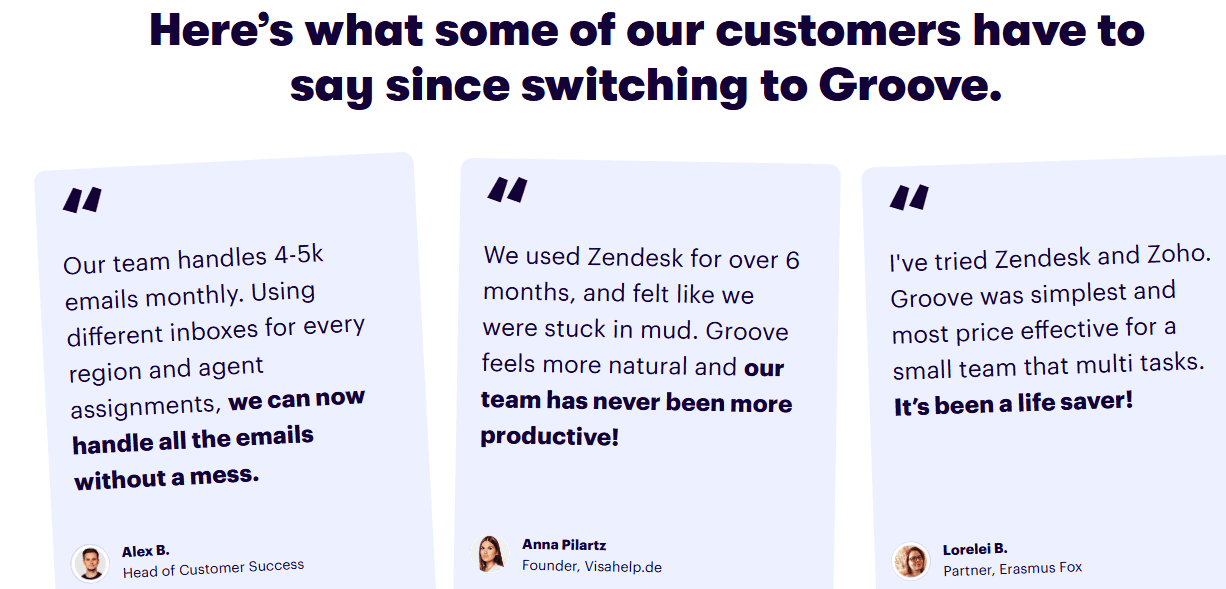
Here’s how Groove addresses your support challenges and helps you in optimizing customer touchpoints:
- Unified Inbox: Groove centralizes all customer communications, enabling faster response times and consistent answers across channels. No more juggling multiple platforms or losing track of conversations!
- Live Chat: Offer real-time support without overwhelming your small team. It’s like having an extra set of hands on deck, helping you engage customers instantly.
- Smart Automation: Groove’s automation features help you handle routine inquiries efficiently, freeing up your team to tackle more complex issues. Set up canned responses, automate ticket routing, and more.
- Reporting: Customer service metrics are easy to access and review in Groove. These numbers tell you which touchpoints (or what aspects of your touchpoints, such as response times) are working and which need improvement.
- Knowledge Base: Groove makes it easy to create and maintain a self-service knowledge base. This empowers customers to find answers quickly, reducing the load on your support team and improving customer satisfaction.
Groove is also built with simplicity and affordability in mind. It’s designed to help small businesses punch above their weight in customer support, without breaking the bank or requiring complex technical setup.
Ready to transform your CX? Try Groove free for 7 days, and see the difference it can make in optimizing your customer support touchpoints.
7. Improve In-Product Experiences
Another type of touchpoint that’s very easy to overlook is the in-product touchpoint. The process of using your product or service is the most tangible experience people have with your brand. Setting it up, learning and configuring it, and using it long-term – all of these need to be as simple and positive as possible.
Here’s how to make your product itself a strong touchpoint:
- User Onboarding: Guide new users through your product’s key features. This could be as simple as a welcome email series, or as sophisticated as an in-app tutorial.
- Product Tutorials: Offer clear and concise instructions for using your product. Video tutorials can be particularly effective.
- Intuitive User Interface: A well-designed, user-friendly interface can significantly reduce support inquiries and increase customer satisfaction.
- Regular Updates: Keep your product fresh and bug-free with regular updates. Communicate these improvements to users, to show that you’re actively working to enhance their experience.
By focusing on both external support and in-product experiences, you’ll create a comprehensive approach to customer touchpoint optimization.
The Ripple Effect: How Optimized Touchpoints Transform Your Business
Optimizing customer touchpoints isn’t just about improving individual interaction. It’s about creating a wave of positive change throughout your entire business. Each enhanced touchpoint creates ripples that extend far beyond customer satisfaction.
These optimized interactions boost employee morale, streamline internal processes, and provide valuable data-driven insights. They turn satisfied customers into brand advocates, bringing in new business organically. Plus, the process of refining touchpoints often uncovers unexpected opportunities for innovation and market differentiation.
The best part? You don’t need a massive budget or a large team to get started. Even small improvements can set off this powerful ripple effect. Whether you’re a solopreneur or leading a growing team, now’s the time to take that first step.
With Groove, even small businesses can deliver a customer experience that rivals the big players. Our all-in-one customer service platform helps you optimize your support touchpoints with ease. Start your free trial and start improving CX today!
What Is Intelligent Customer Experience? (Plus 5 Steps for Making It a Reality)
You’ve poured your heart and soul into creating a product you’re proud of. But lately, you’ve noticed a troubling trend. Your customers aren’t as engaged as they used to be. And your poor support team? They’re drowning in a sea of tickets. Success isn’t just about having a killer product. It’s about providing exceptional experiences […]
How To Develop a Winning Digital Customer Experience Strategy
Finding it difficult to determine how customers interact through your digital channels? Maybe your buyers have a hard time moving from one channel to the next with your brand? If your business fails to create a personalized experience across all channels, you’ll face low engagement rates, high bounce rates, and hampered customer satisfaction. The solution? […]