
6 Tips for Delivering Better SaaS Customer Service

As an SaaS business, your customers experience a unique post-sale journey. Purchases aren’t simple one-and-done affairs. This is great for your bottom line, but it presents challenges – especially if you have a small team.
That matters, because an inability to meet customer demand means higher churn rates. Given that your customers are continual users rather than just buyers, you have to account for onboarding, ongoing support, and much more.
It’s a lot to manage, but there are ways to make it easier. Let’s explore some strategies to transform your SaaS customer service process from a headache into a true competitive advantage.
Understanding the SaaS Customer Service Landscape
Effective support reduces churn. It helps customers achieve their goals via your product with a minimum of fuss, increasing satisfaction and loyalty.
However, SaaS customer service is a lot more involved than traditional support. It’s not enough to solve problems as they arise. You’ll need to guide customers through every stage of their journey with your products.
This includes:
- Optimizing support via self-service and automation
- Reducing churn by increasing customer lifetime value
- Balancing personalization and efficiency
- Leveraging high-quality support for improved product/feature adoption
Small SaaS companies face an uphill battle. Resources are usually tight, and you have a less robust team than many of your competitors. This means you need to be smart and efficient with every interaction.
In addition, as your customer base grows, your support needs to scale without becoming too expensive or time-consuming. Often, that means finding the right mix of personalized attention and helpful automation.
Key Components of Effective SaaS Customer Support
Perhaps the most important differentiator is the need for proactive support. Instead of just reacting to issues, small SaaS businesses need to anticipate customer needs and guide them towards success from day one. Proactive support during onboarding and throughout the customer lifecycle boosts feature adoption and overall product usage.
To thrive in the SaaS landscape, you’ll also need to focus on these key areas:
- Providing omnichannel support. Offer support across multiple channels, such as email, live chat, phone, and a self-service knowledge base. This way, customers can reach you however they prefer.
- Embrace proactive support strategies. Don’t wait for customers to get stuck. Proactively identify potential roadblocks, and provide solutions before they become major headaches.
- Continuously gather feedback from your customers. You can use the results to improve your product and support processes.
6 Tips To Level Up Your SaaS Customer Service Game
Want to keep customers around for the long haul? There’s no magic bullet – you’ll need to focus on the big picture and implement a comprehensive strategy. Here are our best SaaS customer service tips to get you started.
1. Deliver Proactive Customer Service
It’s important to stay one step ahead of problems. Proactive customer service anticipates your users’ needs, and guides them towards success from the start.
So how do you make that happen? Let’s explore a few strategies.
Build Relationships
You can use scheduled check-ins to to ensure that customers are getting the most out of your product. Many SaaS businesses assign a dedicated customer success manager to each account.
If that’s beyond your scope due to a small team size and stretched resources, you can use automation instead. Create canned messages that can be quickly accessed and customized, and schedule them to send at key points in the customer journey.
Run Feature Adoption Campaigns
It’s important to make sure users actually experience your product’s key features! To help them get the most out of what they’ve paid for, you can set up feature adoption campaigns.
This sounds grandiose, but it just means sending targeted emails to specific user groups, highlighting relevant features they haven’t yet explored:

To make this even more user-friendly, you can include quick tutorial videos. Who doesn’t love a good visual guide?
Stay Ahead by Anticipating Common Issues
You can turn frequently asked questions into opportunities for proactive problem-solving.
As an example, Intuit, the company behind QuickBooks, noticed that its customers frequently encountered specific error messages. So its developers put together an AI powered assistant to help customers resolve those issues. This led to a significant drop in support tickets.
When you shift from reactive to proactive, you create a smoother, more enjoyable customer experience. You also give your support team the bandwidth to tackle other pressing issues.
2. Create a Comprehensive Onboarding Process
When a new user signs up, you want them to feel confident and excited. A well-designed onboarding process is crucial.
If a new customer doesn’t understand how to use your software, they won’t stick around for long. Even if your product is easy to understand, clear and deliberate onboarding is vital. When done right, it not only teaches a customer how the product works, but provides guidance for making the most of it.
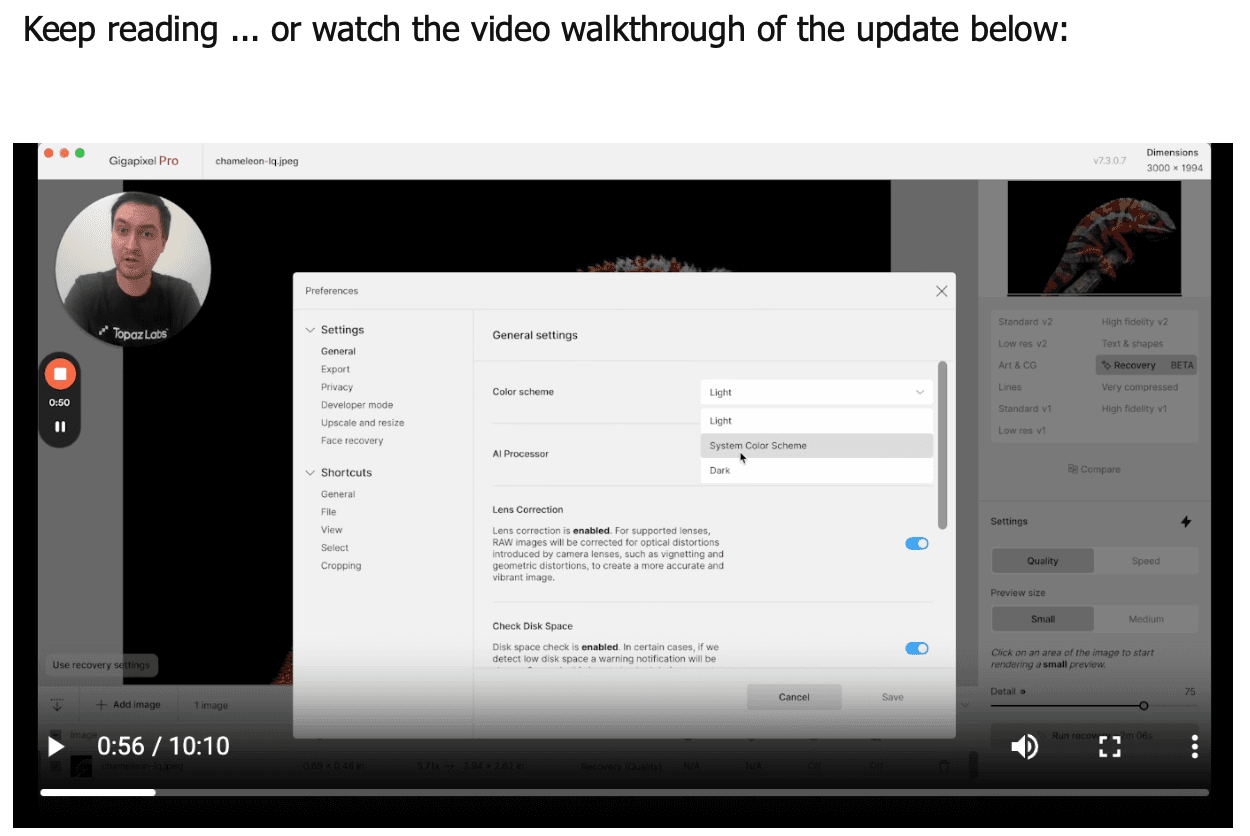
This is something we focus on a lot here at Groove. For example, we’ve used interactive tutorials to walk users through Groove’s essential features. This helps to minimize initial hurdles, and reduces the need for immediate support.
Understand Users’ Desired Outcomes
You can’t teach people how to use your product unless you know what they want to do with it. If you haven’t already, this is a good time to conduct surveys, interviews, and data analysis to gather insights into their goals and pain points.
You can use this information to tailor your onboarding process to meet their specific needs. By understanding users’ desired outcomes, you can create a more personalized and effective onboarding experience. This also lays the foundation for a customer-centric approach to service.
Establish an Onboarding Team
An onboarding team helps to improve customers’ initial experience. This team should be well-versed in every aspect of your product, from technical setup to best practices for usage.
This way, they can guide customers through the early stages and show them how to maximize the value of your service. This proactive approach reduces churn and sets the tone for a long-term, positive relationship.
Refine Your Criteria for Onboarding Success
As with anything else your business does, it’s essential to define clear criteria for your onboarding process. These should be measurable and aligned with both your business’ goals and your customers’ needs. Common metrics to focus on include feature adoption rates and user satisfaction scores.
Don’t forget to regularly review and refine these criteria, to ensure that they remain relevant and effective. This ensures that your onboarding process evolves with changing customer expectations.
3. Apply Behavioral Science To Your Support Strategy
A little psychology can go a long way in SaaS customer service. By understanding what motivates your users, you can create more effective interactions that lead to better outcomes for everyone.
The BJ Fogg Behavior Model provides a useful framework for understanding why users do what they do. According to Fogg, three elements must converge for a behavior to occur: Motivation, Ability, and a Prompt.
When it comes to SaaS customer service, this means answering three types of questions:
- How important is solving this issue to the user? Is it a minor annoyance or a major roadblock? (Motivation)
- How easy is it for them to implement the solution? (Ability)
- What will trigger them to take action? A clear call to action, a helpful reminder, or a sense of urgency? (Prompt)
By considering these elements in your support interactions, you can tailor your approach to increase the likelihood of a positive outcome.
4. Empower Your Customer Service Team
Your SaaS customer service team is the face of your business. They’re the ones on the front lines, building relationships with users and helping them achieve success with your product. Empowering them with the right skills, tools, and culture is essential for delivering exceptional support.
Hire the Right People
Hiring the right people isn’t just about finding service agents who are friendly and helpful. Your SaaS support team should also have:
- Product knowledge and technical aptitude. They need a deep understanding of your product’s features, integrations, and common use cases. Depending on your industry and target market, this might require specialized expertise.
- Problem-solving skills. SaaS support often involves troubleshooting technical issues and finding creative workarounds. Therefore, you’ll need to look for individuals who are analytical, resourceful, and able to think on their feet.
- Empathy and communication skills. Support interactions can be emotionally charged, especially when users are frustrated. Therefore, your SaaS support team needs to be able to communicate clearly, listen actively, and put themselves in the user’s shoes.
- A passion for learning. The SaaS landscape is constantly changing. The ideal support professional should stay up-to-date on new features, industry trends, and best practices.
Build a Culture of Empowerment
Beyond individual skills, fostering the right team culture is paramount. To do this, you can:
- Equip your team with the tools they need to be successful. You could offer regular training on new features, problem-solving techniques, and customer communication best practices.
- Break down silos between support, product, marketing, and sales. Sharing insights and working together leads to a more holistic and customer-centric approach.
- Give your support team the autonomy to resolve issues and make decisions that benefit the customer.
- Acknowledge and reward exceptional support interactions. By doing this, you reinforce a positive team culture and motivate individuals to go the extra mile.
5. Measure and Optimize Support Team KPIs
Leveraging user feedback is key for delivering exceptional SaaS customer support. It’s also important to track key performance indicators (KPIs). Metrics may not be exciting, but they give you a clear understanding of what’s working well and where there’s room for improvement.
Different KPIs matter to each business. However, a few essentials to start with are:
- First Contact Resolution (FCR). How often your support team resolves issues on the first interaction. A high FCR means happier users and a more efficient team. A low FCR is a prompt to identify knowledge gaps or provide self-service options.
- Average Resolution Time (ART). How long it takes to resolve the customer’s request. Aiming for a low ART shows that you value buyers’ time.
- Customer Satisfaction Score (CSAT). How satisfied customers are with support interactions. To calculate CSAT, divide the number of satisfied customers (based on a post-interaction survey) by the number of survey responses, then multiply the result by 100.
- Net Promoter Score (NPS). Indicates customer loyalty and their likelihood to recommend your product. To calculate NPS, subtract the percentage of “Detractors” (those who give you a low score) from the percentage of “Promoters” (those who give you a high score).
- Ticket Volume Trends. You can also monitor the number of support tickets over time. A sudden increase might be an indication of product issues, or may signal the need for better documentation.
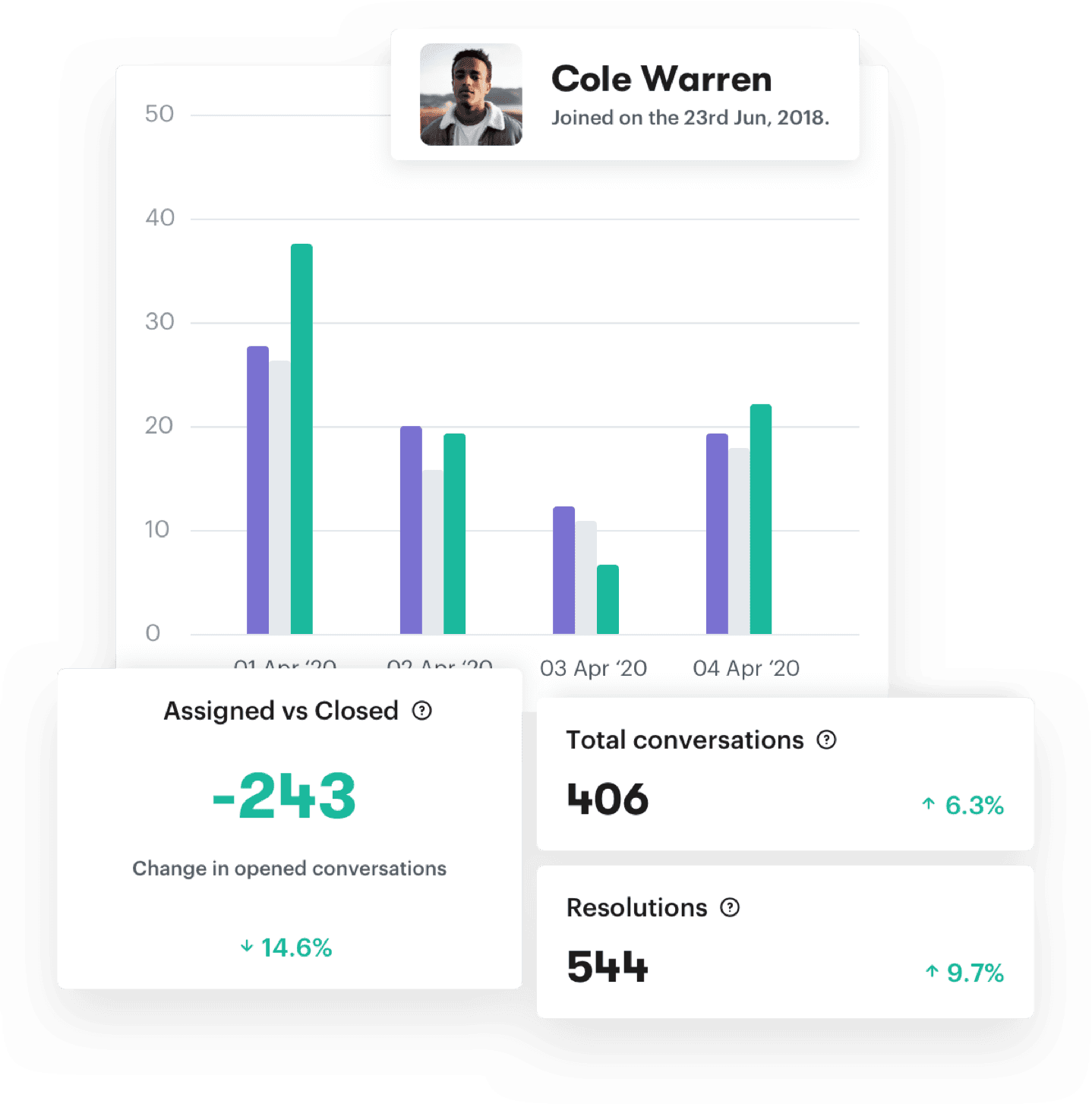
If you’re using a customer support helpdesk, it may be able to track these metrics for you. Our own helpdesk, Groove, offers reliable and easy-to-understand KPI reports – and it’s designed from the ground up for small businesses like yours.
Incorporate Direct Feedback from Customers
Of course, numbers in isolation only tell you so much. Qualitative feedback from your customers is also essential. You might:
- Implement post-interaction surveys. Ask specific questions about the support experience.
- Conduct periodic in-depth interviews. These can provide rich insights into customer pain points and expectations.
- Monitor social media and review sites. These often contain unsolicited, honest feedback.
- Create a feedback loop. Ensure that insights from customer feedback reach relevant teams (product, development, marketing) so they can take action.
Finally, metrics and customer feedback alike are only valuable if you use them! Leverage what you learn to drive ongoing improvements, such as by:
- Regular team reviews. Discuss performance metrics and customer feedback in team meetings.
- A/B testing. Try different approaches to support, and measure their impact on your KPIs.
- Continuous training. Use insights to inform ongoing staff training and development.
- Process refinement. Regularly update your support processes based on data-driven insights.
6. Plan Ahead for Business Growth
As your customer base expands, you’ll need to handle a growing volume of inquiries without compromising on quality. Here are some tips to help you scale your support capacity, even if your team stays small:
- Segment customers for personalized support. Segmenting your customer base allows you to provide tailored support more quickly. You can identify key customer segments based on usage patterns, purchase history, or demographics, and make sure you know what they need and what they struggle with.
- Increase efficiency. Always keep an eye out for ways to save time. This can involve automation, providing customers with self-service options, and putting clear workflows in place for how customer communications should be handled.
- Evolve your support strategy over time. Stay informed about industry trends and emerging technologies that can enhance your SaaS customer service. It’s important to regularly review and adjust your strategy as your business evolves.
Choose Tools That Support Growth
It’s hard to do any of this without the right tools. And it’s disruptive if you have to change platforms after your workflows are all in place. To provide top-notch customer support, you’ll need tools that are affordable yet robust enough to grow with your business.
That’s why we created Groove:
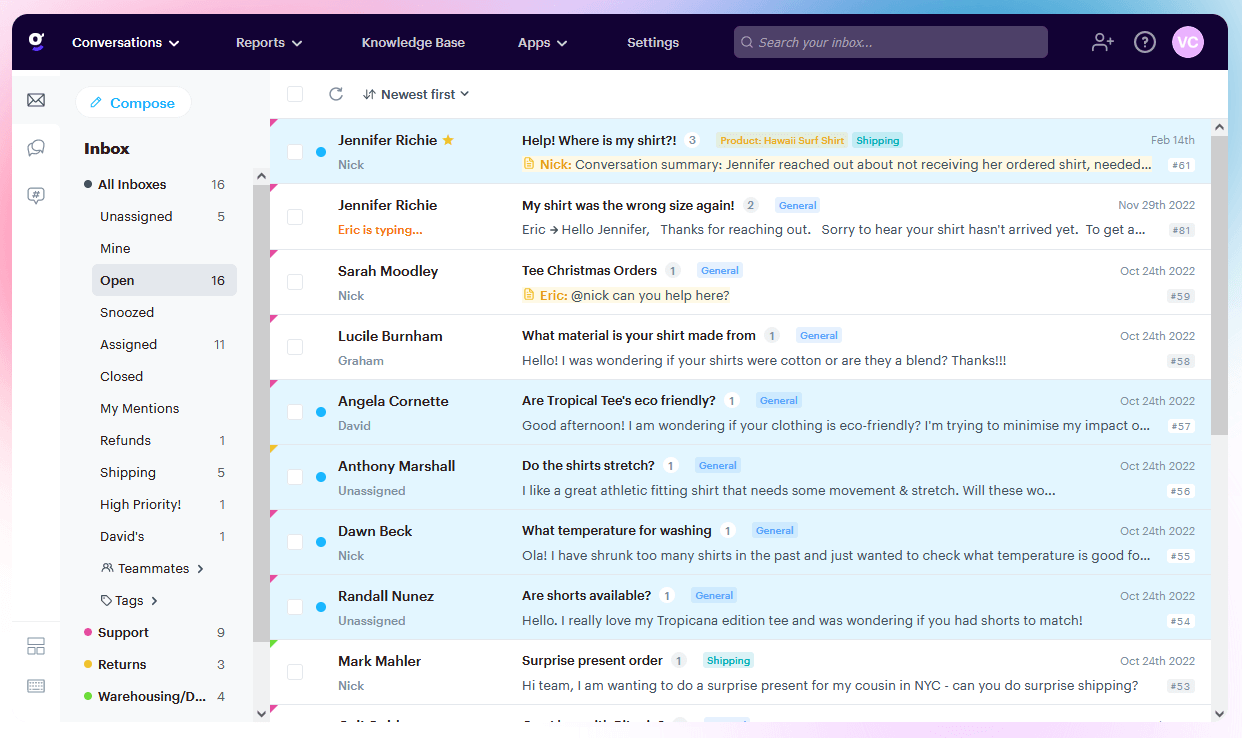
Groove is powerful helpdesk software that simplifies SaaS customer service. It’s helped many businesses just like yours deliver exceptional service.
Here are a few of the ways it does that:
- Simplified support management. Groove offers a centralized platform for all SaaS customer service requests. No conversation falls through the cracks.
- Time-saving features. With easy tracking and management for user communications, your team can handle inquiries more efficiently. Furthermore, you can set up automated rules that streamline your support processes, as well as canned responses for common queries.
- An intuitive interface. It’s simple to prioritize and resolve issues, and Groove offers a seamless experience for both your team and your customers.
- Enhanced team collaboration. The shared inbox and private notes features enable seamless teamwork.
- Lots of integrations. Groove’s integrations with tools like Zapier help to automate routine tasks. This reduces the load on your agents, and allows them to focus on providing exceptional SaaS customer service.
We know firsthand the struggles and constraints that small businesses face. If you’re looking to maximize return on investment, Groove offers affordable pricing without compromising on quality. We offer a simple cost structure and no hidden fees.
Moreover, Groove’s user-friendly design and easy setup process means you won’t have to invest in expensive training or onboarding for your team. You’ll be up and running in minutes.
Transform Your SaaS Customer Service with Groove
Quality SaaS customer service is the key to building lasting relationships. To achieve that, you’ll have to do a lot more than just answer questions as they arise.
From proactive onboarding to understanding user behavior, it all boils down to this: putting your customers first. But even with the best intentions, your time and resources have limits.
Groove’s centralized platform makes it easy to manage all of your support interactions in one place. Thanks to a shared inbox, organizational features, automation options, and much more, your team can collaborate seamlessly and provide effective support, even as demand grows.
5 Help Scout Alternatives: Why Growing Support Teams Switch to Groove
Groove Fixes What Teams Don't Like About Help Scout: Flat Pricing, Built-In AI, and Native SLA Management. See the Full Comparison.
How Helply's Hallucination-Proof AI Eliminates the #1 Fear of AI Customer Support
Customer Support Automation That Hits 65% AI Resolution, Guaranteed. Helply's Action-Based AI, Safe Escalations, and Optimization.