
Local SEO for Small Business: The Complete Beginner’s Guide

SEO basics like understanding search intent and performing keyword research still matter – but they’re often not enough. If you don’t optimize for local search results, your business can easily miss out on potential customers looking for exactly what it provides.
Any company that attracts customers in specific regions can benefit from local SEO strategies, even if your business is online-only. With the right techniques you can generate more leads, and better understand what’s working and what isn’t (so you can double down on profitable results).
If you’re not sure how to approach local SEO for small business, we’re here to help. We’ll cover a few basics, then dive into five proven strategies you can implement right away.
Boosting Visibility: What Is Local SEO?
Local Search Engine Optimization (SEO) involves optimizing your website and other online content so your company ranks higher in local search results. It’s traditional SEO applied on a more region-specific basis.
For example, a pet groomer in Toronto, ON could use local SEO strategies to appear at the top of search results for keywords like “best dog groomer in Toronto” or “pet groomer near me”.
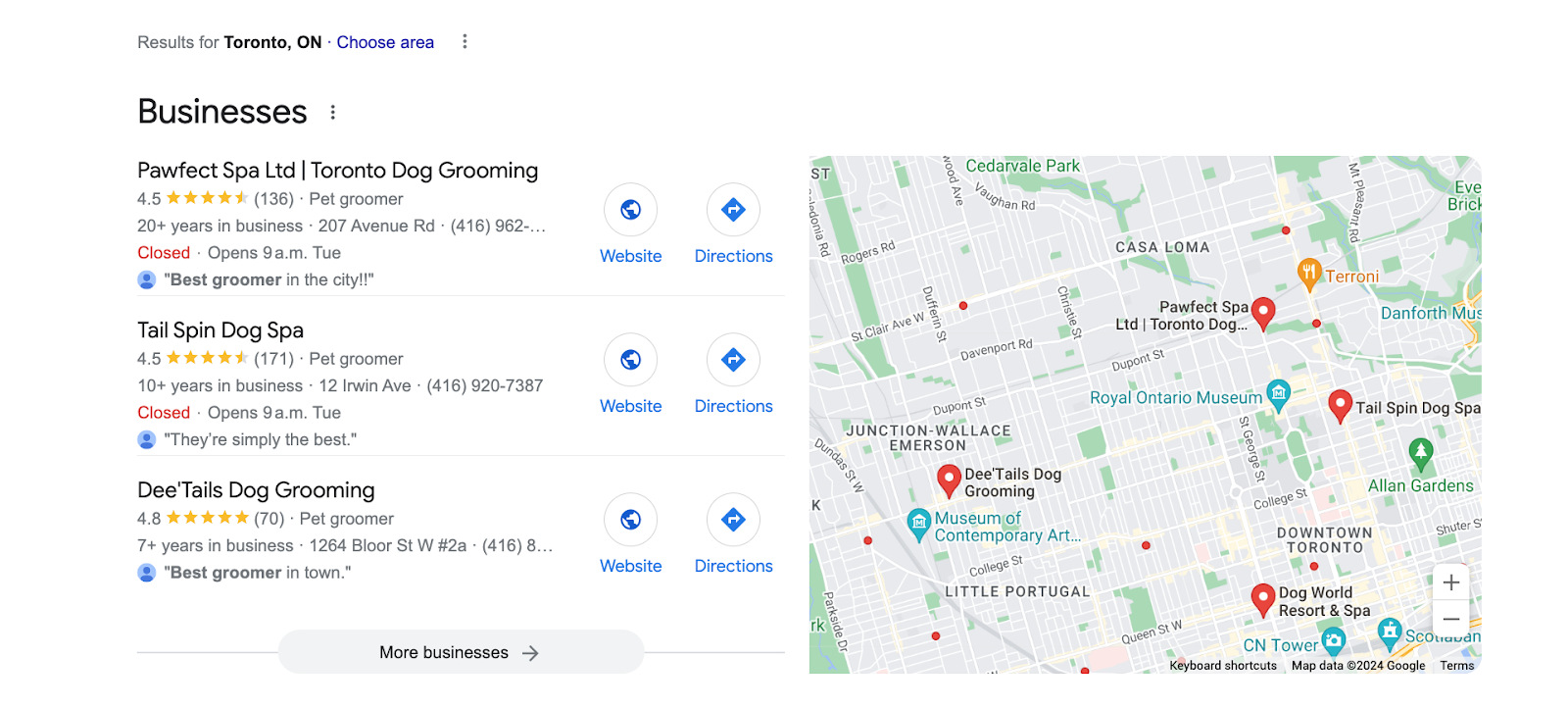
There are two types of search results that matter when it comes to local SEO. Map results sit at the top of local search pages, with a feature depicting where the business is on a regional map (if there’s a physical location):
Organic search results appear underneath the map results – these are the familiar blue links:
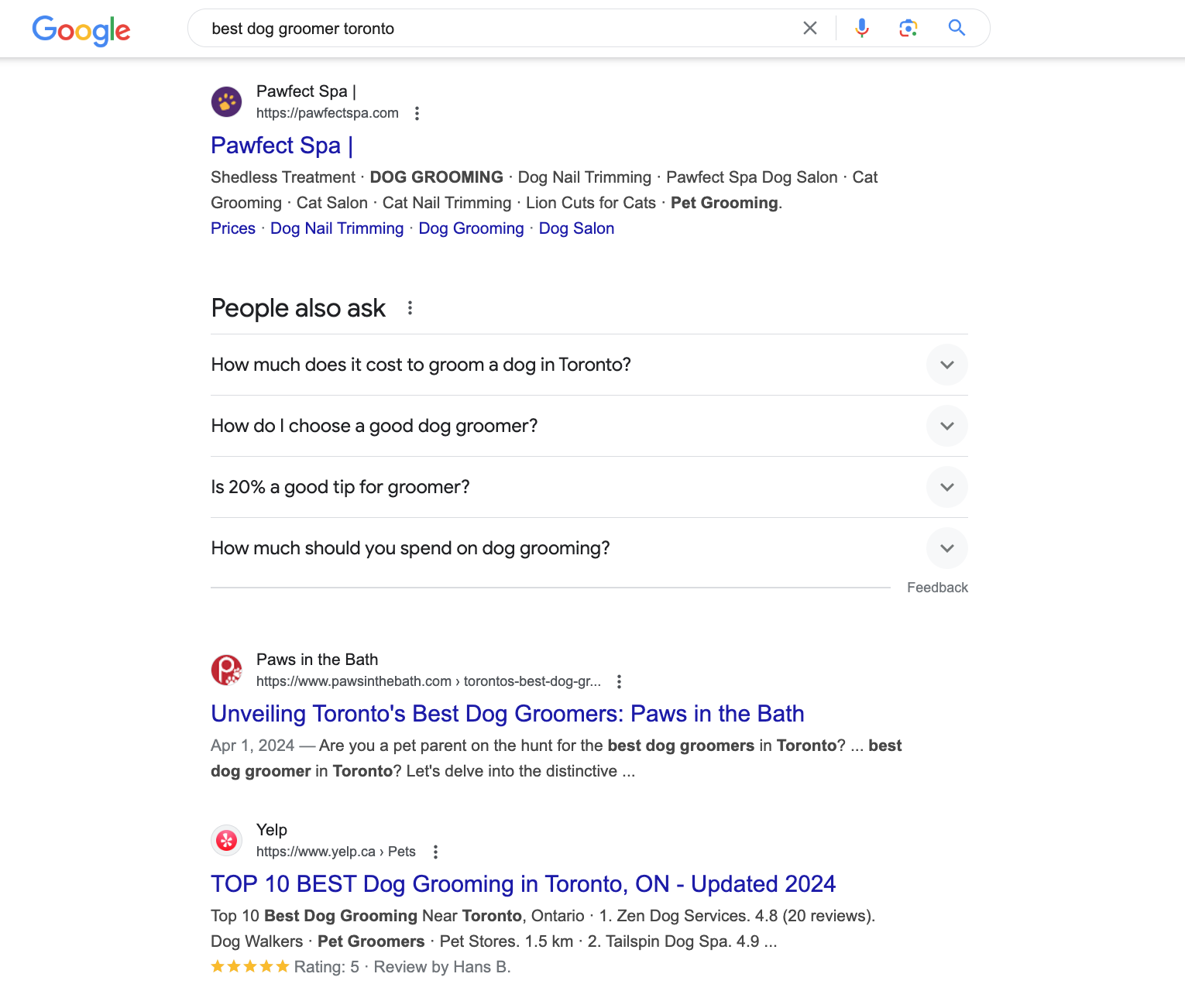
Above, you can see that Pawfect Spa shows up first in both types of results. This makes it a lot easier for that business to grab searchers’ attention. Throughout this post, we’ll explore what local SEO for small business strategies make this possible.
Why Local SEO Matters for Your Small Business
When correctly implemented, local SEO can generate more leads with high conversion rates. That’s because local searches have a high degree of purchase intent. In other words, people who actively seek out local businesses through search engines are more likely to make purchases.
Now, you might be asking yourself: “How is this any different from search engine optimization I would already implement for my business?”
Google has a local search algorithm that uses multiple factors to determine rankings, such as:
- Relevance (how relevant your business is to the search query)
- Prominence (your business’ popularity when compared to competitors)
- Distance (your business’ distance from any location terms used in the search query)
Through analyzing trillions of searches, Google has observed that people often want results in their nearby areas. So its algorithm includes a “proximity factor” that considers the searcher’s location when relevant.
This is NOT restricted to searches with obvious indicators like a city name, location, or “near me” in the search text. A search for “fast food” will still show you a list of fast food restaurants based on proximity in the SERPs.
So while traditional off-site and on-site factors are still essential for ranking well, targeting local SEO specifically requires a different approach. We’ll look at some strategies soon, but first it’s a good idea to familiarize yourself with the key local ranking factors.
Finally, what if your business doesn’t have a physical location? Can you ignore local SEO? We wouldn’t recommend it, as this aspect of SEO can still be very beneficial.
After all, many small companies do the majority of their business in a few specific regions. If you’ve noticed that your customers and/or website visitors tend to come from particular areas, local SEO techniques can still strengthen your presence in relevant searches.
How To Improve Your Small Business’ Local SEO (5 Key Tips)
Local SEO is an essential part of growth for many companies. Fortunately, there are proven ways to outrank competitors, and most don’t require a huge investment of time and/or money.
With that in mind, here’s our primer on local SEO for small business. These five techniques can help your business show up higher in SERPs and attract more customers.
1. Create and Optimize Your Google Business Profile
The number-one tool in mastering local SEO for small business is your Google Business Profile. You can set it up in just a few minutes, and create a profile even if your company doesn’t have a physical address.
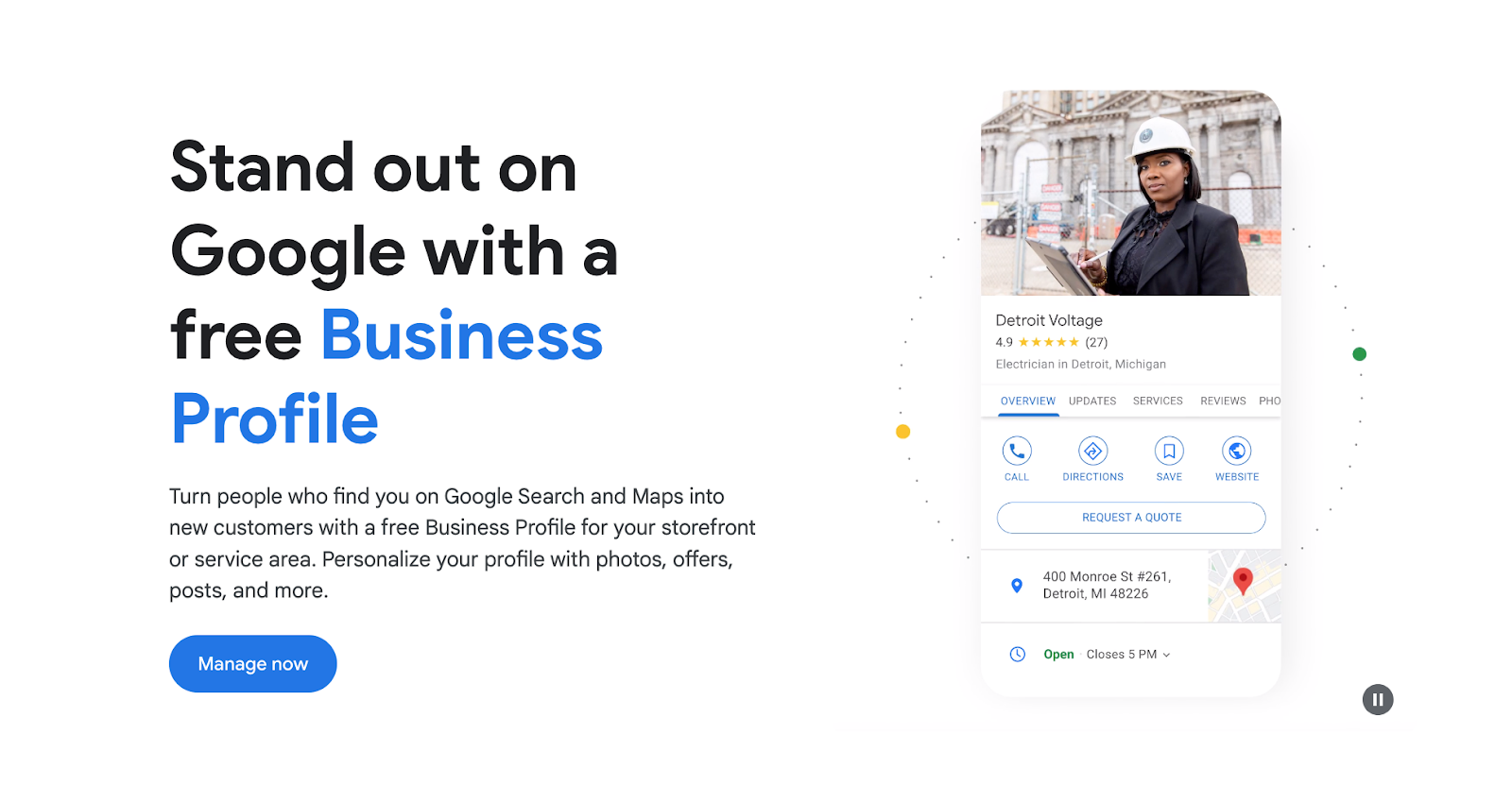
Formerly “MyBusiness”, this free tool helps you control how your company appears in location-based search queries. Google pulls from Business Profile information (location, description, etc.) to match results (businesses) to user search intent (customers). The most relevant matches show up in the top results.
To optimize your Business Profile for local searches, you can start by:
- Including NAP (name, address, and phone) information, a business description, and a summary of your products/services.
- Adding photos, Q&As, hours of operation, etc.
- Selecting relevant categories based on your target audience (you can choose up to 10 when creating your profile).
The more detail you offer, the better off you’ll be. A thorough profile helps people decide whether your business is relevant to their needs. Plus, it gives Google the data needed to match your company with the right searchers.
Don’t forget to view your profile when you’re done, to see how it will appear to potential customers. It’s also a good idea to come back and update the profile regularly. You can even use the Google Posts feature to communicate about updates, offers, and so on.
2. Target Strategic & Local Keywords Relevant To Your Niche
As with any form of SEO, keywords play a big role in local SEO for small business. The content, tags, internal links, and meta data you put online should reflect key words and phrases used by your target audience.
When looking for a hair stylist in Brooklyn, a user might search “top hair stylist in my city” or “top hair stylist in NYC”. Even if your business is a perfect fit for that search, it may not show up if you haven’t incorporated keywords strategically.
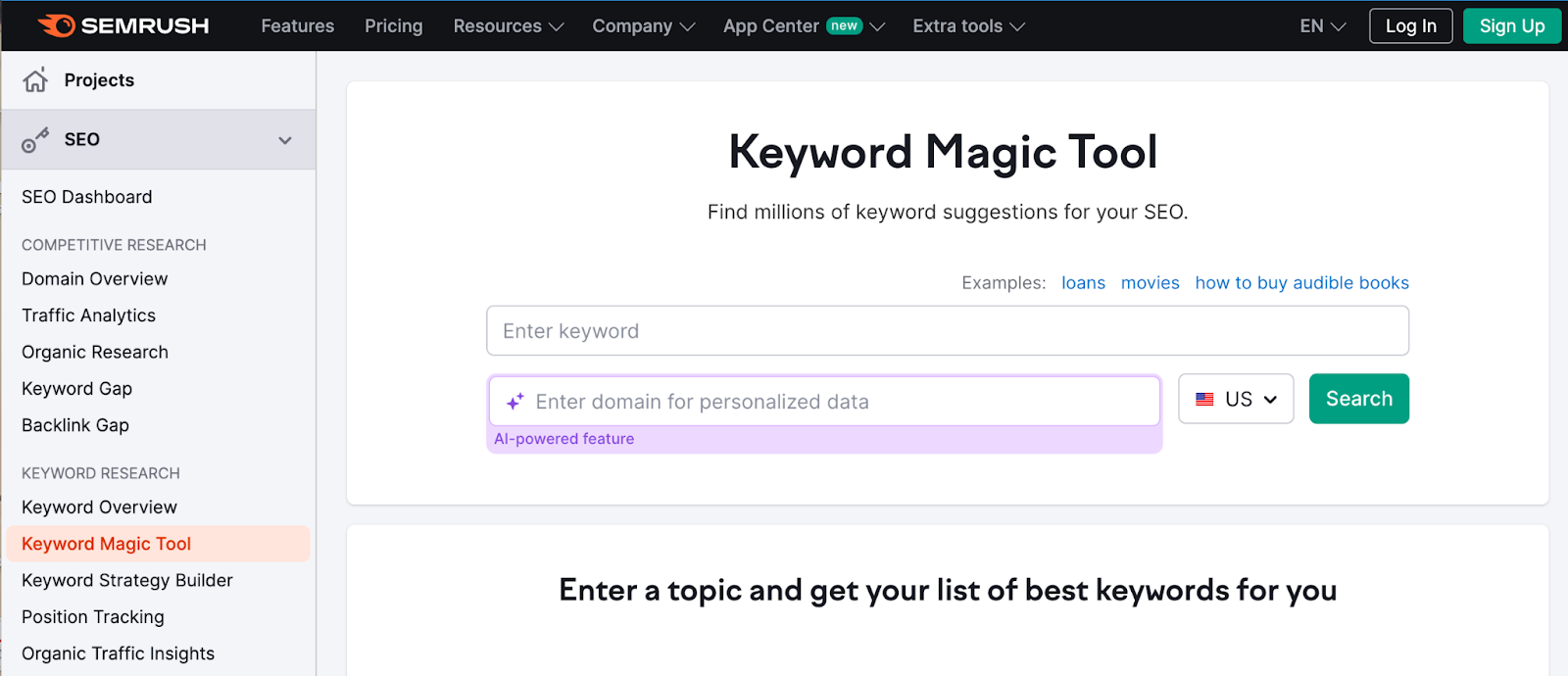
You can find relevant keywords using a number of free and paid tools. Some of the latter can be pricey, but may offer limited services for those on a budget. For instance, Semrush’s Keyword Magic Tool allows a handful of trackable keywords and analytic reports for free.
Another good option is to use Google’s own Keyword Planner tool. It’s completely free, so it’s a solid choice for businesses on tight budgets (and its information comes straight from the source).
However you find them, you’ll want to use these keywords on your website, social media profiles, and wherever else you have a presence online. The standard strategies for effective keyword usage apply here.
But you’ll also want to prioritize location-based keywords, and feature location details in meta data. You can even create multiple location-specific pages to target consumers in different regions.
3. Improve Your Website’s Internal Linking Structure & Content
Internal linking – links from one page of your website to another – can help with local SEO rankings. They show search engines how your pages are related. Plus, they make it easier for less prominent pages, such as content specific to a particular location, to be found and displayed in SERPs.
If you haven’t yet established an internal linking strategy, it’s worth reading up on essential concepts like ‘link equity‘. Half the battle when it comes to local SEO for small business is the tasks that can improve your rankings across the board.
When that’s done, you can further optimize for local searchers by choosing the right anchor text. Where possible, the text for your links should feature highly-specific target keywords. Anchor text like “high-performing B2B shipping solutions in North Carolina” is a lot more useful and effective than something generic such as “click here”.
Other on-page SEO factors can improve your business’ local visibility. One key place to focus is on your site’s content, both its quality and relevance.
Posting high-quality, authoritative content on your site appeals to both human visitors and search bots. That’s doubly true if the content is unique and specific. If you want to attract customers from a particular area, you can create dedicated local pages and post about local happenings (just to give two examples).
4. Generate High-Quality Inbound Links & Structured Citations
It’s important to remember that your business doesn’t exist in a vacuum. Some local SEO for small business strategies are solitary tasks. However, others involve how well your content intertwines with other relevant parts of the web.
Small businesses, particularly those without physical locations, can struggle to be visible online. Even if you optimize your content effectively, it could be overlooked. To give yourself the best chance of being seen, you’ll want other sites and resources to point potential customers your way.
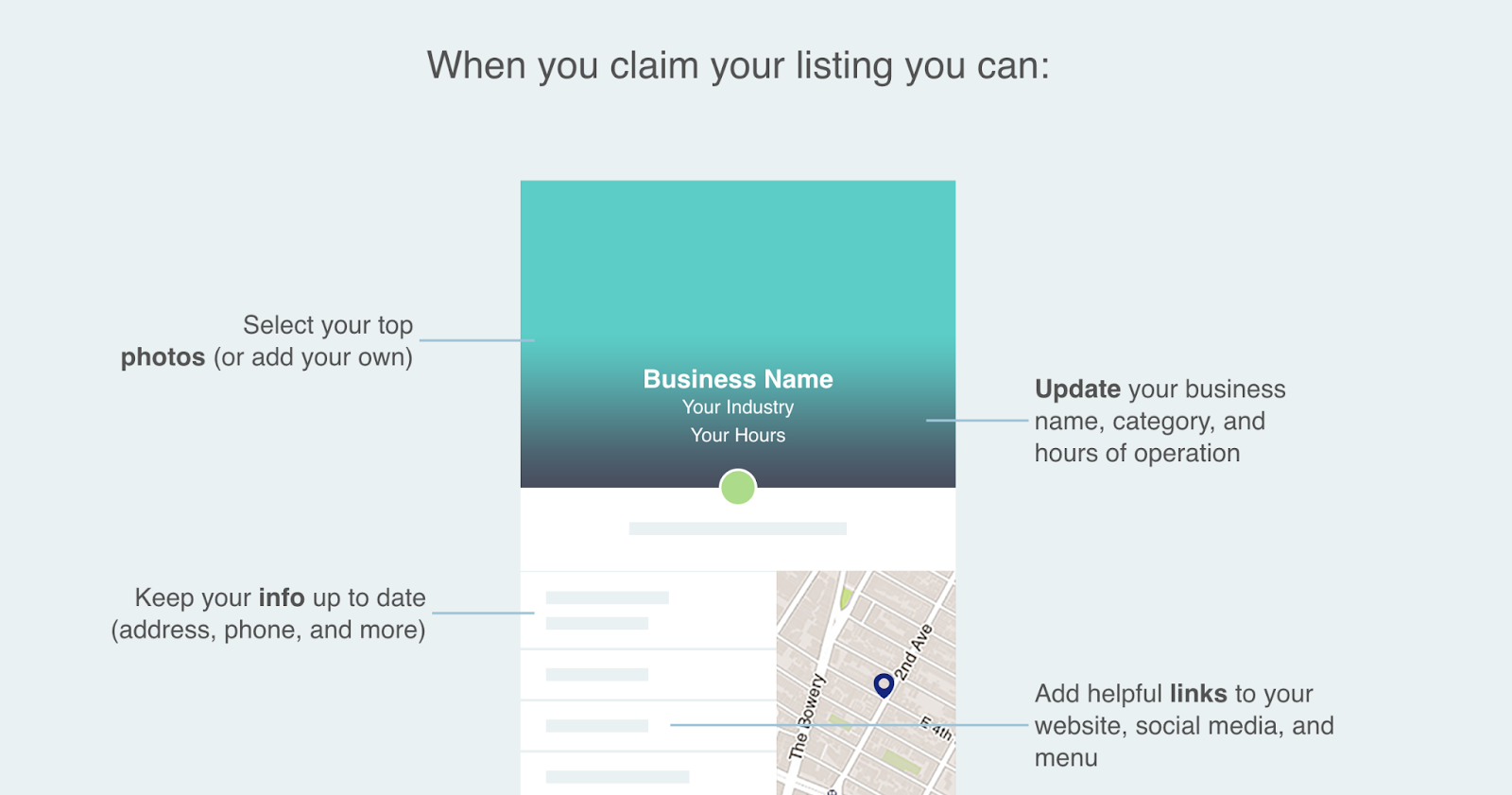
For instance, you can search for and request a listing in relevant local and online directories. Local listings and sites like Yelp can provide your business’ key details, help users find you more easily, and even improve your rankings.
In a more general sense, inbound links are a vital SEO metric. Featuring your company in local business posts, news articles, and blogs is a great way to build a bridge from places potential customers frequent to your website and sales pages.
Just keep in mind that not all links are created equal. Certain factors impact how much influence inbound links have on your visibility:
- Relevance. Is there a connection between the site doing the linking, and the site it’s linking to (your website)?
- Diversity. Are the links your business has earned all from one platform, or a variety of websites?
- Domain Authority/Rating. You get a better ranking boost from an inbound link if the website in question is popular and well-regarded. There are a number of metrics (mostly proprietary) that aim to measure this, such as Moz’s Domain Authority score.
Finally, poor link-building practices can backfire on you. So be sure not to spam links on other sites. Instead, reach out and make requests, offer to participate in link exchanges or pay a listing fee, etc.
5. Encourage Customer Feedback & Reviews
Customer feedback is vital to improving just about every aspect of your business. It also serves as ‘social proof’.
Not only do reviews initiate a dialogue between business and consumer, they also influence local ranking factors and help form brand reputation. Reviews make your company more visible to search engines, especially for queries related to your services or products.
The local SEO benefits don’t stop there. Local customers care about reviews, and feedback from real people has a powerful impact on their buying behaviors:
- 68% of customers trust the public over brand messaging.
- 90% of customers are influenced by a business’ response to prior reviews.
- 50% of customers lose trust if it looks like reviews are fake.
- 63% of customers would update their star ratings if a business did a great job resolving concerns they expressed in their reviews.
This is where we circle back to social proof. When reviews are thoughtfully tended to, you create a brand narrative that signals high trust. This helps with both global and local SEO for small business.
You’re a lot more likely to get reviews if you ask for them. There are plenty of ways to do that, but we recommend sending your customers a satisfaction survey:
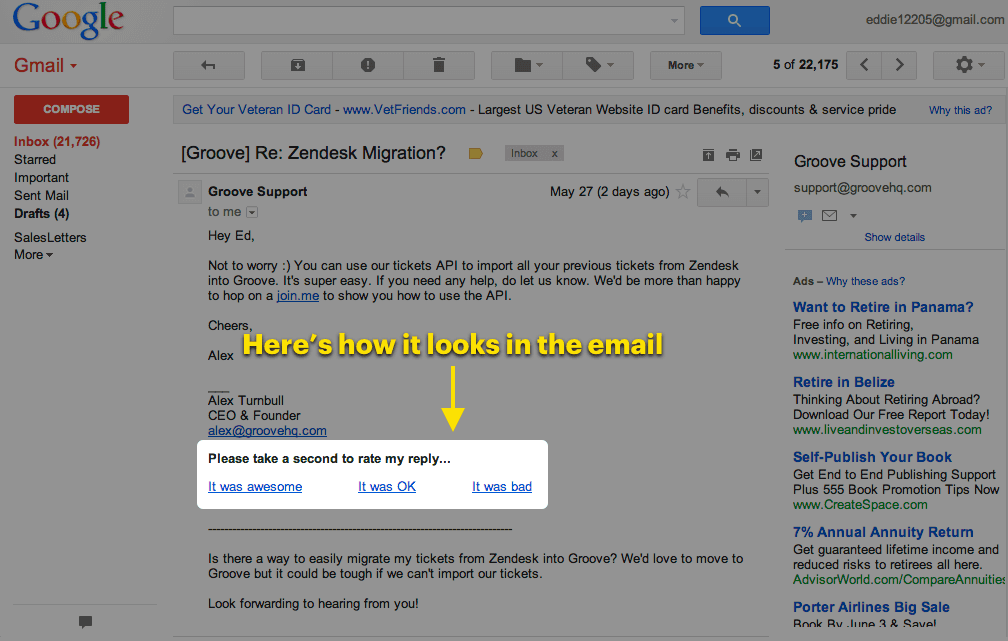
Groove, our all-in-one customer support dashboard, provides automatic survey templates that make this task simple.
You can gather reviews to feature on your website and in online profiles/listings. At the same time, you can track feedback trends and make targeted improvements to your business as a whole.
Convert More Customers With Local SEO, and Keep Them With Groove
It’s important to find a good balance between more traditional SEO strategies and local-focused optimization. Although it can be time-consuming, investing in both global and local SEO is the best way to drive highly-relevant organic traffic.
Of course, that’s where the real work begins. Finding customers is only half of the battle – impressing them and retaining them is the other half.
For that, Groove can help. Along with making it easy to gather reviews, Groove is a complete platform for improving customer satisfaction while saving time and resources. Check it out today!